Robotics and AI to have key roles in FTC Solar’s future in Australia: CEO

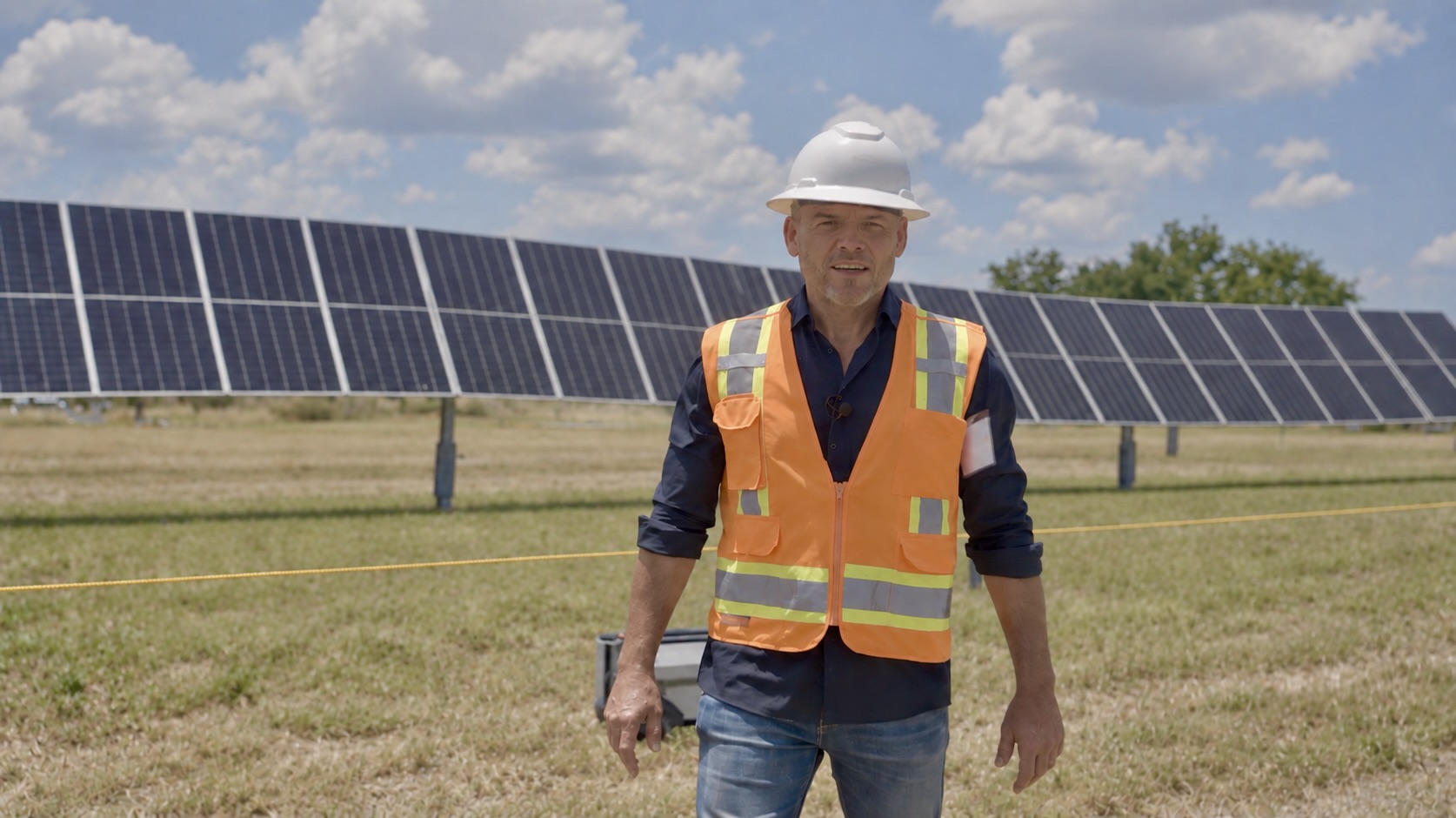
US-based FTC Solar is currently shipping solar tracker systems to Australia, bound for the Fraser Coast 330 MW solar / 180 MW battery, and 82 MW Sybella Creek hybrid solar and battery storage projects, both in Queensland. With 30 projects already installed in Australia, pv magazine spoke with FTC Solar President and Chief Executive Officer Anthony Carroll about why Australia is key to FTC Solar’s future.
Why is Australia a key market for FTC?
I think it’s a few things. it’s a mature market and in some ways, Australia has been a pioneer in building renewal projects, integrating energy storage, like the Waratah Super Battery and Tesla’s first deployments actually happened in Australia, so it’s a mature market that really knows what they’re doing from an electrical perspective and from a construction perspective.
It’s good for FTC because we compete against Tier 1 tracker manufacturers and we also compete against Asian manufacturers and there’s always a cost component to that, so we like the fact that Australia appreciates quality, is focused on execution and track record and I think it’s a very loyal market.
If you sell and you deploy and you deliver, customers continue to trust you, and we have more than 30 projects already installed in Australia which is a pretty impressive track record.
Another reason Australia is a key market is because we really are deploying some incredible projects here and there’s so many big developers and big construction companies; massive global developers are here building those projects. So that’s why it’s exciting; the size, the experience, the maturity, and also the loyalty if you execute and deliver, the market will continue to trust you.
What are FTCs goals for the future in Australia?
I divide our goals into two pathways. One is organic, operational growth, and one is strategic growth.
FTC’s organic growth is definitely going to be multiplying every year if we look at the volume that we are going to ship in the next six months, we’re basically seeing massive growth in Australian terms of MW, and we are in advanced conversations with multiple customers for the next projects of that size.
So, it’s just going to be continuing to focus on execution and growth and it is about continuing to deliver, continue to sell, we are competitive, we have a great supply chain, so we continue to win projects, focus on execution and get the next deal.
From a strategic perspective, one is data centres and how they’re going to require massive amounts of power and the other one is, how do we just make the solar and battery industry grow and be sustainable and continue to deliver all that power that the data centres need, but also that people need, that’s affordable and accessible; that’s a mission that companies like FTC have.
With data centres specifically, FTC is working on AI tools and robotics, which are going to allow to accelerate the timeline in which a PV project is built, installed and commissioned, so build more solar faster without the constraints of labour, safety or timing, and to allow to power those data centres with a safe, clean and reliable energy.
Robotics can lay cable, install modules, and how they connect, and it’s not about replacing humans, it’s about having robots be tools for humans so productivity can increase and we can build more solar safer and faster.
It’s one of the big things about FTC, which is we believe we are one of the most, if not, the most, constructable tracker from a simplicity perspective and that ties into the speed and the growth and the automation with robotics.
What role do robotics have?
What we’re seeing with our competition, which is very respectable, but they’re acquiring companies and adding those companies to their ecosystem.
What we want to be is more of an open source code where we become the tracker that multiple different robotic companies prefer, and we design the trackers of the future so that they can be installed and commissioned by a robot.
This is a very real topic, which is not ten years from now, its two, three, five years from now. The robot’s sort of literally going to speed up the deployment of solar across the globe.
How does FTC Solar approach the future of deployment and technology?
There’s a big inconsistency or the big contradiction of corporations, especially global corporations. As CEOs, what we worry about is shareholder value and the PML and the bottom line and all of these things.
It’s really hard to do what FTC is doing, which is dedicating resources to pure innovation. If you check our VP of Software and Robotics Andrew Morse’s LinkedIn, every week he’s posting about all the things that we’re doing in that space.
We’re investing money that doesn’t have an immediate ROI, it has a long term ROI and that’s a conscious decision that companies need to make in order to enhance their products.
As for a think tank, we actually do have that.
One of the things that my executive leadership team does in every quarterly business review is think out of the box. What are we not doing that we could be doing? What trends are we seeing in the market that we could be following or that could inspire the next product generation.
That innovation is software, software to generate more power. So, 1% improvement in the algorithm that operates the tracker to turn modules towards the sun can result in millions of dollars of more production over the lifetime of a plant, so trackers actually have a brain and a lot of software that also improves the productivity of the plant.
Now battery energy storage is catching up to the rollout of solar, what’s next for utility-scale solar generation?
I think it is a combination of a few things I think, ironically, what needs to come next is a careful analysis of the past and what we’ve learned from all the power that we’ve installed.
I think developers and EPCs have really learned what works, what doesn’t work, what companies and what technologies are there to stay, which are maybe transient, and I think it’s been a big focus on execution.
The first thing is, let’s make sure we implement the things that work and we don’t take risks to sort of make wrong decisions like the industry may have done at times in the past.
The second thing is we obviously need certain regulatory adjustments. The fact that Australia produces 70-80% of China’s iron ore that turns into steel and then we kind of re-import it into Australia. It’s just a contradiction that needs to be solved through politics, I think, politicians in the end are focused on solving problems, and it’s not about taking one side or another, it’s about asking people to give us the regulatory environment that enables building those projects.
There’s a big lack of labour, trusted, qualified, trained labour, how unions tie into this, how manufacturers like us need to focus on training, training people getting young engineers, getting young technicians, getting them trained in Australia so that they can perform the work that is needed as we continue to grow.
Then it’s just trying to speed up the process like interconnection cues, all the roles of the utilities and how fast can a project get approved. It’s like the US, some of them take years and we need to do better. We need to demand all the regulatory companies and organisations just speed up those timelines. It can’t take us five years to approve a project or upgrade a substation. It shouldn’t.
How critical are trackers to the success of a project?
Trackers are misunderstood and I misunderstood the tracker before I joined the board of the FTC about a year ago. People think that solar inverters, batteries, transformers have a lot of technology and they are really critical but in the end what validates a solar plant is usually the ability to build that infrastructure that holds the modules into the ground and that can depend on, do you have rocks or not, do you have undulated terrain or not, do you have a flood zone or not? What type of floor or geotech report you have?
It’s funny how choosing the right tracker and making sure that you have the right tracker partner on it can save or kill a solar project.
There’s a lot of tech in there, obviously from the software perspective.
Then, on reducing the cost, it’s about volume and automation. Steel is steel. Steel is a commodity, but we are innovating, we’re making lighter torque tubes, lighter frames for the modules, the modules are increasing their power so we’re also holding them, holding them better and improving the software algorithms adding robotics and AI.
All of these things are really improving the total cost of building a solar plant today.
This content is protected by copyright and may not be reused. If you want to cooperate with us and would like to reuse some of our content, please contact: [email protected].

Please login to comment