Author
ccomas
Advertisement
Articles written by ccomas

Researchers build 27.39%-efficient inverted perovskite solar cell based on new molecular design
Chinese researchers have developed a molecular additive that reduces defects in perovskite solar cells, enabling a power conversion efficiency of 27.39%. The approach was also used in bifacial mini-modules with efficiencies above 22% and 99.6% power retention after more than 5,000 hours of continuous operation.
Sep 06, 2026

New research confirms negligible LeTID degradation in TOPCon solar cells
Researchers have found that light- and elevated-temperature-induced degradation (LeTID) has a limited impact on n-type TOPCon solar cells compared with earlier p-type PERC technology. Optimized firing conditions and laser-enhanced contact optimisation can further suppress degradation, with industrial TOPCon cells showing efficiency losses within acceptable warranty tolerances.
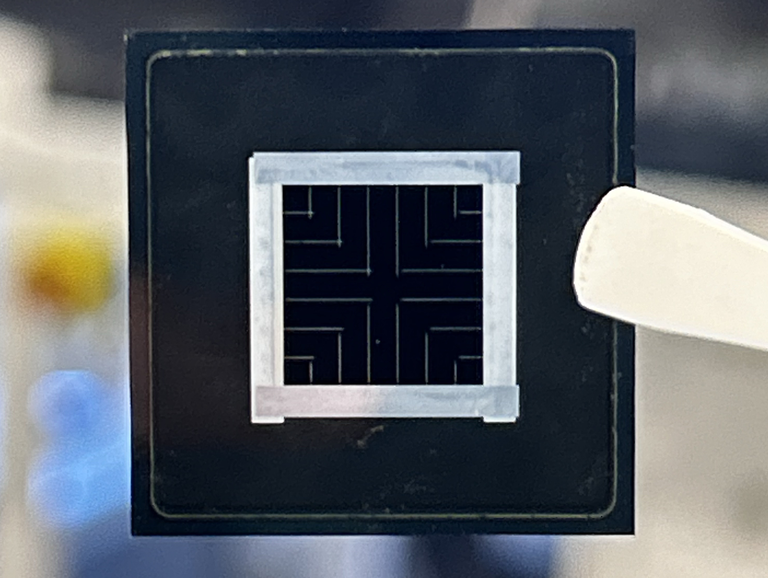
Solvent-free perovskite-silicon tandem solar cell achieves 27.3% efficiency
German researchers have developed a fully solvent-free perovskite-silicon tandem solar cell using sequential evaporation, achieving a power conversion efficiency of 27.1%. The scalable approach also demonstrated significant stability, retaining 97.06% of its initial efficiency after 6,800 hours of dark storage under nitrogen.
Advertisement

AZO-based HJT solar cells more vulnerable to damp-heat-induced degradation, study finds
Researchers have found that aluminum-doped zinc oxide-based silicon heterojunction cells are more vulnerable to damp-heat-induced degradation than their indium tin oxide-based counterparts. To address this issue, they introduced a magnesium fluoride capping layer that significantly improved damp-heat stability by slowing moisture penetration and corrosion.

Mass-scale reuse pilot project finds 15% of second-life solar modules fail to meet safety requirements
Australian researchers have identified two scalable routes for electrical safety qualification of second-life PV modules: silicone backsheet repair and faster parallel wet-leakage testing. A Queensland pilot found that 15% of 2,200 reuse-ready modules failed the wet-leakage test, highlighting the need for dedicated safety screening while modified testing could reduce costs and processing time.

UNSW defines design guidelines for back-contact TOPCon solar cells
UNSW and DAS Solar used Quokka3 simulations to identify cut-induced losses in back-contact TOPCon cells, finding that gap-region cutting reduces efficiency losses by around 50% compared with emitter-region cutting. They recommend an optimized 0.3 mm gap width, particularly important under low irradiance, to minimize edge recombination and resistive losses without additional edge passivation.
Advertisement
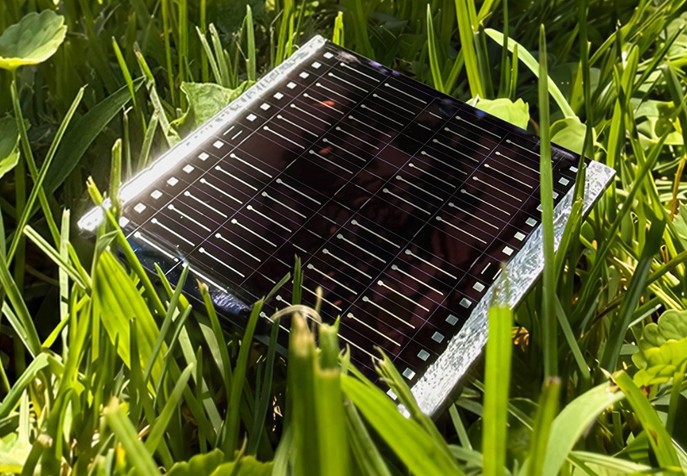
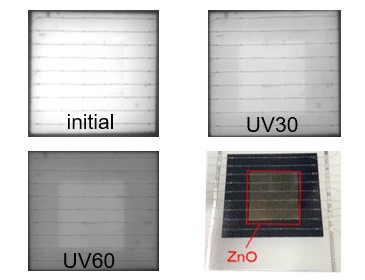
Zinc oxide UV shield cuts HJT solar cell degradation and boosts lifetime output by 4.8%
Researchers in China have demonstrated that zinc oxide (ZnO) thin films can act as a ‘sunscreen’ for heterojunction solar cells, reducing UV-induced degradation while maintaining high visible-light transmission. ZnO-coated modules achieved lower projected LCOE and 4.8% higher cumulative power generation over 25 years.

Researchers warn of unexpected copper corrosion in perovskite solar cells
Researchers find copper electrodes in perovskite solar cells can suffer from edge corrosion during operation, reducing device performance. The team showed that adding a thin bismuth layer helps protect the copper electrode, limiting degradation and improving the long-term stability of the solar cells.
Advertisement
Press releases
Press Release
Energy Estate
Feb 20, 2024
Press Release
BayWa re
Feb 19, 2024
Press Release
Goodwe
Feb 19, 2024
Press Release
Government of Western Australia
Feb 19, 2024
Press Release
Clean Energy Council
Feb 16, 2024
Press Release
Australian Energy Council
Feb 16, 2024
Press Release
Vast Renewables Limited
Feb 15, 2024
Press Release
Clean Energy Council
Feb 14, 2024
Press Release
ClearVue
Feb 12, 2024