Industry trend: residential property professionals pivot to clean energy developer roles

An emerging trend in the Australian property sector is a shift of residential development professionals into the renewable energy and digital infrastructure (data centre) land deals, where processes for project land development are similar to residential projects, but clean energy can deliver a ten-fold return.
According to clean energy land brokerage specialist Rok Solid Renewables Director Daniel Moroko, the people who once “amalgamated apartment blocks, negotiated call options, ran feasibility models and pushed development applications through council are now doing the same work on solar farms, battery energy storage systems (BESS), wind projects and data centre campuses”.
“It is the same job: know your feasibility, secure the right land on the right terms, add value through approvals. That is the entire discipline, whether you are selling a townhouse site in Sydney’s inner west or a 500 MW battery site on the fringe of a transmission network,” Moroko said.
“The only real difference is the zeros. In residential you might spend $400,000 (USD 288,185) to $500,000 getting a site approved, with $50 million to $100 million of capex behind it. In renewables you are spending $4 million to $5 million on approvals, with capex of $500 million to $1 billion. Same skills, ten times the cost, ten times the value, ten times the return.”
Moroko said the migration spans the full professional stack, from land agents and developers through to financiers and solicitors.
“Australia’s energy transition is a land problem before it is an engineering problem. Every battery, solar farm and data centre campus begins with a landowner, a title, a grid connection point and a set of commercial terms. That is property work, and the industry that does it best in this country was built in residential,” Moroko said.
Western Sydney residential land developer Castle Group is an example Moroko cites of property developers embracing clean energy and digital infrastructure.
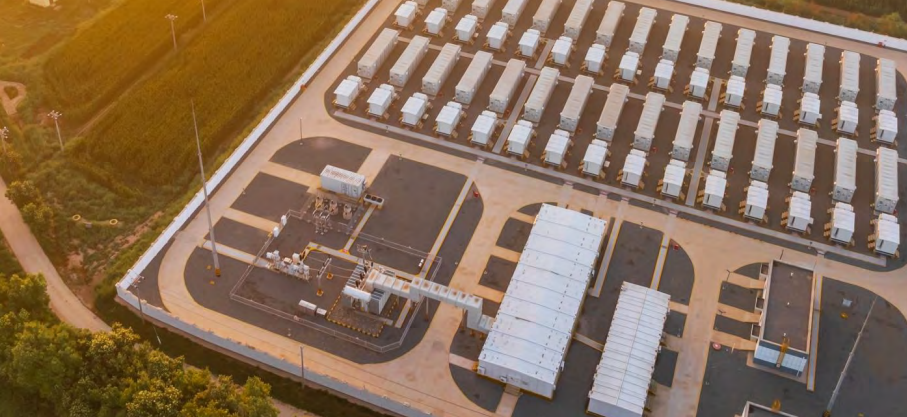
Castle Group recently had two projects endorsed by the NSW government’s investment delivery authority, being the Western Sydney 1,000 MW / 4,000 MWh Kemps Creek battery energy storage system (BESS) and the Regentville 900 MW / 3,600 MWh BESS.
The Kemps Creek site is proposed as part of a Microsoft technology and innovation park incorporating a data centre of up to 750 MW.
When the government’s endorsement was received, Castle Group Founder and Group Chief Executive Officer Ritchie Perera said it reflected the growing importance of large-scale energy and data storage infrastructure in supporting Western Sydney’s next phase of growth and New South Wales’ transition to renewable energy.
“Western Sydney is nationally significant land with nationally significant responsibility. As population growth, advanced industry, logistics, health and digital demand expand, grid reliability and infrastructure resilience become central to economic resilience and community confidence,” Perera said.
Law firms are also moving into renewable energy transaction such as Sydney-based HFK Lawyers, which has been involved in more than 50 renewable energy land deals, Moroko said.
“When your commercial property partner has done fifty option deeds and leases over renewable sites, that tells you the whole professional ecosystem has moved, not just the developers.”
Moroko said the property industry’s capability built over three decades in land acquisition and approvals is now the scarce input in the clean energy sector with a far larger balance sheet behind it.
“Developers, agents and advisers who understand option structures, planning pathways and land assembly are finding that expertise repriced,” Moroko said.
“For rural landowners, the pace of the shift has outrun the advice available to them. Farmers are being approached directly by developers with option and lease proposals they have no way of benchmarking, in a market where value is driven by factors that have no residential equivalent, principally proximity to transmission and available grid capacity.”
Moroko added that the energy transition needs the capability offered by property professional.
“Urgently, and at a scale the residential market has never operated at. Anyone in property who thinks renewables is a different business is going to look up in five years and find their competitors already made the move.”
This content is protected by copyright and may not be reused. If you want to cooperate with us and would like to reuse some of our content, please contact: [email protected].

Please login to comment