Missing line in home battery retrofit quotes: what happens to existing solar?
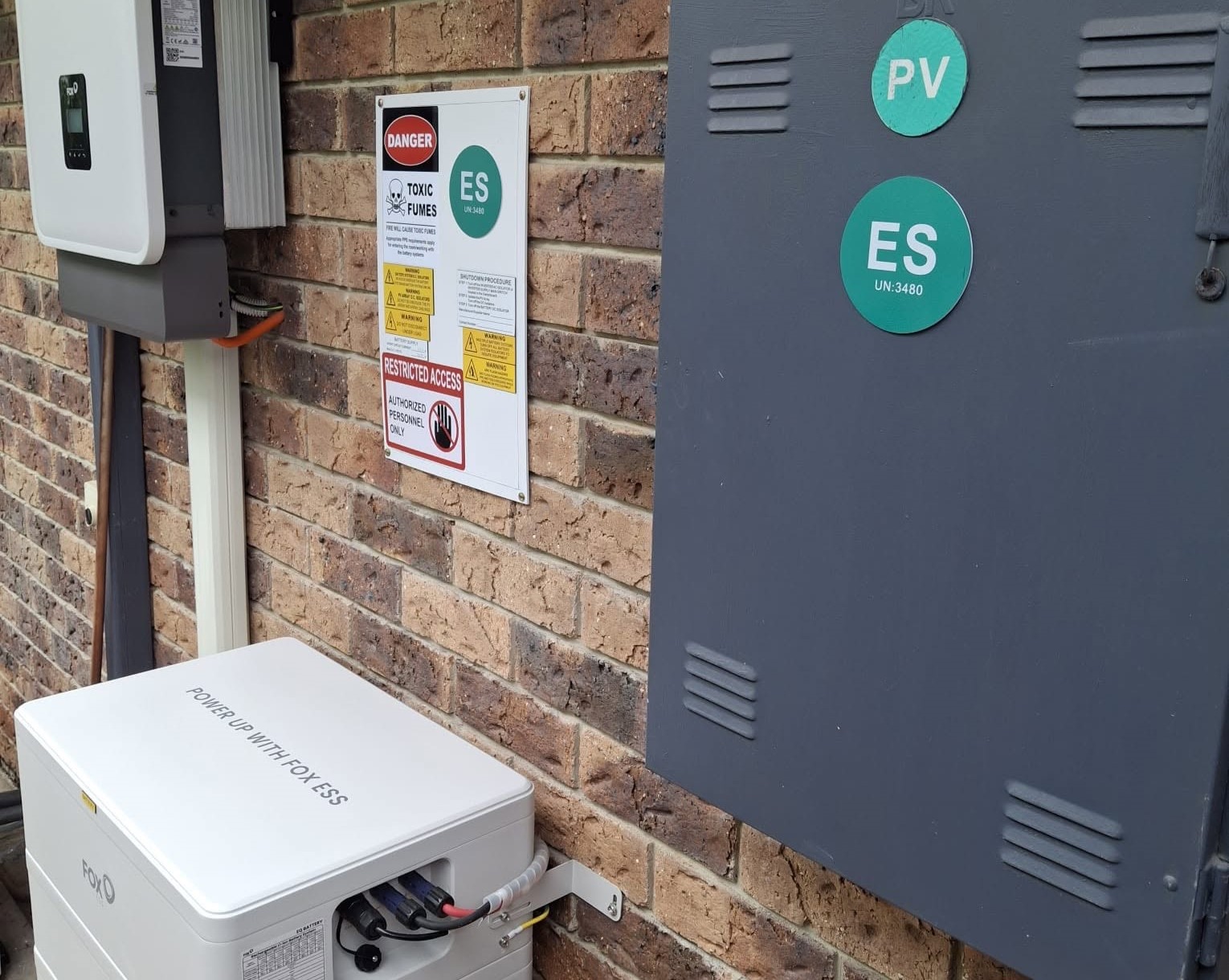
How the new equipment will work with the existing system is often compressed into a phrase such as “compatible with existing solar” or left for the installation team to resolve later.
That missing explanation is one reason apparently similar battery quotes can describe quite different jobs.
SUNNY Energy reviewed 37 genuine pre-sale conversations with Queensland homeowners between June and September 2026. Advertising prompts, contact collection, routine chat and post-installation messages were excluded. Nineteen of the 37 conversations raised the existing solar system or inverter.
The homeowners were not asking abstract engineering questions. They wanted to know whether their current inverter would stay, whether three-phase supply changed the design, whether the battery could charge from solar during a blackout, and whether metering or export control would need to change.
Those questions point to five items that should be explicit in a retrofit proposal.
State what remains and what is replaced
The first line should identify the existing equipment that will remain in service.
In many retrofits, the existing solar inverter can be retained and a separate battery inverter added. The Australian government’s Solar Consumer Guide describes this as the usual AC-coupled arrangement when adding a battery to an existing solar system. The solar inverter continues converting panel output to AC, while the battery inverter charges and discharges the battery.
That can avoid replacing equipment that is still useful. It also means the completed system contains two power-conversion paths that need to be configured and monitored as one household energy system.
Another design may replace the existing inverter with a hybrid inverter and rearrange the way the solar and battery connect. That can be appropriate in some projects, but it is a materially different scope. The proposal should not leave the homeowner to discover after signing whether the existing inverter stays, is relocated or is removed.
A clear retrofit quote therefore names the existing inverter, records whether it remains, and identifies any compatibility check that is still conditional on site verification.
Draw the energy path, not just the equipment list
An equipment schedule tells the reader what products are present. It does not necessarily show how electricity will move between the panels, battery, household loads and grid.
A simple single-line diagram or plain-language energy-path note can remove much of this uncertainty. It should show which inverter receives solar generation, how the battery is charged, where consumption and export are measured, and what controls the system.
This matters because “10 kW inverter” and “40 kWh battery” answer different questions. Inverter power affects the rate at which energy can be delivered at one time. Battery capacity describes the energy available over time. Existing solar capacity is another separate value.
When these figures are collapsed into one package label, a homeowner can easily assume that more storage also means more simultaneous backup power or a higher solar charging rate. The written energy path makes those limits easier to see before installation.
Record phase, metering and export assumptions
The property’s supply phase and the existing inverter configuration affect the design.
On a three-phase property, for example, a single-phase battery or hybrid inverter generally backs up circuits connected to that phase. Metering can still account for energy across the property, but outage operation is a physical circuit question, not merely a billing calculation.
The proposal should also say whether the existing meter arrangement is suitable, whether a new meter or consumption meter is required, and whether the project changes an existing network connection or export setting.
These points are easy to postpone because the final connection work sits behind the sales document. However, they can affect equipment choice, commissioning time and what the customer sees in the monitoring app. If an assumption is not yet confirmed, marking it “subject to site and network verification” is more useful than omitting it.
Describe blackout behaviour as a sequence
“Backup included” is not a complete description of what happens when the grid fails.
Most grid-connected solar-only systems shut down during an outage for anti-islanding safety. A battery can provide backup only if the system is designed and configured for it. Depending on the design, the existing solar inverter may also shut down, leaving the battery to supply selected loads until its stored energy is depleted. An islandable solar-and-battery system may continue using solar generation and recharge the battery while disconnected from the grid.
The difference is important, especially for a homeowner who expects the existing rooftop solar to keep the house running through a long daytime outage.
A useful proposal explains the sequence:
- what disconnects when the grid fails;
- which circuits remain energised;
- whether the existing solar continues operating;
- whether solar can recharge the battery during the outage; and
- what power and energy limits the homeowner must manage.
It should also distinguish selected-circuit backup from whole-property backup. On three-phase sites, it should identify which phase and circuits are supported rather than relying on the word “whole-home”.
Make commissioning and handover part of the retrofit
The final integration is not complete when every unit is fixed to the wall.
The Queensland Electrical Safety Office says a licensed electrician should install, test and commission a battery energy storage system in accordance with manufacturer instructions and relevant standards. It also says the installing electrician should explain safe operation, warnings, shutdown and maintenance during handover.
For a retrofit, commissioning should also confirm that the existing solar, new battery, meter or current transformers, export controls and monitoring platform are reading and responding as intended.
The customer handover should identify which app shows solar generation, household consumption, battery charge and discharge, grid import and export. If the existing inverter keeps its own monitoring portal, the customer should know whether one app or two will be needed and which system is authoritative for each value.
Serial records, commissioned settings, network approval references and the final circuit or single-line diagram should remain available for future support. A battery retrofit may be serviced years later by someone who did not design it. Good records reduce the amount of the system that must be rediscovered.
What operating data can show — and what it cannot
One anonymised southeast Queensland retrofit provides a useful example of why the energy path matters.
The verified system combined a FoxESS KH9.9 inverter with four EP11 battery modules, providing 41.44 kWh of total storage alongside existing solar. FoxESScloud recorded 942.9 kWh of battery discharge across 31 active days in July 2026, an average of about 30.4 kWh per day.
That is evidence of substantial battery utilisation. It is not, by itself, the customer’s bill saving. The financial result also depends on the source and cost of charging energy, import tariffs, export income, household consumption, system settings and losses.
The case is more useful as integration evidence: the installed storage was being charged and discharged within the household’s existing-solar energy path. A proposal that only listed “41.44 kWh battery” would have omitted the inverter path, retained solar, monitoring and commissioned controls that made the system operable.
The line every retrofit quote needs
There is no single coupling arrangement or backup design that suits every existing solar system. The useful standard is not uniform hardware; it is a written explanation that lets the customer, installer and future service technician understand the intended result.
Before a homeowner compares battery retrofit prices, the proposal should answer five questions:
- Which existing equipment remains?
- How will solar, battery, loads and grid connect?
- What phase, metering and export assumptions apply?
- What exactly happens during a grid outage?
- What commissioning records and monitoring handover will be provided?
When these items are visible, two quotes can be compared on scope rather than on battery capacity alone. When they are missing, the most important part of the retrofit is left to interpretation.
Author: Richard Liu, owner, SUNNY Energy
The views and opinions expressed in this article are the author’s own, and do not necessarily reflect those held by pv magazine.
This content is protected by copyright and may not be reused. If you want to cooperate with us and would like to reuse some of our content, please contact: [email protected].
Please login to comment