Electrifying 35% of global energy demand by 2035 within striking distance


A new International Energy Agency (IEA) electrification special report highlights global action needed to maximise the benefits of electrification, which are multiplied by low-emissions sources and investment in grids, resilience, storage, and sources of flexibility.
Prepared at the request of Türkiye, the COP31 President, and Australia, the COP31 President of Negotiations, to inform discussions going into COP31 and beyond, a foreword by Federal Minister for Climate and Energy Chris Bowen said the report arrives at a critical moment.
“The global energy shock has prompted many countries to seek ways to strengthen energy security, while still delivering affordable and reliable energy. The analysis by the International Energy Agency shows that electrification acts on each of these challenges, while also supporting economic growth and lowering emissions,” Bowen said.
“Electrified economies, powered with clean energy, and backed by modern grids and storage, are an enduring answer. A significant finding of the report is that we already have the means to deliver an electrified world today.”
“For our homes, businesses and communities, substantial cost-effective electrification potential can be achieved with technologies that are already commercial.”
Based on technologies available today and energy prices at the levels seen before the onset of the Strait of Hormuz crisis, the report finds that electricity could cost-effectively meet 33% of the world’s final energy consumption by 2035, up from 23% today. This would put the 35% goal that is under discussion within striking distance, according to the report.
The report also highlights that fuel-importing countries could cut their import bills by more than $400 billion (USD 280.5 billion) a year from 2025 levels, average household energy bills in the High Electrification Scenario fall by around 15% by 2035, and electric vehicles (EVs) already avoid 2.3 million barrels of oil a day, more than the volume that bypassed the Strait of Hormuz via the Habshan-Fujairah pipeline in the European summer 2026.
It also says electricity grids need to be modernised and expanded 40% faster to 2035, compared to the past decade, to connect new supply and rapidly growing demand in the High Electrification Scenario.
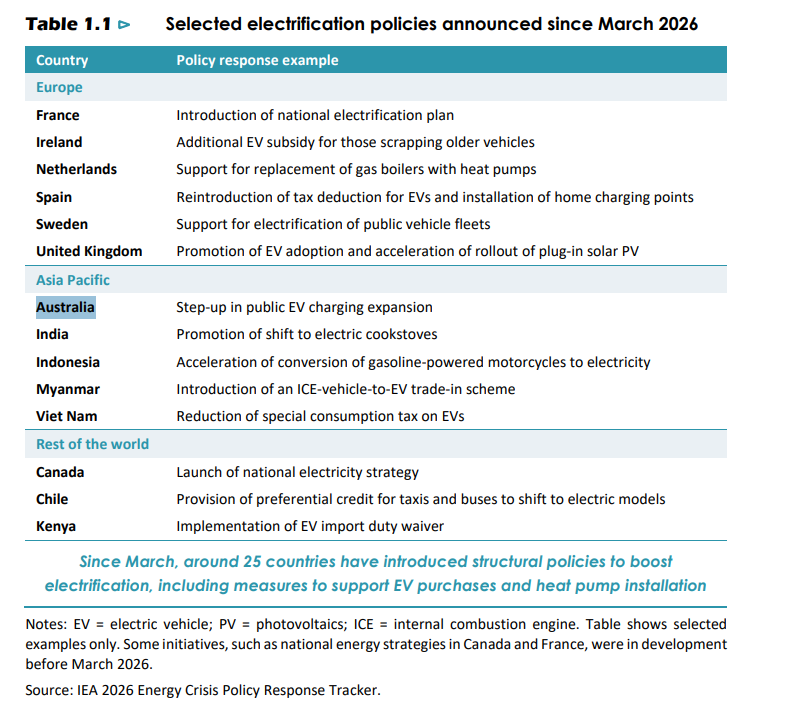
In a scenario based on today’s global policy settings, the global electrification rate reaches around 30% by 2035 highlighting the action that would still be needed to meet the 35% global target.
Electrify Now Global Co-ordinator and Energy Efficiency Council Head of Electrification Anna Freeman welcomed the COP31 Presidency’s leadership in placing electrification at the centre of its global climate action agenda.
“It’s great that the role of electrification in the energy transition now has the policy attention it deserves. In addition to doubling energy efficiency and tripling renewable energy, the science tells us we have to quadruple the rate of electrification over the next decade. It’s a large and urgent task – made all the more urgent by the latest in a long line of energy crises,” Freeman said.
United Kingdom-headquartered energy transition think tank Ember Energy Co-founder and Chief Analyst Dave Jones said the report gives nations the evidence to show that faster electrification is a triple win.
“A win for cheaper bills, a win for less emissions and pollution, and a win for cutting the huge fossil fuel import bill many countries face today.”
Climate Action Network (CAN) International Energy Transition Senior Manager Janet Milongo said the 35 by 35 target will only represent climate progress if it is powered by sustainable renewable energy.
“Success cannot be measured simply by how much of the world’s final energy consumption becomes electric. We must ask what generates that electricity, who has access to it, who owns the infrastructure, and whether it is helping countries transition away from fossil fuels,” Milongo said.
“Developing countries must have the resources and capacity to own, govern and shape their electricity systems in the public interest.”
This content is protected by copyright and may not be reused. If you want to cooperate with us and would like to reuse some of our content, please contact: [email protected].

Please login to comment