Utility solar generation reaches record highs in NEM

The latest data from global energy consultancy Rystad Energy shows that Australia’s fleet of large-scale solar and wind assets generated 5.44 TWh of clean energy last month, an increase on the 4.99 TWh generated in August and up 7% from the 5.1 TWh recorded in September 2025.
Rystad senior analyst David Dixon said Victoria was the biggest contributor to the monthly total with the state’s utility-scale solar assets generating a record 276 GWh of clean energy while its wind assets produced 1,250 GWh – a total of 1,526 GWh.
Dixon said utility PV generation also reached record highs in New South Wales (NSW) and Queensland, totalling 841 GWh and 645 GWh respectively.
Curtailment of solar dropped year-on-year with 22% of available generation in the National Electricity Market (NEM) curtailed last month, compared to 26% in September 2025.
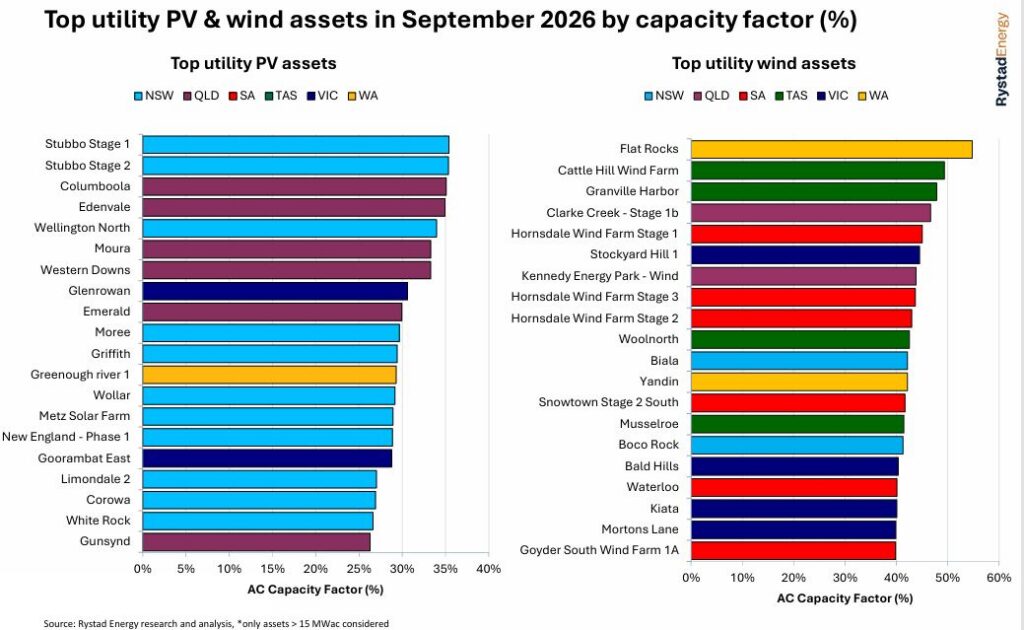
Acen Australia’s 400 MW Stubbo Solar Farm, in central west NSW, was ranked Australia’s top-performing PV facility for the month with an average AC capacity factor (AC CF) of 35%.
The 162 MW Columboola Solar Farm, owned by South Korea’s Hana Financial Investment, and the 204 MW Edenvale Solar Park, co-owned by Japanese companies Eneos and Sojitz, also notched 35% AC CF.
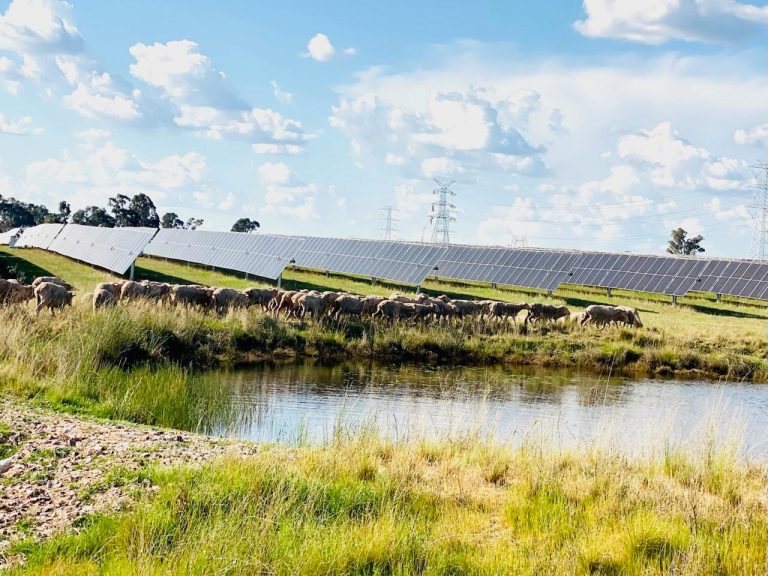
The performance of the Stubbo Solar Farm, which commenced full commercial operations in late 2025, coincided with the recent arrival of a mob of 250 sheep at the site as part of Acen’s shared land use approach that supports grazing, land management, and bushfire preparedness alongside renewable energy generation.
“Agriculture and renewable energy don’t need to compete for land,” the developer said. “At Stubbo Solar, we’re proud to demonstrate how farming and clean energy generation can work hand in hand, supporting local agricultural practices while delivering renewable energy into Australia’s electricity network.”
Acen said the integration of sheep grazing helps keep the land productive while providing practical benefits for site management.
“It’s a simple but effective example of how renewable energy projects can continue to support agricultural activity and create shared value for regional communities,” the company said.
While solar generation continued to reach record high, wind generation in September 2026 was flat or down relative to the same time last year in all states except Queensland.
Wind generation for September 2026 was down about 86 GWh compared to September 2025 while about 13% of available generation in the NEM was curtailed.
The top-performing wind assets for the month were the Flat Rocks facility in Western Australia with a 55% CF, followed by the Cattle Hill and Graville Harbor wind farms in Tasmania, with 49% and 48% CF respectively.
This content is protected by copyright and may not be reused. If you want to cooperate with us and would like to reuse some of our content, please contact: [email protected].

Please login to comment