As grid complexity grows, Australia’s transmission networks face a widening operational capability gap

Published in September, the Australian Energy Market Operator’s (AEMO) Transmission System Operational Capability Framework (TSOCF), developed jointly with industry stakeholders, identifies the widening gap between power system complexity and operational capability as an emerging resilience risk.
As generation and demand patterns change, network businesses face increasing demands on the information and systems used to assess network conditions, plan changes and support operational decisions.
Equipment ratings illustrate why this matters. These limits determine how much power transmission lines and other network equipment can safely carry under particular operating conditions.
Ratings depend on factors such as asset characteristics, temperature and weather, and may be static or dynamic, with seasonal and temperature-based approaches also used.
Calculating and applying ratings requires reliable engineering information. But the relevant data can sit across different systems, including network models, asset management systems and engineering calculations.
When information must be brought together manually, it becomes harder to maintain consistency, traceability and a shared view across teams.
Ratings are one part of a wider network model management problem. As networks change, operators and planners need accurate models of how the system behaves, supported by asset information and engineering calculations that can be checked and verified. They must also manage proposed changes and communicate how the network may look and behave in the future.
This is especially important when transmission and distribution networks are planning around the same constraints and future demand.
If teams work in silos, they risk developing plans without a shared understanding of network conditions, proposed changes or investment needs.
Better coordination helps ensure decisions about one part of the system take account of what is happening elsewhere.
There is also a workforce challenge. As experienced engineers retire or move on, network businesses need to retain the knowledge behind engineering decisions.
If that knowledge sits largely with individuals or depends on processes that are difficult to reproduce and audit, it becomes harder to transfer and apply consistently.
The TSOCF recognises that operational capability involves more than technology.
It covers people, processes, systems, data, tools and governance, providing a voluntary, industry-developed framework for AEMO and transmission network service providers to consider how they can respond to increasing system complexity.
For network businesses, the response is not necessarily another standalone tool. It may involve integrating existing systems more effectively, improving how engineering information is shared and coordinating more closely across engineering, planning and operational teams.
Demonstrating how information supports assessments and decisions can also help build the case for investment in enabling technologies.
As Australia’s electricity system evolves, network businesses will need the tools, engineering information and coordination to plan for change. The priority is ensuring the people and teams responsible for the network share a reliable understanding of how it operates today and how it may need to change.
*
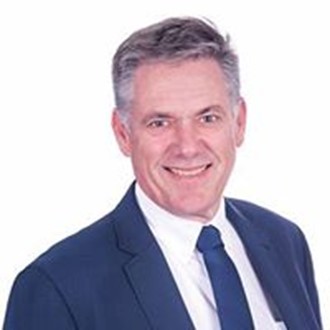
Author: Global provider of engineering and operational software for electricity and gas network operators.IPS-Energy APAC General Manager Peter Howarth. Printed with permission.
The views and opinions expressed in this article are the author’s own, and do not necessarily reflect those held by pv magazine.
This content is protected by copyright and may not be reused. If you want to cooperate with us and would like to reuse some of our content, please contact: [email protected].
Please login to comment