Three minute battery cell health check could transform recycling and second-life potential

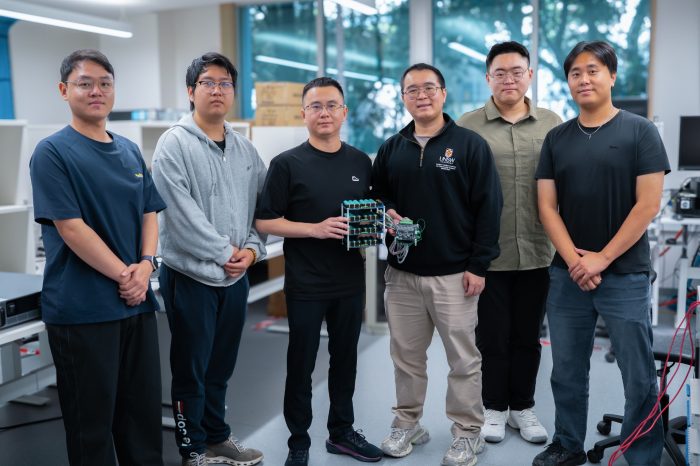
Researchers from the University of New South Wales (UNSW), Sydney have developed a prototype to test battery health, that is 95.5% faster than existing testing and over 80% cheaper, with implications for reducing landfill and improving second-life use.
Designed to work with the management systems already used by recyclers and energy storage operators, the platform will assess the three main lithium-ion chemistries used in electric vehicles (EVs) and energy storage: lithium iron phosphate (LFP), nickel cobalt aluminium (NCA) and nickel manganese cobalt (NMC).
Current used-battery testing relies on an approximately 10-hour full charge-discharge process, which can lead to overheating and fire if damaged batteries endure hours of high-stress cycling. It also costs around $120 (USD 85) per EV battery pack.
Instead, the UNSW prototype platform uses short electrical pulses through each battery cell, and measures how cells respond. Statistical models then estimate the battery’s health in under three minutes per cell, with lab testing showing more than 90% accuracy. The target cost is under $25.
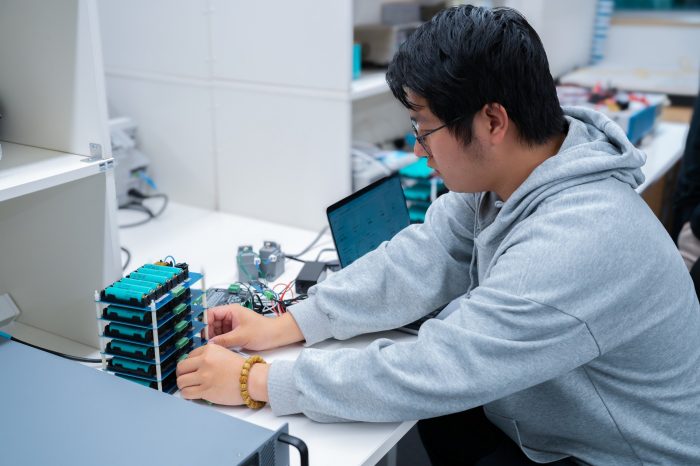
UNSW School of Systems and Computing Associate Professor Huadong Mo said as more electric vehicles (EVs) reach the end of their life, Australia has a real opportunity to build a local second-life battery industry, with retired batteries supporting grid and comunity energy storage.
“Up to 95% of a battery’s components can be recovered, some even to make new batteries. Yet only a small fraction of lithium-ion batteries in Australia are collected for recycling today,” Mo said.
The researchers have partnered with Malaysia-headquartered battery recycling and lifecycle management company DY New Energy on a $1.3 million project to test the new technology on more than 500 batteries in real-world conditions.
Before piloting it in recycling facilities and second-life battery storage systems, the DY and UNSW researchers will develop and test a machine learning-powered decision engine that recommends whether retired batteries should be reused or recycled.
A Battery Management System (iBMS) module will then integrate insights directly into battery systems for real-time monitoring and decision support.
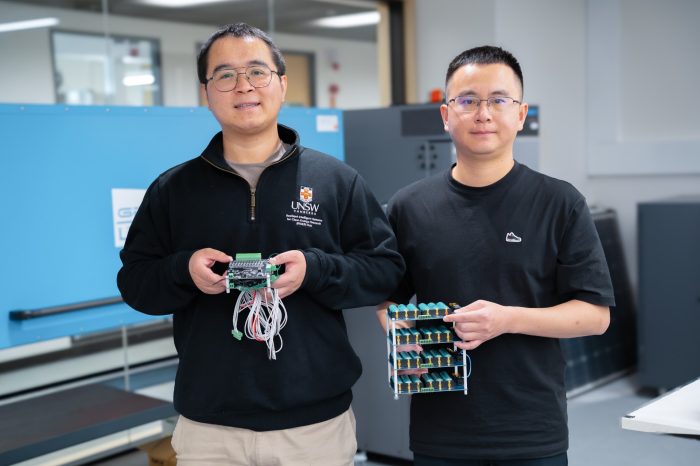
UNSW School of Mathematics and Statistics, and Research Lead Dr Ziyang Lyu said recyclers rarely receive neatly sorted batches.
“One day it might be LFP cells, the next a mix of nickel-based chemistries from different manufacturers. We’ve designed our models to handle that variety, so the platform works with the batteries operators actually receive, not just ideal lab samples,” Lyu said.
Dr Lyu said the technology may also play a role in managing the growing number of batteries used in stationary energy storage systems.
“This technology could also support the future reuse and recycling of Australia’s rapidly expanding fleet of stationary energy storage systems, contributing to a more sustainable and circular battery economy.”
The project is also supported through the Trailblazer for Recycling and Clean Energy (TRaCE) Lab to Market Fund.
DY New Energy announced 13 November 2026 it will partner with the Australian Research Council’s (ARC’s) Fire Resilience Infrastructure, Assets and Safety Advancements (FRIASA) Hub to advance safe and scalable battery recycling.
This content is protected by copyright and may not be reused. If you want to cooperate with us and would like to reuse some of our content, please contact: [email protected].

Please login to comment