Two-stage pyrolysis process turns waste solar panels into silicon carbide

Russian researchers have developed a two-stage process to convert waste solar panels into silicon carbide (SiC), a silicon-carbon compound valued for its hardness, thermal conductivity, and resistance to heat and corrosion. SiC is widely used in applications including power electronics and refractory ceramics.
“The rapid growth in the number of solar panels worldwide is making the issue of their utilisation increasingly urgent,” the researchers said. “This paper presents the results of an experimental study on the recycling of spent solar panels using pyrolysis and vacuum-free plasma electric arc conversion methods, to obtain carbon residue, silicon carbide, and synthesis gas that can be used for energy production.”
The researchers used a decommissioned polycrystalline silicon solar panel, which they shredded and pyrolysed at 500 C under a continuous nitrogen flow to decompose its polymer components and obtain a carbon-containing solid residue.
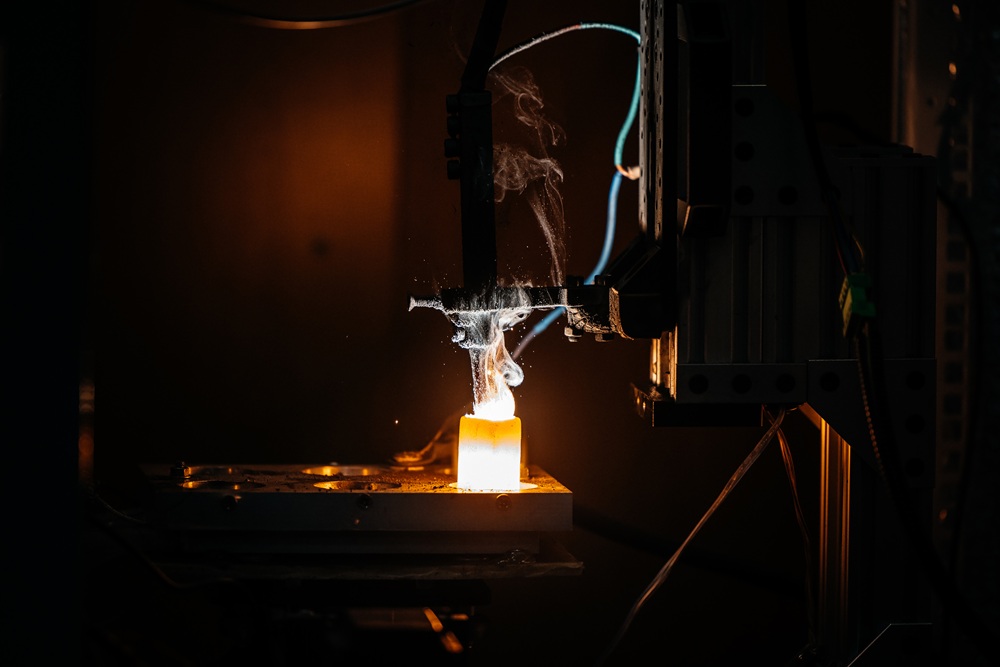
They then processed batches of approximately 2 g of the material in a graphite crucible using a vacuum-free electric arc reactor. The reactor operated at 200 A for 60 seconds, reaching temperatures above 1,800 C.
The scientists tested different carbon additions, using carbon black to promote the conversion of silicon-containing compounds into SiC. They compared the resulting products with those obtained from panel material treated directly in the electric arc reactor without prior pyrolysis.
The researchers then used electron microscopy, X-ray diffraction, and thermal analysis to examine the products’ morphology, crystalline composition, and oxidation behavior.
“Pyrolysis helped accomplish several tasks at once: removing polymers that interfere with further processing, obtaining a solid carbon residue, and collecting gaseous products,” said Zhanar Bolatova, one of the researchers involved in the study. “According to our calculations, the average yield of carbon residue was 45.8% of the mass of the material being processed.”
Bolatova said the maximum methane concentration in the gas mixture reached 5% by volume, while carbon monoxide and carbon dioxide concentrations were approximately 0.6%.
“Analysis of the composition also confirmed the advantage of preliminary pyrolysis,” she said. “After this treatment, the iron silicide phase disappeared from the final product. This reduced the amount of unwanted impurities and increased the proportion of the target silicon carbide.”
The results also showed that increasing the carbon content of the starting mixture from 0% to 30% raised the proportion of SiC in the solid product from 46% to 61%. At the same time, the share of free silicon fell from 19.7% to 8.3%, while silicon dioxide declined from 3% to trace levels.
The researchers said the results indicate that the additional carbon promoted the conversion of silicon into SiC.
The researchers described the process in “Stage Recycling of Solar Panels by Pyrolysis and Vacuum-free Electric Arc Conversion to Produce SiC,” published in Silicon. The research team included scientists from Russia’s National Research Tomsk Polytechnic University and Sevastopol State University.
From pv magazine Global
This content is protected by copyright and may not be reused. If you want to cooperate with us and would like to reuse some of our content, please contact: [email protected].

Please login to comment