Thermal energy storage delivers industrial heat but can solve grid issues too

A September 2026 IEA report proposed a 35% global electrification target by 2035 was in “striking distance” thanks to existing commercial technologies such as electric vehicles and battery storage systems but did not include the electrification of hard-to-abate sectors, despite market ready technologies existing.
Mineral processors, food manufacturers and chemical plants, which run 24/7 on continuous high-temperature steam require the significant heat thermal energy storage systems (TESS) can deliver reducing dependence on fuels such as natural gas.
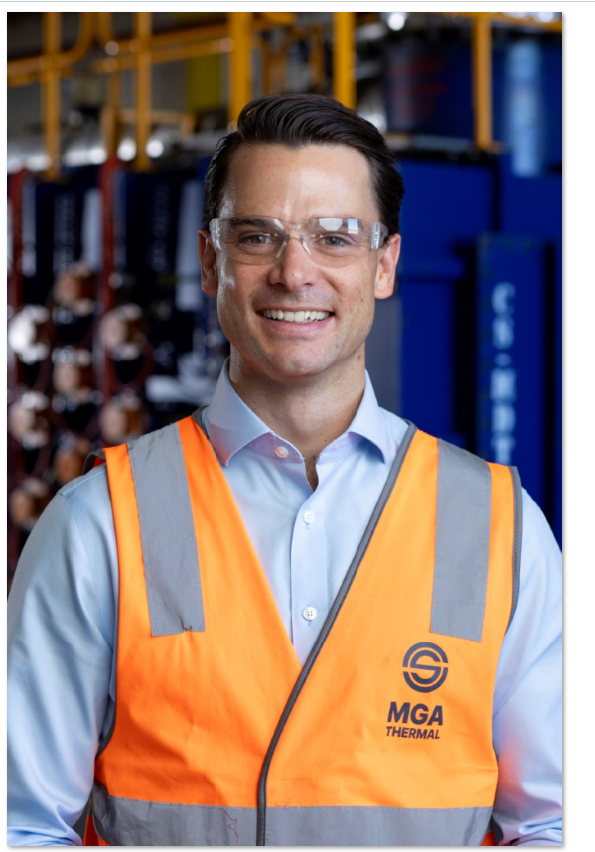
MGA Thermal Head of Business Development Will Furness spoke to pv magazine about the company’s electro-thermal energy storage system (ETES), designed to carry the hardest of industrial loads, but also shows potential to solve issues impacting the grid, such as renewable curtailment.
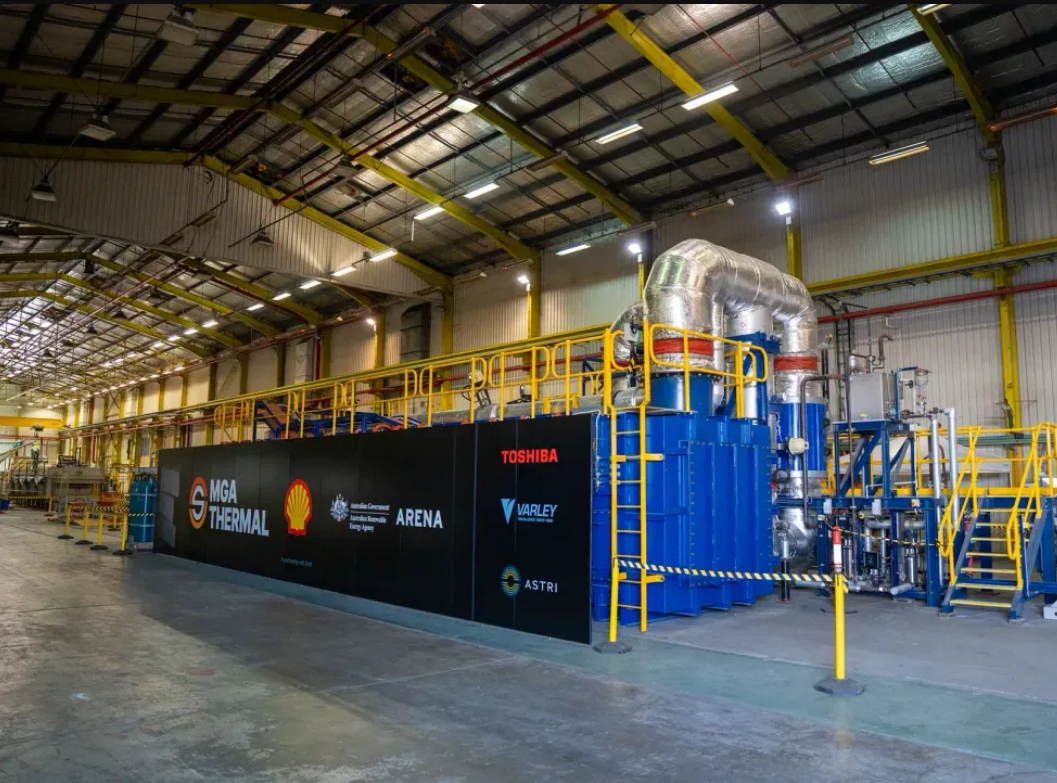
MGA Thermal utilises proprietary miscibility gap alloy (MGA) blocks deployed in its ETES, which are made from aluminium and graphite to store surplus renewable energy as heat (reaching core temperatures around 550°C or higher) to dispatch it as industrial-grade clean steam or electricity.
Is MGA Thermal’s ETES customer ready?
The business case and value proposition for thermal energy storage is founded on economics. We are already today delivering heat at a lower operating cost than conventional fossil fuel boilers.
It’s already cheaper today and if it’s powered by renewable electricity then its eliminating scope 1 and 2 emissions, so it’s reliable, affordable and sustainable power to those industrial businesses.
As we get the reference projects like Tronox in Western Australia (WA) across the line, it will continue to drive capital costs down further and further, and I think we’re going to see the pivot point over the next few years, where industrial businesses have that widespread adoption of thermal energy storage for industrial heating applications.
What is the Tronox project?
Tronox is our flagship project. It’s a 200 MW thermal energy storage project in the Kwinana industrial precinct in Western Australia and is Australia’s largest thermal energy storage project, to date.
That’s going to deliver 20 tonnes per hour of super-heated steam into Tronox’s titanium dioxide pigment facility, around the clock, so directly displacing a large volume of natural gas for industrial heating.
What’s exciting about that project is that while it’s Australia’s largest demonstration of the technology project that’s been announced to date, it’s also a demonstration for them. They’ll go five times larger on that site, and they’ve got a number of other sites around the world in other regions, which they could look to replicate this technology if it’s successfully demonstrated in Kwinana.
What about the MGA Thermals 5 MW demonstration project?
That’s a full turnkey unit which has been operational for almost 18 months in Newcastle and it really provides that technical proof point and validation of performance to give customers the confidence to then invest in projects.
That platform did allow us to secure projects with customers like Tronox, and we’ve got a broader pipeline of opportunities here in Australia and abroad off the back of that success. It’s technically proven, it’s commercially feasible and projects are progressing.
What are some advantages of thermal energy storage?
Steam is what industrial customers want and one of the great advantages of thermal energy storage is that we can deliver steam at the exact same precise set point conditions, so the same temperature and pressure that those operators already use with really minimal integration requirements.
So, that leads to a really simple like-for-like drop in replacement, so that’s a key advantage.
Another advantage is the technology is very simply. It’s basically a big box, filled with our MGA blocks, powered by electricity that just stores heat really efficiently, which makes it very compact, it’s a fraction of the footprint of batteries, a fraction of the capital cost for the same storage capacity as batteries, and where it really sells for customers or businesses that need heat.
What about the cost?
Thermal energy storage does require a larger investment in the asset compared to other solutions but there is an emerging preference for heat-as-a-service models, or energy-as-a-service models, which essentially introduces a third party that would finance, own and operate that asset on behalf of the industrial customer and deliver the steam into that site.
That means the customer avoids the upfront capital cost of the asset and they can outsource a lot of the technology risk and performance risk to a third party.
In return they need to pay a monthly offtake fee for the steam that is consumed and that can be a really attractive way to get all the benefits of thermal energy storage while overcoming that capital hurdle.
How does this impact the grid?
The last opportunity around thermal energy storage is around grid connection. So, we’re talking about transitioning very large gas loads to electricity and in doing so, unless you’re going to charge it from behind-the-meter, you’re going to need an upgrade to your grid connection, and that can take time and it can be expensive, and there is a lot of uncertainty.
I think we’re starting to see a lot of regulators, networks and energy retailers recognise the broader benefits that thermal energy storage can provide for the grid, beyond just industrial facilities, and that’s starting to help lead to some tariff reform and grid connection process reform to streamline the connection of these electrified assets.
Where batteries are increasingly relied on to firm the grid, can thermal energy storage play a role too?
Our primary user case is industrial heat, but we see where thermal energy storage can solve a lot of problems for the broader energy market.
It’s just a giant energy sink and at the moment, we’re finding there’s a lot of house and businesses with solar on their rooftop and during the middle of the day that solar is being curtailed, and we’re seeing very low feed-in tariffs for that electricity back into the grid.
It’s a huge, wasted resource and we see a world where we can deploy these thermal energy storage assets around the grid to soak up all of that renewable energy during the day at very low cost.
So, it would reduce renewable curtailment and could also improves the utilisation and efficiency of the network and the big benefit for everyone is not just the industrial businesses we work for, but every household, every business and consumer in the network, is that it would reduce the cost of energy for everyone.
This content is protected by copyright and may not be reused. If you want to cooperate with us and would like to reuse some of our content, please contact: [email protected].

Please login to comment