Intium unlocks grid connection for Maryvale solar and battery project

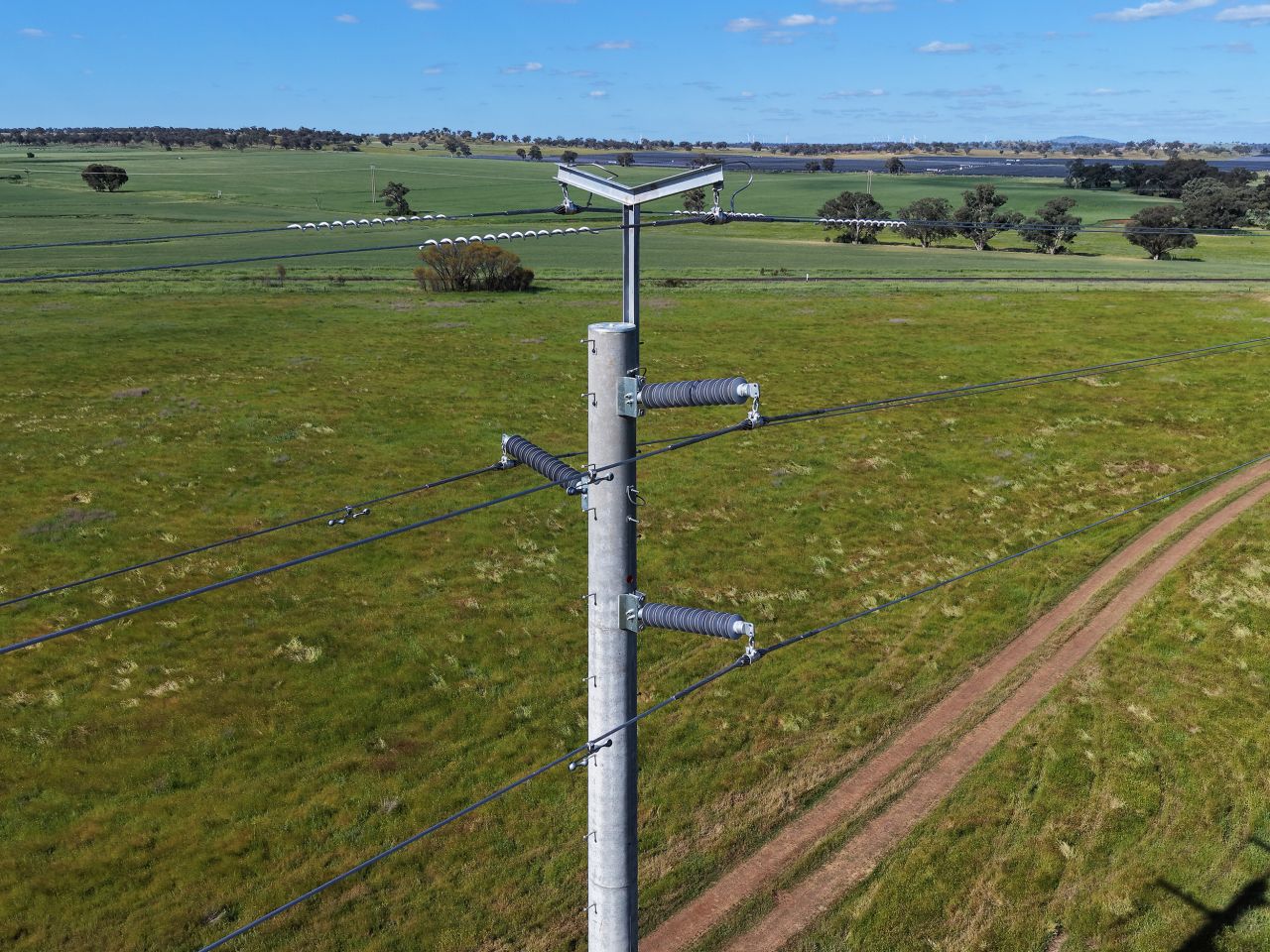
Sydney-headquartered high-voltage infrastructure specialist Intium announced it has completed a new 132 kV transmission line in regional New South Wales (NSW) on budget and about three months ahead of schedule, unlocking a connection point for Gentari’s Maryvale solar and battery project.
The Maryvale project, being built on a 360-hectare site near Wellington in central western NSW, integrates a 243 MWp solar installation with a 172 MW / 409 MWh battery energy storage system (BESS).
The new overhead transmission line, that stretches nine kilometres from Maryvale to network operator Essential Energy’s existing Geurie Zone substation, provides the network connection point required for the Maryvale project to export electricity to the NSW network.
Intium, which delivered the transmission line construction and commissioning program for Essential Energy, installing the 132 kV overhead line with steel and concrete poles and high-capacity fibre, said the project is now complete and awaiting electrification.
“With grid connection delays a persistent bottleneck for renewable projects, the project shows what an end-to-end delivery model can achieve for network operators,” the company said, adding that “this critical network link will support the integration of regional solar and battery storage into the electricity grid and help unlock clean energy generation in the central-west region of NSW.”
The Maryvale solar and battery project, that ranks among Australia’s largest sites using DC-coupled technologies to optimise output and storage management, is expected to commence commercial operations in mid-2027.
Gentari said the project is designed to enhance system strength and inertia, helping to stabilise the grid and ensure that renewables can be integrated more reliably in an area with already high levels of renewable penetration.
“By combining solar PV with a BESS connected on the DC side of the inverter, Maryvale can capture surplus midday solar, reduce energy losses by avoiding unnecessary AC-DC conversion cycles, and optimise output without increasing its land footprint,” the developer said. “The BESS is capable of firming and smoothing variable solar supply, shifting energy to align with demand, and providing essential grid support services such as Frequency Control Ancillary Services (FCAS).”
“Together, these features position Maryvale as a flexible, grid-strengthening power station tailored for Australia’s modern electricity system.”
The project was one of the first solar-BESS hybrid projects to win a Long Term Energy Storage Agreement (LTESA) through the NSW government auctions.
This content is protected by copyright and may not be reused. If you want to cooperate with us and would like to reuse some of our content, please contact: [email protected].

Please login to comment