NEM gains 890 MW from 90,000 rooftop solar systems installed in Q3 2026

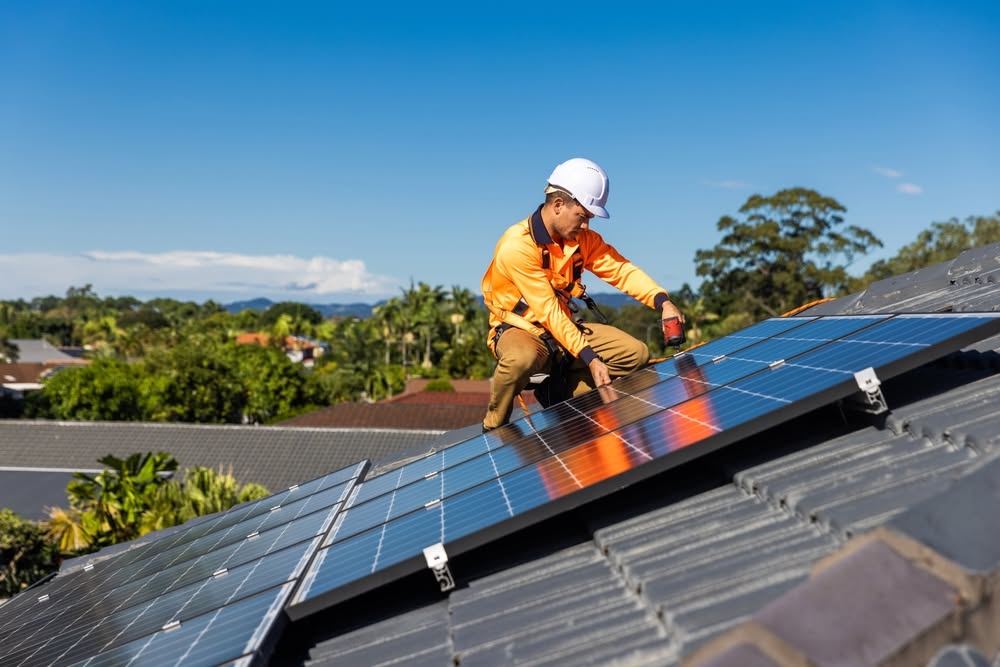
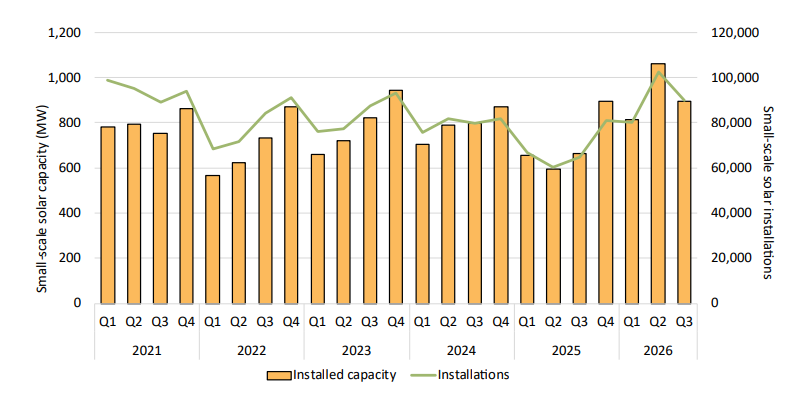
Recording its strongest September quarter, rooftop solar installations reached approximately 90,000 systems delivering 890 MW of capacity for the National Electricity Market (NEM), and boosting 2026 installations to 2.8 GW, according to the Clean Energy Regulator’s (CERs) Quarterly Carbon Market Report (QCMR) Q3 2026.
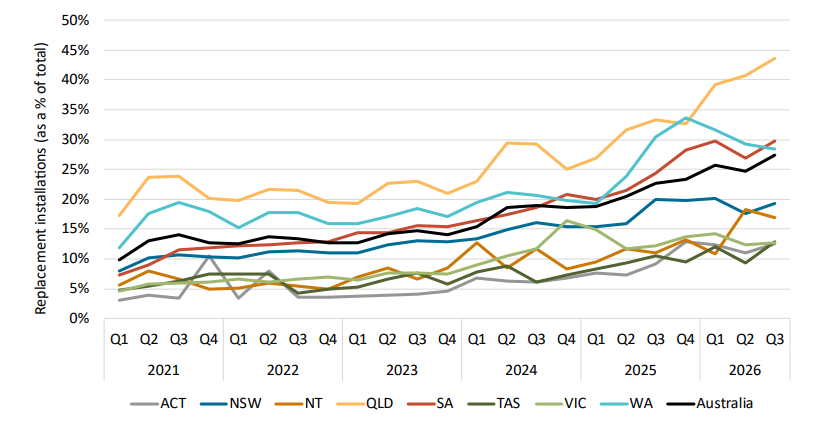
Almost one third of installations were replacement systems with an associated trend of replacement systems being substantially larger, however CER data on replacements over the past five years show systems are generally being retained for longer before replacement.
The CER report says annual rooftop solar capacity is tracking towards the upper end of its 3-3.7 GW projection range and will exceed the previous annual record of 3.2 GW.
“With 2.8 GW installed by the end of Q3 2026, rooftop solar remains the foundation of Australia’s consumer energy market,” the report says.
The Australian Energy Market Operator (AEMO) also found that growth in distributed solar exceeded growth in total (grid plus distributed) electricity demand in Q3, finding that households with rooftop solar and batteries imported 74% less electricity during the evening peak than households with solar alone.
Year-on-year wholesale spot prices for Q3 saw a 27% drop compared to 2025, which the CER says is the lowest Q3 average since 2021.
Installations bolstered by batteries
The QCMR says solar systems installed have predominantly been driven by investment in residential batteries in all 5 quarters since the Cheaper Home Batteries Program (CHBP) began on 1 July 2025, and more than solar-only installations.
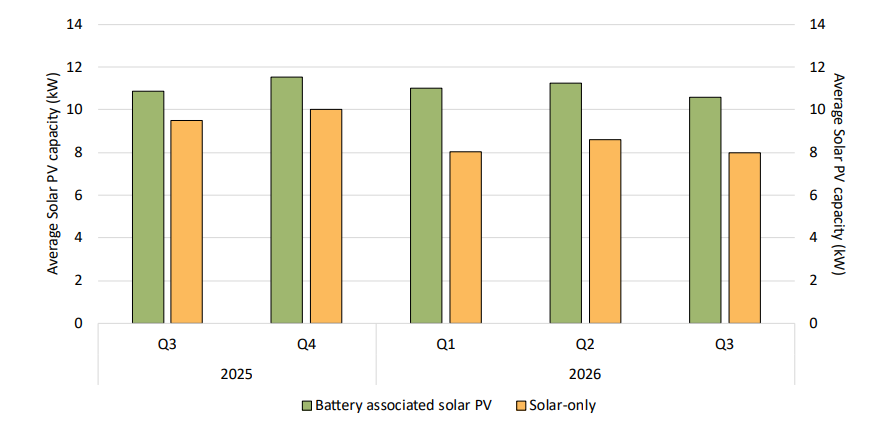
“During Q3 2026, solar systems installed alongside battery storage averaged 10.6 kW, compared with 8 kW for solar-only systems. The larger system sizes suggest battery storage is increasingly being taken into account when households and installers determine the scale of rooftop solar investments,” the report says, adding rooftop solar and battery investment is increasingly becoming linked.
“The shift toward concurrent installation of batteries and solar that was visible following the 1 May 2026 changes persisted through Q3,” the report says.
“While around 45% of approved batteries installed were part of a new or upgraded rooftop solar system in April 2026, this rose to around 59% between May and September 2026.”
This content is protected by copyright and may not be reused. If you want to cooperate with us and would like to reuse some of our content, please contact: [email protected].

Please login to comment