Securing power purchase agreements a barrier for large-scale renewables


A significant number of renewable energy projects without power purchase agreements (PPAs) is a key impediment to renewables projects progressing to construction, according to an Institute for Energy Economics and Financial Analysis (IEEFA) report.
The Australian Renewable Energy Scorecard, released in September 2026, tracks the progress of renewable energy projects across Australian through key development milestones, their capacity, and level of investment and employment the projects could offer.
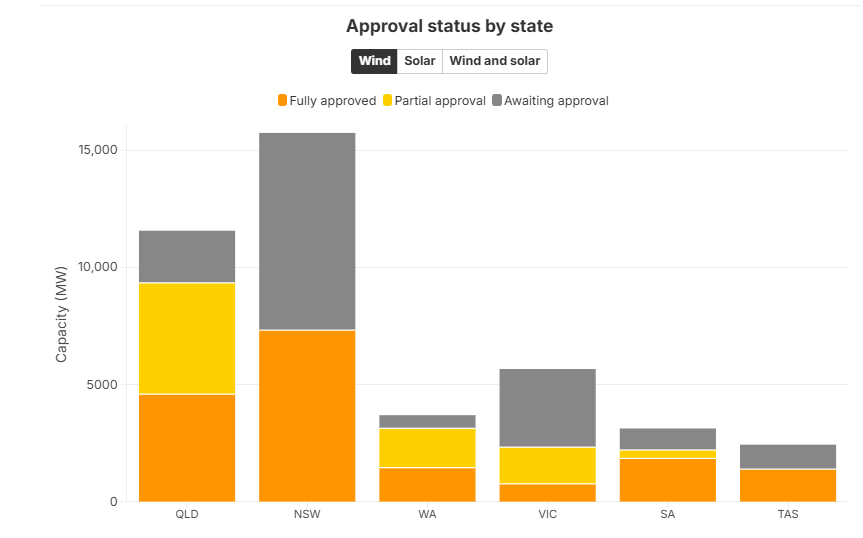
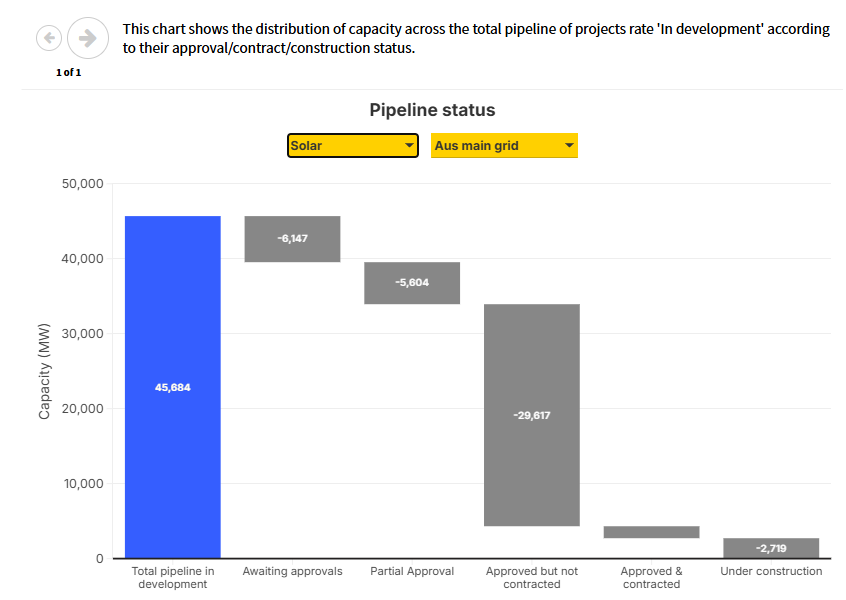
The Scorecard says there are several hurdles involved in converting projects under development to ‘Under construction’ and include securing planning and environmental approvals; securing grid connection and transmission access; and securing financing and final investment decision. In some cases, two or more fully approved projects might be located in close proximity and, due to constrained transmission capacity, only one can or will viably proceed.
Across the solar, and wind, pipeline, the IEEFA Scorecard suggests the biggest barrier to a project’s progress is its ability to secure PPAS.
In the past quarter, 6% of approved projects across Australia’s main have also been contracted and is show to be a pivotal factor that is constraining the scale of projects under construction to well below what is required to achieve 82% by 2030.
Only 25% of solar projects are waiting on one or more approvals but the main hindrance is converting approved projects to contracted then construction.
Large-scale renewables: What’s approved?
In order to comfortably meet the 82% target by 2030, each state needs to build up a bank of fully approved capacity that substantially exceeds the new capacity required to be operational by 2030. This buffer accounts for the time it takes projects to move from fully approved to operational, and for the range of other hurdles beyond approvals that can prevent projects from progressing to construction. The extent of the buffer (or shortfall) currently held by each state varies considerably.
By state and territory, Queensland, South Australia (SA), Victoria and Western Australia have materially more fully approved solar and wind capacity than the capacity required to be operational by 2030 to meet the 82% target.
The Scorecard, however, shows New South Wales (NSW) and Tasmania are noticeably short on solar relative to the new capacity required.
This content is protected by copyright and may not be reused. If you want to cooperate with us and would like to reuse some of our content, please contact: [email protected].

Please login to comment