Li-S Energy lands US buyer for Australian-made lithium-sulphur battery cells

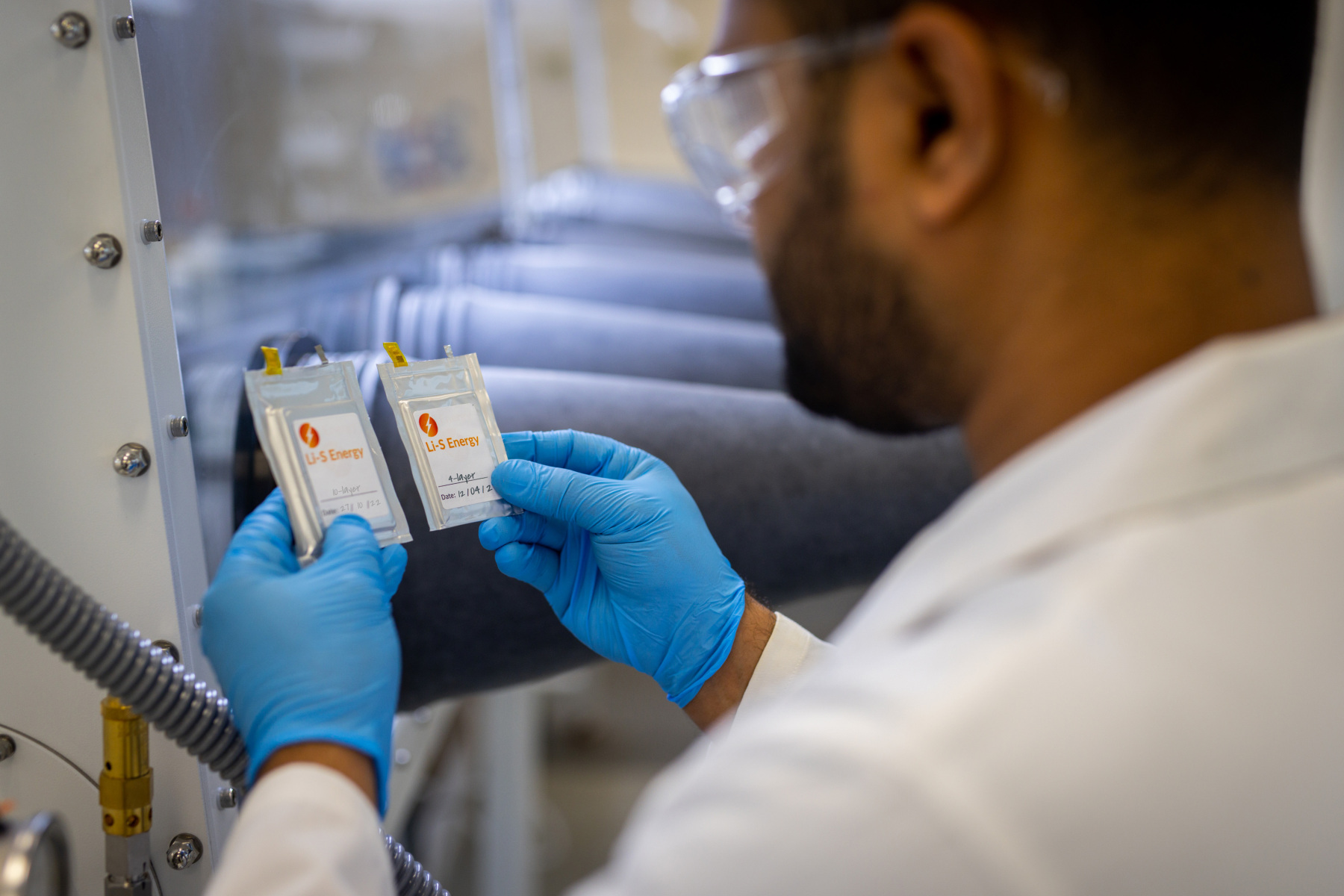
Australian battery technology developer Li-S Energy has announced a major commercialisation milestone with the company’s 10 Ah lithium-sulphur Power Cells purchased by United States-based company SOFWERX for evaluation against military requirements.
A specialist innovation hub tasked with fast-tracking new technologies into US Special Operations Command (USSOCOM), SOFWERX said the Australian-made cells will be evaluated for potential applications across air, land and sea, including drones, robotics and uncrewed maritime platforms where battery weight and endurance are critical.
“Special Operations Forces operate at the very edge of what technology allows, and energy is one of the hardest constraints we face,” SOFWERX Chief Technology Officer Brian Andrews said. “As platforms become smaller, more autonomous and more widely distributed across air, land and sea, the demand for batteries that deliver more energy at less weight only grows.”
Brisbane-headquartered Li-S, which has manufacturing facilities at Geelong in Victoria, develops and manufactures lithium-sulphur battery cells that it said offers “a step-change in energy density” that translates directly into greater range, longer endurance and increased payload in weight-critical applications. Li-S said its latest Power Cell range delivers a continuous power density of 1,700 W/kg and a peak power density of 2,400 W/kg while retaining a gravimetric energy density approaching 400 Wh/kg.
“With an energy density approaching twice that of conventional lithium-ion, Li-S cells are well placed to deliver a significant capability enhancement,” the company said, noting that the technology also offers defence customers a distinct supply-chain advantage.
“Li-S’ Australian-made cells require no graphite, nickel or cobalt, offering an allied supply chain with lower risk of disruption,” it said.
Andrews said if Li-S’ technology delivers on its promise, it could translate directly into greater reach and capability for the special operations forces of the US armed services.
“We are continually searching for advanced energy sources that can extend endurance, range and payload, and we look forward to evaluating Li-S Energy’s lithium-sulphur cells,” he said.
Li-S Managing Director Lee Finniear said the sale marks an important step for the company, moving it beyond technology development and testing into its first commercial cell sale, with a potential pathway into the broader US defence market.
“There could be no better first customer,” he said. “USSOCOM is moving rapidly to uncrewed and autonomous systems in the air, on land, on the water and underwater. In every one of those domains, energy density and weight are decisive, and that is exactly where our lithium-sulphur cells are designed to excel.”
“Engaging USSOCOM through SOFWERX puts real cells in front of the people defining the next generation of these platforms.”
Finniear said the first delivery of Power Cells will support an early-stage evaluation to identify alignment with prospective special operations use cases. If the results are positive, he expects to supply further cell batches tailored to specific platforms and mission domains.
“If our cells perform as we expect, the opportunity across USSOCOM and the broader US defence market is substantial,” he said.
The announcement follows recent advances in Li-S’ technology, including the unveiling of its new high-power Power Cell range and first-phase pressure testing of its lithium-sulphur cells equivalent to a depth of 1,000 metres under a collaboration with British undersea systems specialist MSubs.
This content is protected by copyright and may not be reused. If you want to cooperate with us and would like to reuse some of our content, please contact: [email protected].

Please login to comment