UNSW researcher wins international award for pioneering PV work

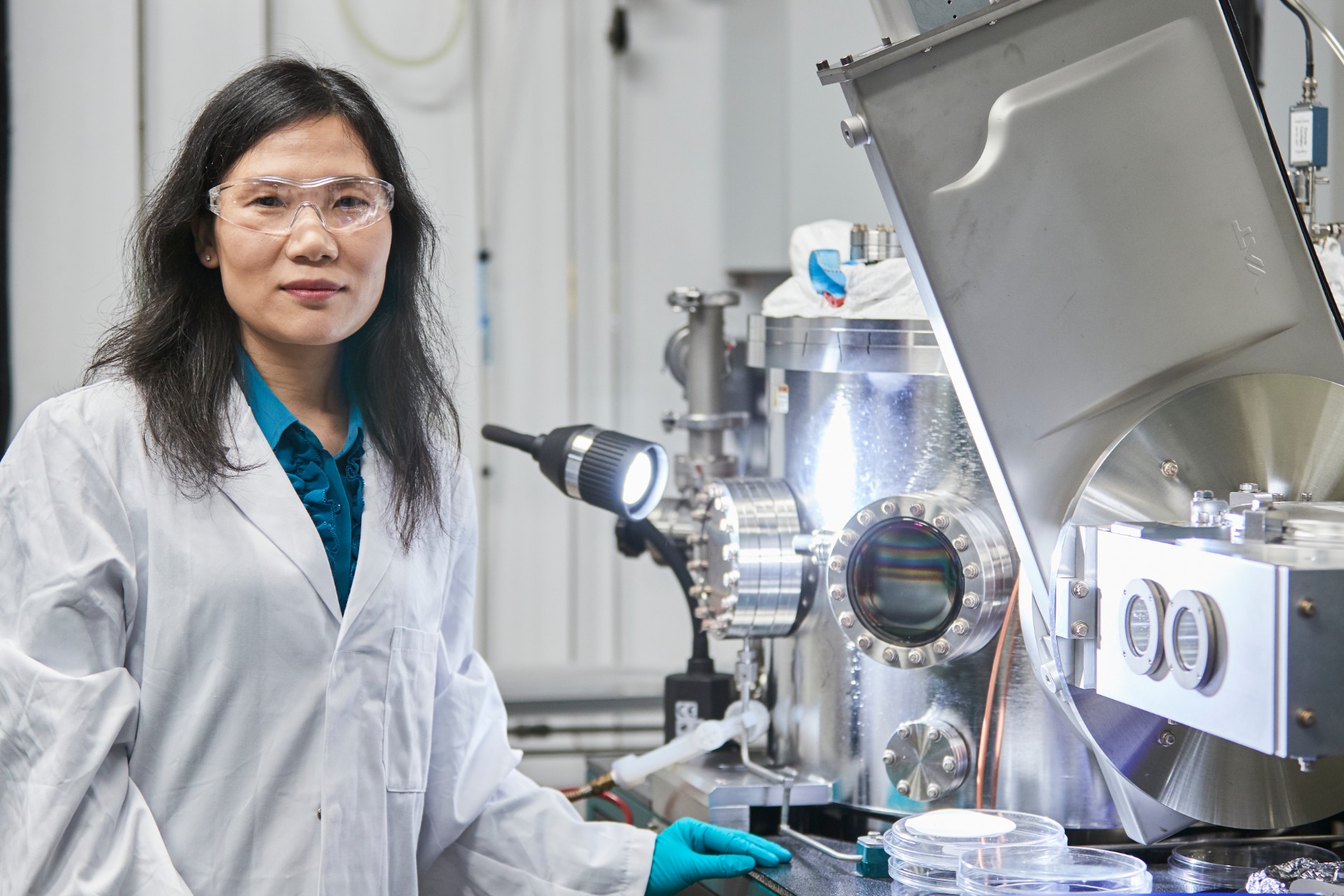
University of New South Wales (UNSW) Scientia Associate Professor Xiaojing Hao, a pioneer in the field of thin-film PV, has been recognised on the international stage as the winner of the Hamakawa Award in recognition of her breakthroughs in developing the next generation of solar energy cells.
The Hamakawa Award honours outstanding contributions to PV research and technological accomplishment. Hao, who has established herself as a world leader in the field of PV technology through the creation of four different thin-film technologies, was presented with the award during the World Conference on PV Energy Conversion staged in South Korea last week.
Hao’s record-breaking research focuses on the development of low-cost, high-efficiency thin-film and tandem solar cells, with a focus on emerging PV materials and scalable device engineering.
Since joining the field as a PhD student in 2006, Hao is credited with driving four different thin-film PV technologies to world-record status, including last month achieving a certified stabilised power conversion efficiency of 23.5% for a 30 x 30cm perovskite submodule. Earlier this year she was part of a team that achieved a certified power conversion efficiency with solar cells made from antimony chalcogenide, an emerging material regarded as a strong candidate for next-generation solar technology.
Hao said she is proud of her team’s work and now hopes to see the next-generation PV technologies she is developing move from the laboratory into fabrication and real-world applications.
“My ambition is to help advance silicon-based tandem solar cells, accelerate the transition to more efficient and sustainable energy technologies, and contribute to global net-zero goals and industrial decarbonisation,” she said.
“This is an incredibly exciting field with the potential to reshape how the world generates and uses energy. We need curious, creative and ambitious students who want to tackle challenges that matter.”
Hao is the first Australian PV scientist to receive the Hamakawa Award and was nominated for the honour by UNSW Scientia Professor Martin Green who cited not only her significant research achievements but also her leadership in the field.
“Xiaojing has greatly surpassed the award criteria by developing not one, but undoubtedly uniquely, four different thin-film PV technologies to world record status,” Green said in the submission.
“She has demonstrated outstanding international leadership in the ongoing development of these technologies.”
“She has made an important and internationally recognised contribution to the development of the global PV sector and helped define pathways to the future.”
The Hamakawa award was established in 2014 as part of the World Conference on PV Energy Conversion. The award is not given every year.
This content is protected by copyright and may not be reused. If you want to cooperate with us and would like to reuse some of our content, please contact: [email protected].

Please login to comment