




New Energy Nexus and EnergyLab have announced the launch of the AusTestBed pilot: a first-of-its-kind, non-matching grant that gives Australian clean energy entrepreneurs free access to university testing facilities to validate their technologies and move closer to commercial deployment.
The launch has brought California Energy Commission (CEC) Chair David Hochschild to Climate Action Week Sydney. He oversees the highly successful California model, CalTestBed, which AusTestBed is based on.
The pilot program, made possible by seed funding from Boundless Earth, will see three Australian startups each receive $50,000 (USD 35,407 ) to test their clean energy technologies at Australian tertiary, government and private research institutions — at no cost to them, and with no requirement to find matched private investment, and no IP claims.
Initial testbed partners include Trailblazer for Recycling and Clean Energy (TRaCE), a partnership between UNSW and the University of Newcastle, which will provide access to testbed facilities, alongside the University of Melbourne.
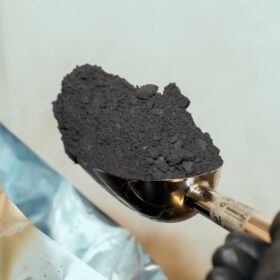
The three battery and energy storage startups are: Powerblocks, Adoxima, and Carbophite. The announcement was made at Climate Action Week Sydney, where California Energy Commission Chair David Hochschild was in Australia as a keynote speaker.
Hochschild, who Governor Gavin Newsom appointed as Chair of the CEC in 2019 and reconfirmed to a third term in 2024, oversees the EPIC program — the California ratepayer-funded research and development initiative that gave birth to CalTestBed and CalSEED.
Under his leadership, California has become the largest economy in the world to be powered by two-thirds clean energy, adding a record 7,000 MW of clean energy capacity to the grid in 2024 alone.
California’s grid now runs on 100% clean electricity for an average of five hours a day, and the state’s battery storage fleet has grown 1,944% since 2019. California is also the world’s leading hub for clean energy innovation and investment, home to more clean energy jobs than any other US state and widely regarded as the global benchmark for clean energy policy and deployment.
“California didn’t become a global clean energy leader by accident. It happened because we deliberately invested in the innovation pipeline, not just policies and targets. We built public infrastructure and developed programs that got money to entrepreneurs at key moments when private capital wasn’t yet activated. It’s exciting to see the launch of AusTestBed, which will offer Australia that same clean energy innovation leverage,” said David Hochschild, Chair, California Energy Commission.
AusTestBed is modeled directly on CalTestBed, a voucher program administered by New Energy Nexus California on behalf of the CEC since 2019. CalTestBed has to date supported 64 clean energy companies and distributed more than $23.2 million in testing vouchers across more than 70 University of California and national laboratory facilities.
The companies that have gone through the program have collectively raised an estimated $617.9 million in follow-on private investment since participating — a figure that reflects the commercial momentum that third-party testing validation unlocks for startups seeking to attract serious capital.
The program has helped companies advance an average of 1.6 Technology Readiness Levels (TRL) through participation — a meaningful jump on the internationally recognised scale that runs from basic concept (TRL 1) to fully commercial deployment (TRL 9), and one that can determine whether a technology attracts investment or stalls entirely.
The opportunity in Australia is huge. The country has committed over $70 billion to decarbonising Australia’s economy over the coming decades and it has world-class university research infrastructure. However, Australia’s early-stage funding programs usually require matched private investment, creating a structural bottleneck – one that the CalTestBed program was specifically designed to remove in California.
The Investor Group on Climate Change has explicitly identified this bottleneck: 61% of institutional investors cite a lack of investment-ready opportunities as a reason for staying on the sidelines.
“We’ve watched California prove, over five years, that removing the match requirement and giving startups access to world-class testing infrastructure is one of the most effective things a government or philanthropic funder can do to accelerate commercialisation of clean energy startups. Australia has the research assets. It has the startups. AusTestBed is what connects them,” said Andrew Chang, CEO, New Energy Nexus.
“One of the biggest hurdles for Australian startups is the ‘validation gap’ — the distance between a prototype and the independent data required to secure investment. AusTestBed bridges this by providing the third-party proof and derisking that founders need to move toward commercial deployment at scale,” said Megan Fisher, CEO, EnergyLab.
New Energy Nexus and EnergyLab are calling on the Australian federal government to fund a full national rollout of AusTestBed. Expanding access to non-matching early-stage funding is a key lever to accelerate systemic progress in Australia.


By submitting this form you agree to pv magazine using your data for the purposes of publishing your comment.
Your personal data will only be disclosed or otherwise transmitted to third parties for the purposes of spam filtering or if this is necessary for technical maintenance of the website. Any other transfer to third parties will not take place unless this is justified on the basis of applicable data protection regulations or if pv magazine is legally obliged to do so.
You may revoke this consent at any time with effect for the future, in which case your personal data will be deleted immediately. Otherwise, your data will be deleted if pv magazine has processed your request or the purpose of data storage is fulfilled.
Further information on data privacy can be found in our Data Protection Policy.