ASEAN’s looming renewables revolution
Southeast Asia, when taken as a whole, is a global laggard in the uptake of renewable energy, but some countries are leading the way, such as Vietnam, the Philippines, and Myanmar. And as ‘Angry Clean Energy Guy’ Assaad W. Razzouk argues, policymakers in the region cannot hold back the tide of solar and wind for much longer.
Power play under way Down Under
Economics and common sense have to win out over a climate-denying, pro-fossil fuel government, says John Grimes, the chief executive of Australia’s Smart Energy Council. And in the absence of renewable energy targets, he argues that the power of the people seems to be leading the way.
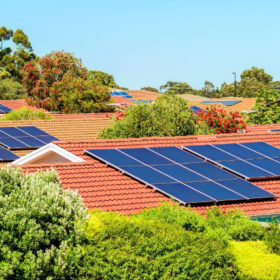
A line in the silicon: SA solar industry inverted as new regulations come into effect
South Australia’s new solar installation regulations came into effect on September 28. The regulations, designed to better manage a distributed energy system, are thought rushed by some in the industry, but ultimately they should facilitate more solar integration.
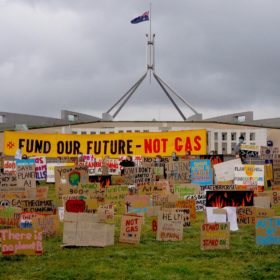
“Fund Our Future Not Gas” is the call made to the Coalition in nationwide student protests
Over 500 separate protests, many of them virtual, took place on Friday as students and young Australians across the country again demonstrated their determination in the face of an inveterate Federal Government. Due to the restrictions of Covid-19, many of the protests took on imaginative shapes.
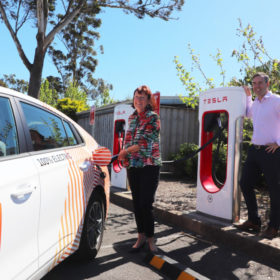
NSW coal country commits to clean energy transition
A new raft of councils across New South Wales’ coal country have committed to climate action and renewable energies are joining the Cities Power Partnership. Lake Macquarie City Council, Port Stephens Council and Cessnock City Council have followed the likes of The City of Newcastle in turning their backs on coal and gas.
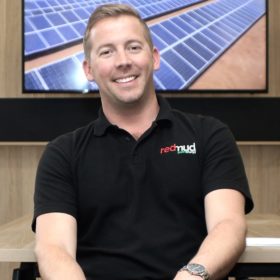
Small-scale surge continues with Yates Electrical 20 MW partnership
South Australia’s small-scale solar sensation Yates Electrical Services is teaming up with Sustainable Energy Infrastructure to develop 20 MW of small-scale solar over the next 18-months, another sign of the strength of the small-scale solar surge which flies under the radar of the network’s congestion woes.
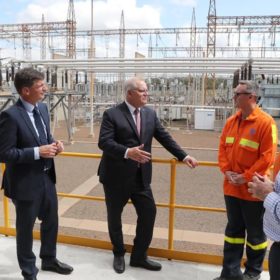
Coalition’s $1.4b ARENA extension cuts solar and wind while enabling fossil fuels
The Australian Government has finally announced new long term funding and an expanded remit for the Australian Renewable Energy Agency (ARENA) beyond 2022. The funding package, which looks more like a cut than anything else, pushes investment away from solar and wind and toward fossil fuel enabling technologies like carbon capture and storage.
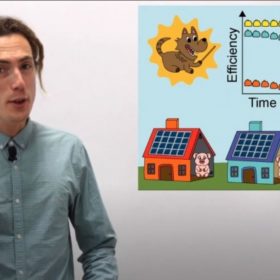
UNSW doctoral student’s solar fairytale wins 3 Minute Thesis Final
UNSW Faculty of Engineering doctoral researcher Bruno Vicari Stefani won the University’s Virtual 3 Minute Thesis Final by creatively reimagining the fable of the Three Little Pigs to demonstrate how combining hydrogen with low-cost silicon in solar can improve efficiency.

SNEC 2020 CEO Series – Interview with Liu Zhifeng, Vice GM of Jolywood
Jolywood is one of the few PV manufacturers, who has placed its bet on TOPCon technology. Instead of focusing on the simplicity of the production process, Jolywood believes the conversion rate is more critical. With years of efforts, the company has established its leading position among TOPCon players. During the SNEC 2020 in Shanghai, pv magazine had the opportunity to interview Liu Zhifeng, Vice General Manager of Jolywood, and listened to his views on some hot topics, especially the cell tech route.
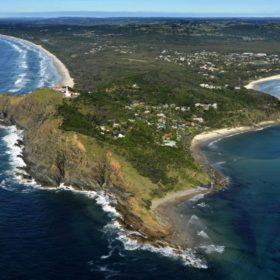
Byron Shire Council’s draft net zero action plan is a demonstration of good framing policy
It is not surprising that Byron Bay is ahead on its eco-friendly activity, but Byron Shire Council’s latest draft Net Zero Emissions Action Plan is an example of how framing policy can provide the active space for energy transition – an example the Morrison Government would be wise to follow.