Marija Maisch

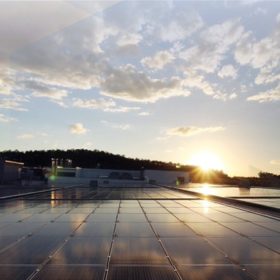
Mirvac commits to 100% renewables as RE100 experiences banner year
Mirvac has become the first Australian property company to join RE100, reaffirming its commitment to transition to 100% renewable energy by 2030. Growing by a third with 40% of that growth coming from Asia and the South Pacific, the global initiative which brings together companies committed to sourcing all of their energy from renewables is experiencing its biggest year yet.
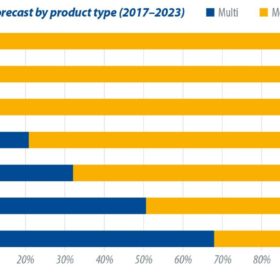
Module prices continue to slide
After China’s National Day holiday, demand started picking up at a slow pace, but the anticipated installation rush did not occur as expected, due to land and financing issues, as well as the return of winter. These factors will also delay the timing of more than 6 GW of capacity to the first half of next year. PV InfoLink has thus downwardly revised its estimates for installed capacity in the fourth quarter to 11.3 GW in China and 30 GW globally, bringing this year’s global demand forecast to below 120 GW.
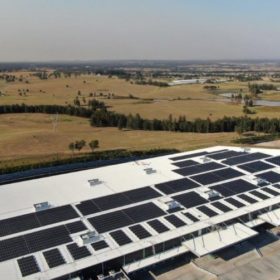
Epho commences construction of its first urban solar farm
Construction is underway on the first urban solar farm to harness the power of clean energy using Epho’s Bright Thinkers Power Station. The technology overcomes various constraints for solar in the city allowing installations to operate both behind and in front of the meter.
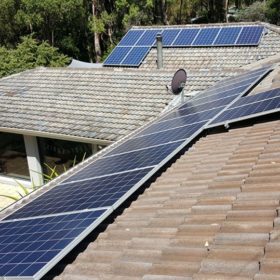
Victoria proposes cuts to minimum feed-in tariffs
Victoria’s Essential Services Commission has proposed electricity retailers should offer PV owners the option to choose between a single rate feed-in tariff and a time-varying feed-in tariff, and set lower minimum rates for both.

Pernod Ricard becomes first Australian winemaker to switch to 100% renewables
All of the winemaker’s Australian sites are now using renewable electricity thanks to the completion of the nation’s largest combined winery solar installation and a 10-year power purchase agreement to source renewable electricity.
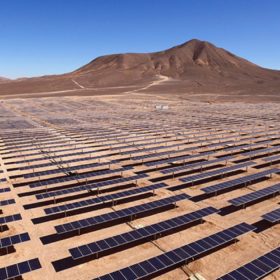
Another Riverina solar project gets go-ahead
The 90 MW West Wyalong Solar Farm has become the latest addition to the swelling solar PV pipeline in the Riverina region having secured the NSW Government’s approval.
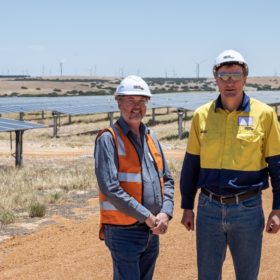
APA opens new solar farm in its Western Australian renewables precinct
Gas pipeline giant APA Group has formally opened a 19.25 MW Badgingarra Solar Farm in Hill River, Western Australia. The project is colocated with a 130 MW wind farm.
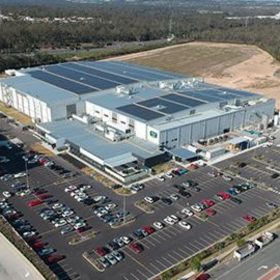
Meat production facility installs Australia’s second biggest rooftop PV array
A $280 million meat production recently unveiled by Hilton Foods Australia in south-east Queensland, is sporting one of the country’s biggest rooftop solar arrays.
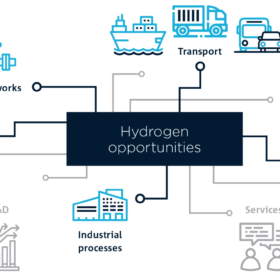
CSIRO calls for more research to unlock $11 billion hydrogen potential
The national science agency, CSIRO, has mapped the critical research steps Australia must take to realise a potential 7600 jobs and $11 billion a year by 2050 from the burgeoning hydrogen industry.
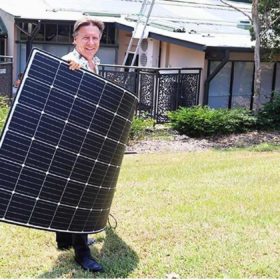
SunMan’s flexible solar panels installed on Noosaville Library
The 72.5 kW curved-roof solar installation will generate almost half of the Noosaville Library’s electricity needs. The flexible panels used for the installation are manufactured by Dr Shi Zhengrong’ firm SunMan.