Marija Maisch

High-capacity energy storage based on affordable, eco-friendly materials
Worldwide Universities Network researchers used cheap and abundant starting materials to synthesise a small molecule organic electrode material and achieved a considerable performance boost with various battery chemistries. The new cathode material exhibited unparalleled cycling stability, ultra-high capacity, and rate capability in aqueous zinc-ion batteries.

Custom-made 3D printed solid-state batteries
US-based Sakuu has announced that it has successfully 3D printed solid-state batteries in custom shapes and sizes at its battery pilot line facility in Silicon Valley, California.

How safe are second-life EV batteries as home energy storage devices?
There is currently no widely accepted test methodology to assess the safety of second-life lithium-ion batteries (LiBs). However, a UK government study reveals two opposing views on their safety, raising concerns over whether such devices should be deployed in homes under any circumstances.
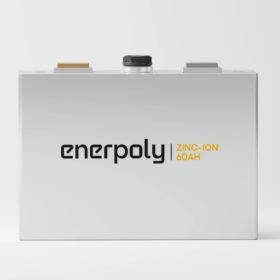
Zinc-ion batteries for residential applications
Enerpoly produces low-cost, low-maintenance zinc-ion battery storage systems for durations of two to 10 hours. The Swedish battery specialist now plans to develop prototypes of a residential plug-in storage system with rechargeable zinc batteries in Europe, under an EU-funded collaborative project with Austrian startup EET.
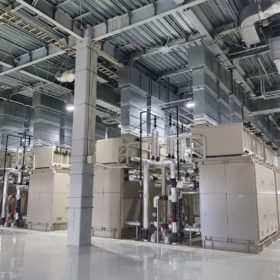
Overcoming thermal issues of vanadium redox flow batteries
Chinese scientists have analysed reports of thermal issues with vanadium redox flow batteries (VRFB) and existing thermal management methods. They say the operating temperature should be maintained in the range of 10 C to 40 C to ensure VRFBs with high efficiency, weak side reactions, high electrolyte stability, and low crossover.
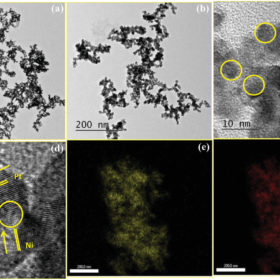
Zinc-bromine redox flow batteries with superpower density
Indian researchers have presented a new way to develop effective electrode materials for superpower redox flow battery (RFB) systems. Their flow cell with heat-treated nickel-rich platinum-nickel coating on the graphite felt delivered an impressive ever-best power density of around 1,550 mW cm−2.

Virtual power plant to trade grid-stability services in New Zealand
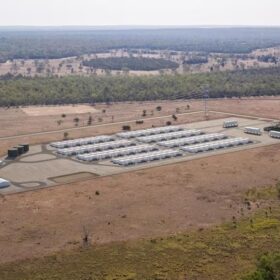
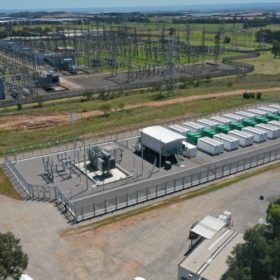
New Zealand’s solarZero says it aims to provide fast, sustained reserves with its virtual power plant of 10,000 household battery systems. Meridian Energy, meanwhile, has secured approval for a 100 MW battery energy storage system – the country’s largest such system to date.
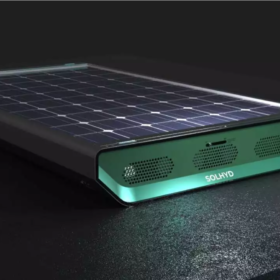
Hydrogen-producing rooftop solar panels nearing commercialisation
KU Leuven researchers have developed rooftop panels that capture both solar power and water from the air. Like traditional PV modules, hydrogen panels are also connected, but via gas tubes instead of electric cables. The researchers are now preparing to bring the tech to the mass market via a spinoff company.
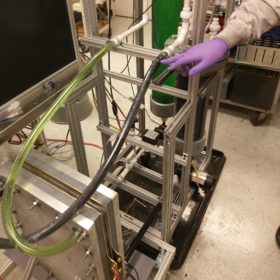
Novel redox flow battery paves way for low-cost storage
US researchers have facilitated the decoupling of power from energy design by incorporating a conducting carbon slurry in the negative electrolyte of an all-iron flow battery. In a new study, they describe the design considerations for slurry iron redox flow battery scalability.
优睿科.jpg-280x265.png)
Latest advances in sodium-ion battery research
Qingdao University researchers have synthesised high-performance titanium dioxide-based anode materials with excellent cycling stability, while German scientists have used operando techniques to observe how solvated sodium ions embed themselves in electrodes.