5 MW Mobilong Solar Farm moves into construction phase
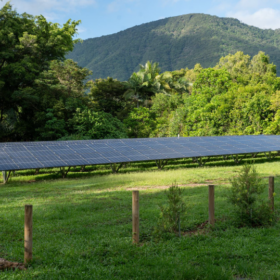
A newcomer to Australian solar, Indonesia’s Terregra Renewables, has appointed Balance Utility Solutions to carry out EPC activities on a 5 MW solar farm north of Murray Bridge in South Australia.
NREL publishes U.S. large scale solar plus lithium ion storage cost study
NREL has released an report which, for the first time, highlights utility scale energy storage costs with various methods of tying it to solar power: co-located or not, and DC- vs AC-coupled.
Canadian Solar picks up EPC for 175 MW Finlay Solar Farm
Canadian Solar will provide EPC services, under a JV partnership with Singal Energy, for the 175 MW Finlay Solar Farm in southern NSW. The Chinese manufacturer will also supply modules to the project – which is notable for having signed the largest single PPA in the Australian marketplace.
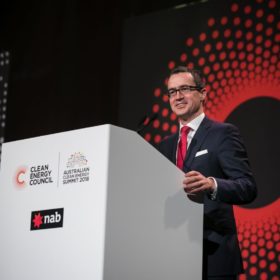
Renewables momentum continues, despite political chaos
As 2018 draws to a close, it is worth reflecting on another extraordinary year for the Australian renewable energy industry.
14 PV trends for 2019
Crystal-ball gazing is dangerous in a sector as fast moving as PV. But that hasn’t stopped pv magazine’s international team of solar reporters from compiling a list of the top 14 solar PV and energy storage trends expected to characterize 2019. What do you think? Have we missed anything?
Flow Power contracts Bomen Solar Farm output for wine, munchies producers
Commercial electricity retailer Flow Power has signed an offtake deal for more than a half of the production from the 120 MW Bomen Solar Farm near Wagga Wagga to power one of the nation’s largest vineyard owners, Australian Vintage, and a major snack food manufacturer, Snack Brands.
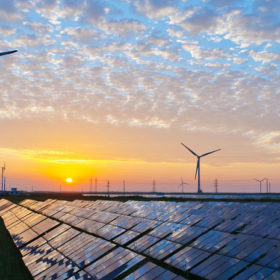
Wind, solar cheaper than coal, and responsible for falling energy price outlook
Major reports from Australia’s chief energy institutions point to the importance of wind and solar not just because of their climate credentials, but also the economic benefits they bring. A report from the energy market operator and the CSIRO finds based on analysis of LCOE that renewables are the cheapest new-built power. A separate report from the Australian Energy Market Commission shows that wind and solar will give a typical household a saving of $55 a year in next two years.
COAG energy ministers backs development of national hydrogen strategy
The December meeting of the COAG Energy Council has grabbed headlines as NSW attempted to push for a zero-emissions policy only to be blocked by Federal Energy Minister Angus Taylor. But, in a rare substantive outcome of the meeting, the energy ministers agreed to develop a national hydrogen strategy.
140 MW solar farm approved for Mulwala, NSW
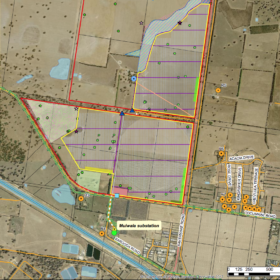
With NSW Energy Minister Don Harwin drawing a line on energy and climate policy between the state Liberals and the feds, the NSW government continues to pursue its renewables agenda waving through another large-scale solar project.
Genex Power partners with EnergyAustralia on Kidston solar-pumped hydro project
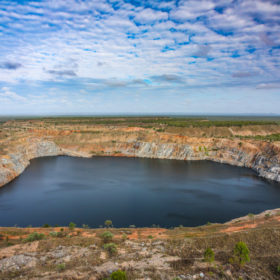
Sydney-based publicly listed Genex Power has signed an agreement with electricity provider EnergyAustralia to begin construction on the 250 MW pumped hydro project as part of the Kidston renewables hub in north Queensland. Genex is now looking to secure financing for a 270 MW solar component of the project.