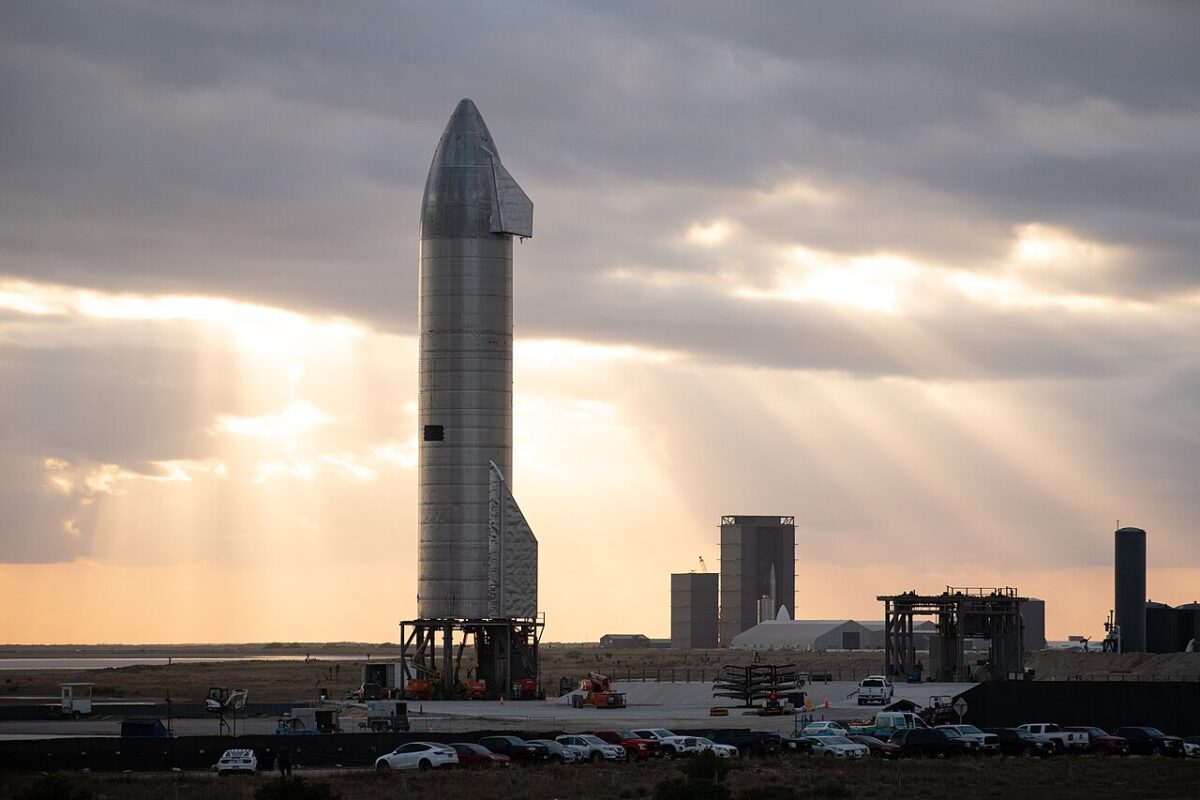





Tesla and SpaceX chief Elon Musk made his first appearance at the World Economic Forum (WEF) in Davos, Switzerland, last week, telling WEF interim co-chair and Blackrock CEO Larry Fink that solar could power space-based AI, with full-scale deployment possible within two to three years.
“When you have solar in space you get five times more effectiveness, maybe even more than that, than solar on the ground,” Musk said. “It’s always sunny, so you don’t have a day-night cycle or seasonality or weather and you get about 30% more power in space because you don’t have atmospheric attenuation of the power. The net effect is any given solar panel will do five times more energy in space than on the ground.”
Space also offers excellent thermal conditions, according to Musk.
“It’s a no brainer for building solar-powered AI data centres in space, because as I mentioned it’s also very cold in space. When you’re in the shadow, it’s very cold in space, 3 degrees Kelvin,” he said. “So you have solar panels facing the sun and then a radiator that’s pointed away from the sun, so it has no sun incidence, so it’s just cooling, it’s a very efficient cooling system. The net effect is that the lowest-cost place to put AI will be space and that will be true within two to three years, three at the latest.”
But how do we get all this gear into space? This is where Musk’s other major venture, SpaceX, comes into play. SpaceX is planning a record-setting public offering in 2026 and is on track to further cut what Musk calls the “cost of access to space.”
“Hopefully this year we should prove full reusability for Starship, which would be a profound invention, because the cost of access to space would drop by a factor of 100 when you achieve full reusability,” he said. “That gets the cost of access to space below, we think, the cost of freight on aircraft, so under USD 100 ($144.6) a pound easily.”
Subscribe to monthly pv magazine Global edition
Starship, the largest rocket ever built, would be used to deploy solar-powered AI infrastructure in space. Eventually, similar infrastructure could be established on the Moon and planets such as Mars, particularly as smart AI-powered robots become commonplace for building and maintaining these space-based assets. The first step on this roadmap appears to be solar-powered AI satellites.
“One of the things we’ll be doing with SpaceX within a few years is launching solar-powered AI satellites,” Musk said. “Space is really the source of immense power and then you don’t need to take up any room on earth, there’s so much room in space, and you could scale to ultimately, I think, hundreds of terawatts a year.”
This content is protected by copyright and may not be reused. If you want to cooperate with us and would like to reuse some of our content, please contact: editors@pv-magazine.com.



By submitting this form you agree to pv magazine using your data for the purposes of publishing your comment.
Your personal data will only be disclosed or otherwise transmitted to third parties for the purposes of spam filtering or if this is necessary for technical maintenance of the website. Any other transfer to third parties will not take place unless this is justified on the basis of applicable data protection regulations or if pv magazine is legally obliged to do so.
You may revoke this consent at any time with effect for the future, in which case your personal data will be deleted immediately. Otherwise, your data will be deleted if pv magazine has processed your request or the purpose of data storage is fulfilled.
Further information on data privacy can be found in our Data Protection Policy.