




From pv magazine Global
A research team from South Korea has developed a novel guided-learning framework that jointly estimates irradiance and regresses PV power.
“The model first learns an irradiance proxy from routine meteorological signals and then uses that proxy for PV power regression,” corresponding author Sangwook Park told pv magazine.
“This enables deployment at sites without irradiance sensors while retaining the accuracy benefits those signals usually provide.”
The proposed framework uses solar irradiance measurements only during training and does not require them during operation. According to the researchers, it consistently delivers the same level of accuracy even when applied to scenarios beyond the training dataset.
The method consists of two main components: a solar irradiance estimator, which predicts irradiance from meteorological inputs, and a power regressor, which augments its inputs with the estimated irradiance and outputs PV power normalised by installed capacity.
The system initially collects inputs such as temperature, humidity, and wind speed and, during training, also incorporates irradiance data.
A deep sequence model processes the weather time series to generate internal features. These features are passed to an estimation block and a region block, which enable the model to learn internal irradiance representations.
After training and validation, the model is deployed without irradiance inputs, instead estimating irradiance internally and using it to calculate PV power output.
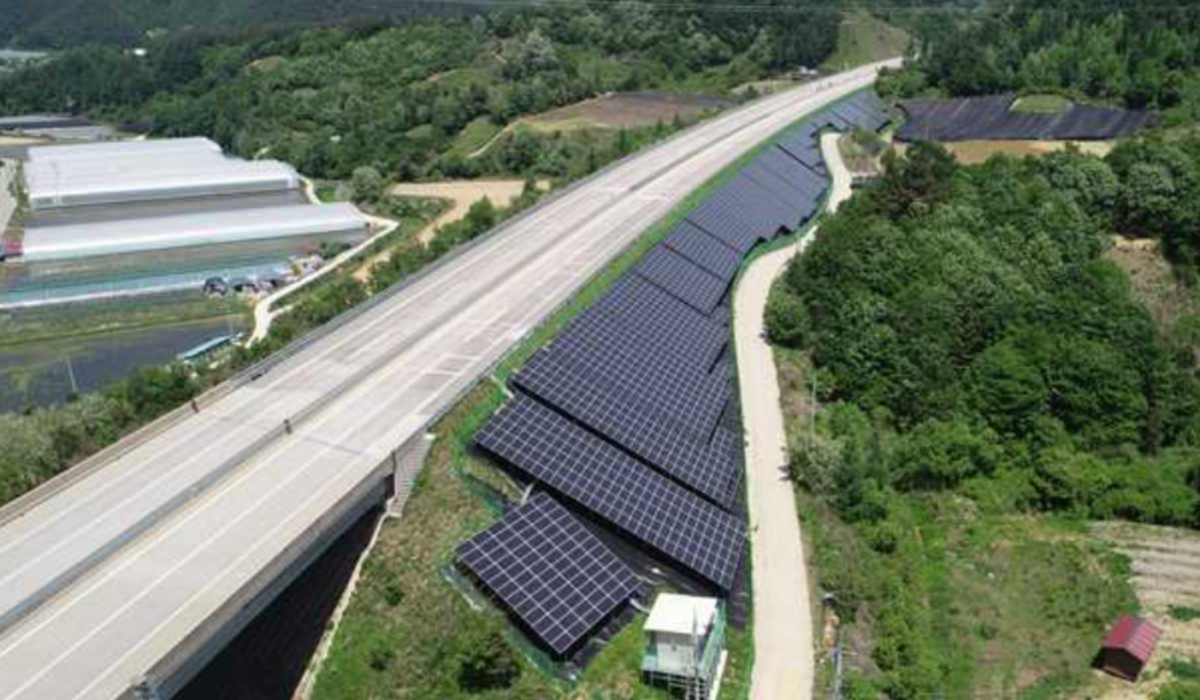
The framework was demonstrated using a dataset collected in Gangneung, South Korea, over one year, from 1 January 2022 to 31 December 2022. Three PV plants were analysed: C9 for training, N19 for validation, and C3 for testing.
Several deep sequence models were evaluated within the framework, including double-stacked long short-term memory (LSTM), attention-based LSTM, and convolutional neural network, long short-term memory CNN-LSTM architectures.
The double-stacked LSTM delivered the best overall performance, with the attention-augmented variant showing statistically comparable results.
“The proposed guided-learning method demonstrated strong out-of-sample performance on the test set,” the researchers stated.
Statistical comparisons using t-tests and bootstrap methods showed average improvements over baseline approaches without irradiance data of 0.06 kW in hourly root mean square error (RMSE) and 1.07 kW in daily RMSE.
Compared to reference approaches using irradiance data in both training and testing, improvements reached 1.03 kW and 15.33 kW, respectively.
Park noted that one of the most unexpected findings was that the guided model generalised better at the test site than models that directly used irradiance data during inference.
“When irradiance inputs were noisy or inconsistent, conventional models degraded, whereas the guided model remained stable and achieved lower error across both hourly and daily metrics,” he said.
The research team is now preparing a multi-region study spanning diverse climates and installation types and is exploring multi-station data fusion to further improve model robustness.
“We also plan to add missing-input robustness, uncertainty quantification with calibrated prediction intervals, and out-of-distribution detection for extreme weather and sensor faults,” Park added. “Finally, we are scoping pilot deployments with grid operators to assess operational value.”
The new model was introduced in “Guided learning for photovoltaic power regression in the absence of key information,” published in Measurement. Scientists from South Korea’s LG Electronics and Gangneung-Wonju National University participated in the study.
This content is protected by copyright and may not be reused. If you want to cooperate with us and would like to reuse some of our content, please contact: editors@pv-magazine.com.


By submitting this form you agree to pv magazine using your data for the purposes of publishing your comment.
Your personal data will only be disclosed or otherwise transmitted to third parties for the purposes of spam filtering or if this is necessary for technical maintenance of the website. Any other transfer to third parties will not take place unless this is justified on the basis of applicable data protection regulations or if pv magazine is legally obliged to do so.
You may revoke this consent at any time with effect for the future, in which case your personal data will be deleted immediately. Otherwise, your data will be deleted if pv magazine has processed your request or the purpose of data storage is fulfilled.
Further information on data privacy can be found in our Data Protection Policy.