





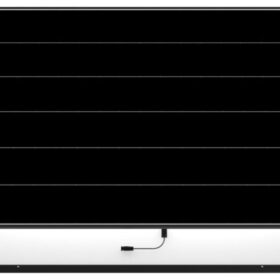
Chinese solar manufacturer DMEGC has introduced a new addition to its rooftop portfolio with the G12RT-G48HBB, a full-black n-type monofacial module designed for residential and small commercial and industrial (C&I) applications.
The Infinity RT double-glass module is available in five versions, with power output ranging from 455 W to 475 W and conversion efficiency spanning 22.8% to 23.8%. The open-circuit voltage ranges from 36.18 V to 36.74 V, while the short-circuit current lies between 15.78 A and 15.98 A.
The new product measures 1,762 mm × 1,134 mm × 30 mm and weighs around 23 kg. It is built on a 96-cell layout and features a 2 mm + 2 mm double-glass structure. It also incorporates heat-strengthened glass with an anti-reflective coating on the front and a matching glass layer on the rear.
The IP68-rated module has a temperature coefficient of -0.29%/C and supports a maximum system voltage of 1,500 V, along with an overcurrent protection rating of 25 A.
From a reliability standpoint, the module is backed by a 25-year product warranty and a 30-year linear performance guarantee. Its degradation profile includes a first-year drop of no more than 1%, followed by an annual decline capped at 0.4%, resulting in approximately 87.4% of the initial output after 30 years.
The product is certified in accordance with IEC 61215 and IEC 61730 standards and has passed additional tests for ammonia corrosion, salt mist, dust and sand, and light- and elevated-temperature-induced degradation, DMEGC stated. It is designed to operate within a temperature range of -40°C to 85°C and can reportedly withstand front loads of up to 5,400 Pa and rear loads of 2,400 Pa.
The company said the module is manufactured without PFAS materials and is designed with a low carbon footprint. Its production facilities have achieved SSI ESG Silver certification, aligning the product with Europe’s growing environmental requirements.
Another key feature of the module is its encapsulation approach, which uses a black ethylene-vinyl acetate (EVA) layer on the rear side to enhance internal light reflection within the cell structure. According to the manufacturer, this design can increase energy yield by approximately 1% compared to conventional configurations.
This content is protected by copyright and may not be reused. If you want to cooperate with us and would like to reuse some of our content, please contact: editors@pv-magazine.com.






By submitting this form you agree to pv magazine using your data for the purposes of publishing your comment.
Your personal data will only be disclosed or otherwise transmitted to third parties for the purposes of spam filtering or if this is necessary for technical maintenance of the website. Any other transfer to third parties will not take place unless this is justified on the basis of applicable data protection regulations or if pv magazine is legally obliged to do so.
You may revoke this consent at any time with effect for the future, in which case your personal data will be deleted immediately. Otherwise, your data will be deleted if pv magazine has processed your request or the purpose of data storage is fulfilled.
Further information on data privacy can be found in our Data Protection Policy.