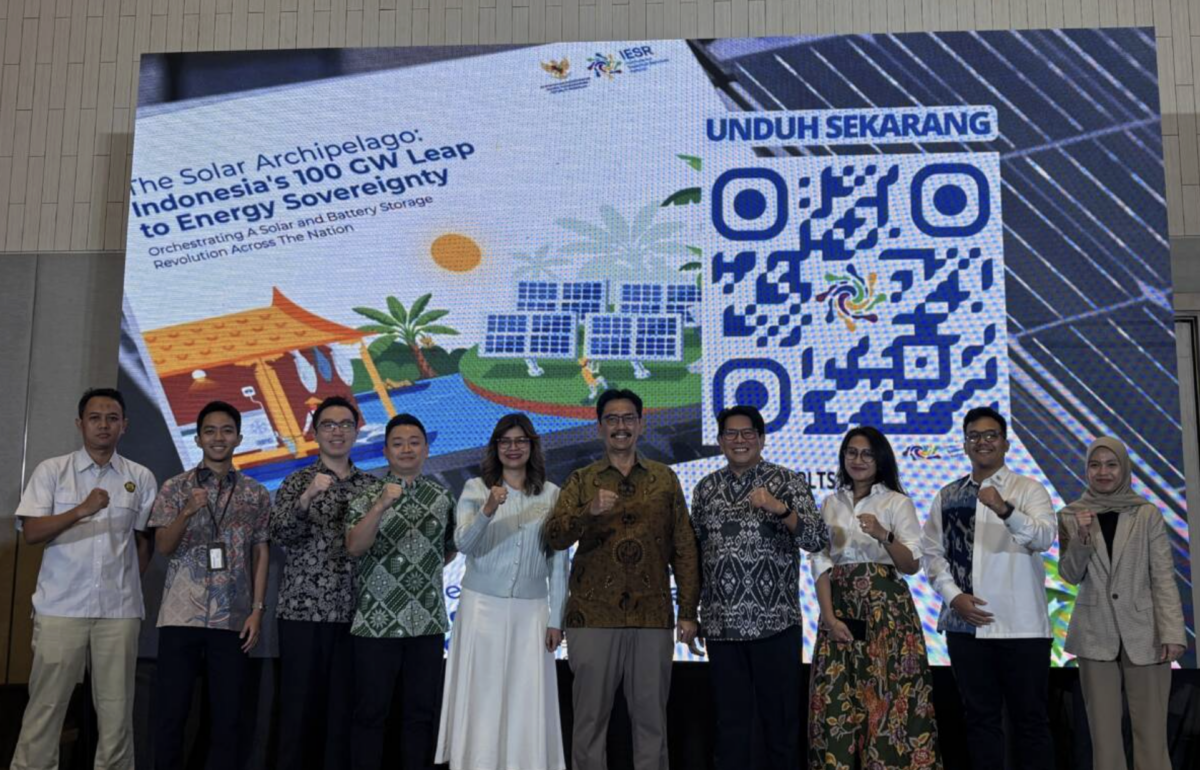





Research from Indonesia has proposed a 180-day action plan to operationalise the country’s 100 GW solar initiative.
The Solar Archipelago: Indonesia’s 100 GW Leap to Energy Sovereignty report, by thinktank Institute for Essential Services Reform (IESR) in collaboration with Indonesia’s Coordinating Ministry for Economic Affairs, serves as an implementation framework to realise Indonesia’s 100 GW directive.
First announced in August 2025, the 100 GW target encompasses 80 GW of decentralised, small-scale solar systems with accompanying battery energy storage systems (BESS) to be deployed across 80,000 villages, alongside 20 GW of centralised solar.
Fabby Tumiwa, IESR CEO, told pv magazine that in order to reach the target, the institute is recommending the initiative is designated as a national strategic program, with the establishing a centralised project management unit to coordinate the rollout.
“Critical policy factors include adopting a modular plug-and-play design for rapid deployment across 80,000 villages, revising [state-owned electric utility company] PLN’s Electricity Supply Business Plan to retire aging coal plants and implementing a blended financing model to cover the estimated USD 78 billion ($114 billion) priority phase one investment,” Tumiwa said.
Reaching the 100 GW target will require an estimated $205-305 billion after the first phase investment, the report adds, with calls for support from financial institutions, green financing mechanisms and the private sector.
Workforce development will also be vital, with 100,000 trained installers and 80,000 operations and maintenance technicians required, according to the report, capability that will require investment in 34 provincial training centers and 500 vocational programs.
The study also warns that trying to adopt a one-size-fits all approach to electrifying the 80,000 villages with 1 MW solar-plus-4 MWh BESS systems risks wasting capital, creating stranded assets and undermining public trust in solar.
“Indonesian villages vary widely, from small remote settlements under 1,000 people to large productive centres over 5,000. A uniform system would result in significant oversizing for small villages and undersizing for larger ones,” the study explains, instead recommending a differentiated approach encompassing 10 village archetypes ranging from 200 kW to 2.5 MW in capacity is adopted.
Tumiwa added that with a robust delivery framework, the 100 GW program has the potential to deliver reliable and affordable electricity to tens of millions of citizens, while reducing fuel subsidy expenditures by up to IDR 21 trillion ($1.81 billion).
The study also features a roadmap for the first 180 days to take the initiative from mandate to mobilisation, which includes finalising initial funding tranches, signing a national framework agreement for PV modules and BESS components, announcing the first three regional bundles with a target of over 150 MW in capacity and certification of more than 5,000 technicians, ensuring that apprenticeship roles are ready to be filled as soon as the bundles reach construction phase.
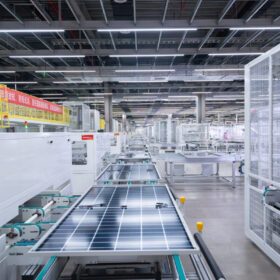
Tumiwa told pv magazine an Energy Transition Acceleration Task Force – another of the 180-day roadmap’s recommendations – has already been established. He said there has also been a $2 billion investment by [sovereign fund] Danantara for a domestic solar manufacturing facility capable of producing 50 GW annually, alongside the finalisation of new legal frameworks to streamline rural electrification.
“Moving forward, the government is expected to accelerate de-dieselisation pilots in remote areas and expand the Lisdes (village electrification) budget to integrate more private sector participation,” added Tumiwa.
Indonesia surpassed 1 GW of solar capacity in 2025, with total capacity reaching 1.49 GW.
This content is protected by copyright and may not be reused. If you want to cooperate with us and would like to reuse some of our content, please contact: editors@pv-magazine.com.


By submitting this form you agree to pv magazine using your data for the purposes of publishing your comment.
Your personal data will only be disclosed or otherwise transmitted to third parties for the purposes of spam filtering or if this is necessary for technical maintenance of the website. Any other transfer to third parties will not take place unless this is justified on the basis of applicable data protection regulations or if pv magazine is legally obliged to do so.
You may revoke this consent at any time with effect for the future, in which case your personal data will be deleted immediately. Otherwise, your data will be deleted if pv magazine has processed your request or the purpose of data storage is fulfilled.
Further information on data privacy can be found in our Data Protection Policy.