Ev Foley

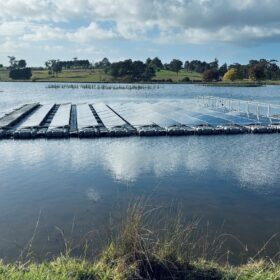
Benefits of floating solar on display for agribusiness sector in Victoria
A 50 kW floating solar system deployed on a lake at Lardner Park in southeast Victoria is being used to demonstrate the benefits of the technology for Australia’s agribusiness sector, including its ability to utilise water bodies instead of pastures that contribute directly to farming profit.
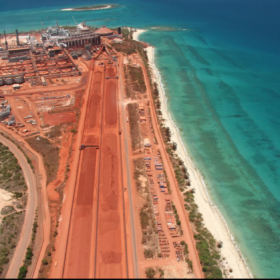
Rio to install two 5.25 MW solar farms at NT mine site
Resources giant Rio Tinto will install two 5.25 MW solar farms at its Northern Territory Gove Peninsula bauxite mine to reduce carbon emissions and leave sustainable power supply for First Nations people after the mine’s closure later this decade.
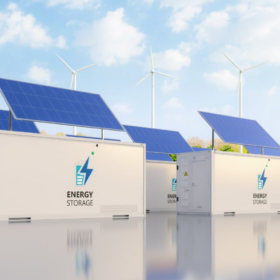
New CIS tender seeks 2 GWh clean dispatchable capacity for Western Australia
The ball is rolling on the Australian government’s pending Capacity Investment Scheme Tender 2 focussing on the Western Australian Wholesale Electricity Market and which seeks an indicative target of 500 MW of four-hour equivalent dispatchable capacity, or 2,000 MWh.
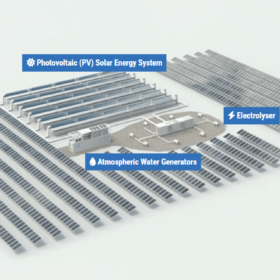
Electrolyser production facility to be offshoot of 10 GW modular green hydrogen plant
A proposed 10 GW renewables-based hydrogen production facility to be developed in the Northern Territory by Climate Impact Corporation will include an upstream Darwin-based electrolyser and atmospheric water generator manufacturing facility.
Australian Capital Territory commits to 100% renewables, rejects nuclear
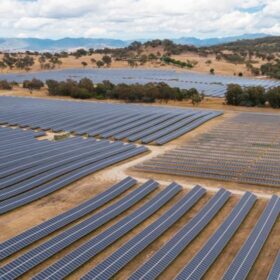
The Australian Capital Territory legislative assembly has passed a motion expressing a commitment to power Australia with 100% renewable energy as soon as possible, and ensure the ACT remains free of nuclear power and nuclear waste.

New approval for DC-coupled hybrid battery and solar farm
Renewables investment firm Octopus Australia’s 128 MWh DC-coupled Fulham hybrid battery project and 80 MW solar farm have been granted a technical greenlight from AEMO.
Researchers discover method to help solar cells self heal
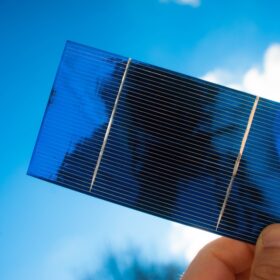
A global team of researchers, lead by Monash University, Melbourne, have made a game-changing breakthrough that could make perovskite solar cells more reliable and efficient.
Queensland to pilot second local renewable energy zone
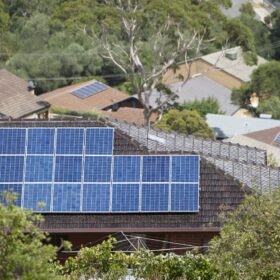
The Queensland government is investing another $40 million into a second 8.4 MW / 18.8 MWh battery energy storage system, up to 2.8 MW of solar and 0.9 MW of demand management for a Townsville local renewable energy zone.
AEMC tweaks grid connection rules to relieve project backlog
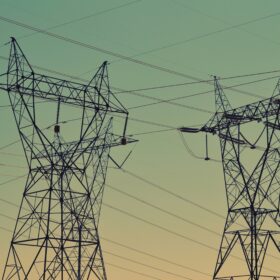
The Australian Energy Market Commission has published a final rule to speed up grid connections for new renewable energy generation and storage in light of the pace and scale of projects being built to achieve the national target of 82% of renewables by 2030.
Planning approval for NSW REZ transmission project
The Central-West Orana renewable energy zone transmission project, with a projected network capacity by 2029 of 6 GW, has planning approval to begin building trasmission infrastructure, including lines and energy hubs.