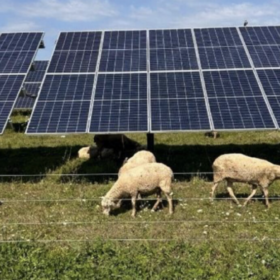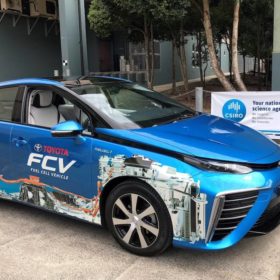
Hydrogen home storage, refueling hub get financial shot into the arm
Toyota Australia will transform its former manufacturing site in West Melbourne into a renewable energy hub to produce green hydrogen with the help of funding from the Australian Renewable Energy Agency (ARENA). In other hydrogen-related news, researchers at UNSW Sydney with partners H2Store have received a $3.5 million investment from Providence Asset Group to develop a hydrogen residential storage.
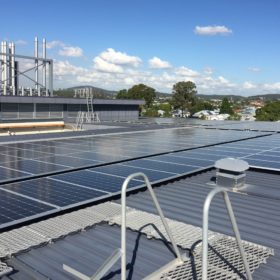
NSW Coalition commits to support apartments going solar, module and battery recycling
If re-elected on Saturday, the NSW Coalition will change strata laws to reduce the minimum votes needed to install solar panels, battery storage and electric vehicle charging points in strata buildings. The government has also pledged to give $20 million more funding to the Emerging Energy Program and $10 million in funding for a solar panel and battery recycling program.
How to neutralise your greenhouse gas footprint
With time running out for us to make deep reductions in greenhouse emissions, you may well be wondering what you personally can do to minimise your own greenhouse footprint.
Queensland launches solar for renters trial
Up to 1000 landlords and their tenants have the chance to team up and cut power bills and emissions under a trial scheme in Bundaberg, Townsville and Gladstone. To participate in the $4 million program, both property owners and tenants need to be on board, as installing a PV system would entail a rent increase only to be offset by power bill savings.
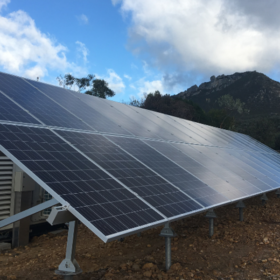
Rural power lines to be replaced with stand-alone solar and battery systems at WA farms
Western Australia’s government-owned regional utility Horizon Power is readying to roll out 13 solar and battery technology units at 14 far-flung farms in the Esperance region.
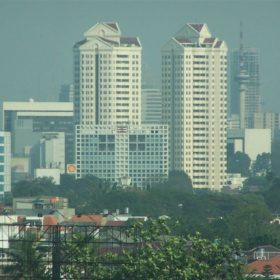
Storage preferred to net metering in Indonesia as new rules prove ineffective
According to solar body the PPLSA, around 300 PV system owners have already gone off-grid as the tariff granted for surplus power under net metering was not attractive enough. Several barriers are preventing net metering taking hold, including an obligation to either use locally made equipment or pay more to re-certify imported modules and inverters.
Victoria increases minimum feed-in tariffs
From 1 July this year, the single minimum price Victoria’s solar households will receive for the power they export to the grid will increase by two cents per kilowatt hour. However, under the time-varying tariff introduced last year, the peak rate tariff has been slashed by half.
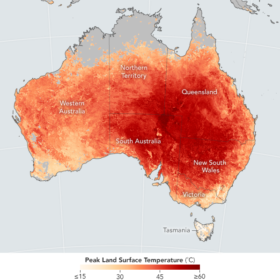
Solar saves the (heatwave) day
The latest report from The Australia Institute corroborates solar’s pivotal role in shaving peak demand, particularly in the event of extreme conditions as seen in January. Renewables performed the best of all energy sources during the record-breaking summer of heatwaves, while coal clunkers were operating well below capacity, the findings confirm.
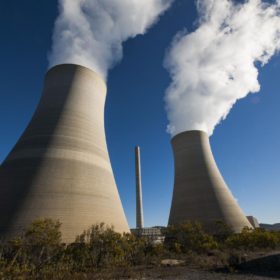
Without more solar and wind, NSW risks being left behind in the dark ages
Stating NSW was once a world leader on climate change, a new Climate Council report notes the state is now far behind being home to Australia’s oldest fleet of coal-fired power generators. While NSW public is highly supportive of renewable energy, state government policies fail to encourage more wind and solar projects beyond 2020.
Low, middle income households install solar more than wealthy
New myth-busting analysis has revealed that rooftop solar is not so much in vogue among the wealthy, but is more popular among poorer households. Cost-saving benefits are, however, being blunted by high fixed charges, while energy retailers are profiteering from households with solar PV, states the report from the Victoria Energy Policy Climate.