Solar farm adds to King Island’s renewables solution
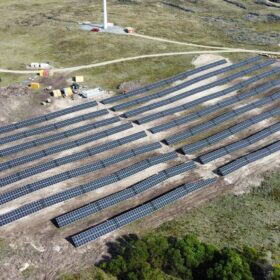
A permanent shift towards 100% renewable energy supply on Tasmania’s King Island is a step closer to realisation with the completion of a new 1.5 MW solar farm adding to the existing hybrid off-grid power system that services the island.
DAS Solar establishes Australian subsidiary
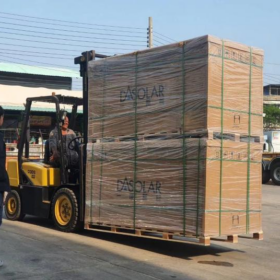
Chinese module manufacturer DAS Solar has launched an Australian subsidiary, an investment the company says reflects its confidence in the region’s solar market.
350 MW solar and storage project gets state tick of approval
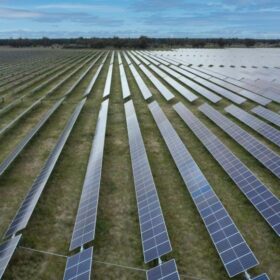
Construction of the 350 MW Blind Creek solar farm and large-scale battery energy storage project planned for southeast New South Wales is set to begin next year with renewables developer Octopus Australia announcing the state government has now granted planning approval.
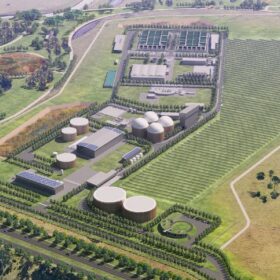
Sydney Water plans 4 MW solar farm to power new recycling plant
A 4 MW solar farm to be constructed at Kemps Creek in Western Sydney will be used to power a high-tech water recycling facility that will provide a water system to approximately 400,000 homes and businesses in the growth area.
Provaris plans 2.6 GW solar farm for NT green hydrogen project
Western Australian renewables company Provaris Energy has advanced its Tiwi H2 green hydrogen export project planned for the Tiwi Islands in the Northern Territory with the design feasibility report for the proposed solar farm and transmission system now complete.
Solar generation climbs to new highs in NEM
Solar generation in Australia’s main electricity grid has surged to record highs with the latest data from the Australian Energy Market Operator revealing that rooftop solar generation increased 30% in the second quarter of 2023 while grid-scale solar output rose by 37%.
Neoen boosts Western Downs Battery capacity to 540 MWh
Renewable energy developer Neoen will scale up the installed capacity of the Western Downs Battery being built in Queensland to 270 MW/540 MWh as it looks to keep pace with rising demand for energy storage and realise opportunities across Australia’s evolving energy system.
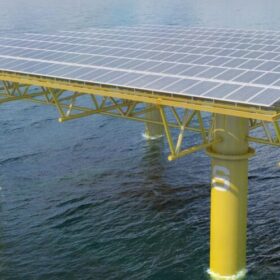
Offshore floating PV demonstrator to go online in North Sea
The SeaVolt consortium says it will launch an offshore floating PV demonstrator off the Belgian port of Ostend. The main companies – Tractebel, DEME, Equans and Jan De Nul – say the anchored floating array will collect data for at least a year to scale up the tech.

New grid-forming inverter concept based on bee colony algorithm
Scientists in China have proposed to use an algorithm that simulates the behaviour of foraging bees to shape a new grid-forming inverter design. The approach is designed for both grid-connected and islanded inverters.
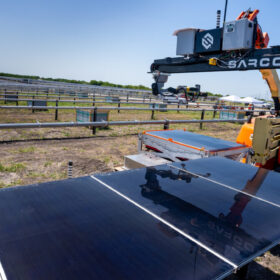
Autonomous robots for solar installation gain traction
Installation robots are moving from test centres to the field. American technology companies Sarcos Technology and Robotics Corporation and Terabase Energy recently announced key business developments.