CEFC tables Annual Report to Australian Senate
The Clean Energy Finance Corporation (CEFC) has released its 2018-19 Annual Report on its investment into Australia’s clean energy transition. The report laud’s CEFC investment and provides optimistic reading for the energy transition.
The race has only just begun
The Australian utility-scale PV and wind industries have just gone through a record two years of construction and commissioning. More specifically, writes Rystad Energy’s David Dixon, utility-scale PV has transformed from a megawatt-scale market to one measured in gigawatts. The resultant boom in utility-scale PV in the country has attracted developers, EPCs and OEMs, from at home and across the globe.
South Australian government puts out tender for long-term, cleaner electricity supply
The state government is on a lookout for a new electricity supplier for 100% of its load. Its goal is to lock in a contract which would deliver more affordable, reliable and cleaner electricity in South Australia.
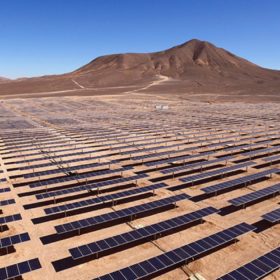
Lighsource BP secures finance for first Australian solar farm
Lightsource BP has signed financing agreements to develop its first utility-scale solar project in Australia. The 200 MW solar farm, near Wellington, New South Wales, is the largest single plant to be financed by the U.K. solar developer to date and one of the biggest projects in Australia to use bifacial PV.
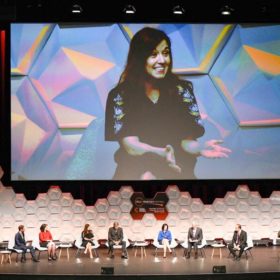
All Energy Australia Day 2
Welcome to Australia’s largest national showcase of renewable energy at the Melbourne Convention and Exhibition Centre. Follow pv magazine live to keep updated on the latest Aussie solar PV and storage developments and trends from this year’s event, as they happen. Stay tuned!
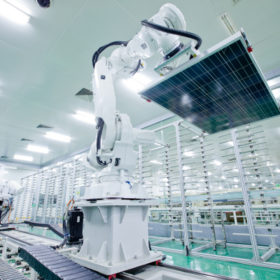
Jinko launches Tiger module Down Under
The Chinese manufacturer has officially unveiled its high-efficiency product in Melbourne after celebrating a 13.6 MW panel order from the nascent Hungarian PV market.
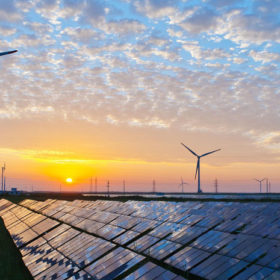
AEMO brings up staged approach to energy transition
The Australian Energy Market Operator (AEMO) has undertaken a review on how Australia compares with other international power systems and suggested that the theoretical limits on wind and solar penetration may need to be defined with an eye on the power system stability.
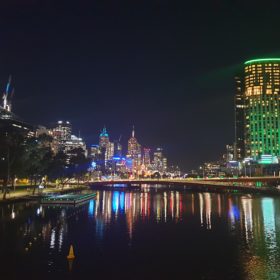
All Energy Australia Day 1
Welcome to Australia’s largest national showcase of renewable energy at the Melbourne Convention and Exhibition Centre. Follow pv magazine live to keep updated on the latest Aussie solar PV and storage developments and trends from this year’s event, as they happen. Stay tuned!

SMA showcases solutions for all applications at All Energy
Visitors at the All-Energy event will have the opportunity to find out about the German inverter maker’s latest PV system technology and comprehensive solutions for home, business and large-scale applications.
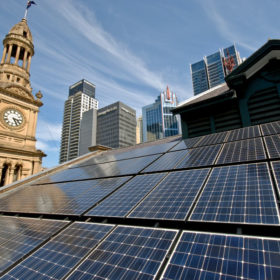
City of Sydney unveils $60 million green energy deal
The City of Sydney has unveiled the biggest standalone renewables deal for an Australian council. Valued at over $60 million, the plan will see the City meet its electricity needs using only wind and solar.