Weekend read: Darkest hour before Ukraine’s solar dawn
Ukraine is still facing dire circumstances, with war continuing to claim lives and Russian invaders occupying large parts of the country. Solar plant owners also face serious challenges, including collateral damage, looting, destruction of communication infrastructure, and payment shortfalls. However, a bold vision for recovery has been set out with a key role for solar, as Ian Skarytovsky reports.
NSW seeks to smooth path for 700 MW/1400 MWh super battery
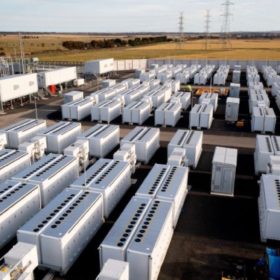
The New South Wales government has moved to fast track the development of the 700 MW/1400 MWh Waratah Super Battery as it looks to shore up a reliable energy supply ahead of the impending closure of the country’s biggest coal generator.
NSW refines transmission plans for Central-West Orana REZ
The New South Wales government’s plans to develop a renewable energy zone in the state’s central west is one step closer to fruition following the release of the scoping report for the transmission infrastructure required to connect at least 3 GW of new renewable energy generation capacity to the grid.
AEMC recommends rule changes to ready gas grid for hydrogen
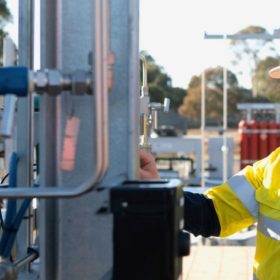
The Australian Energy Market Commission has called for changes to be made to the national energy rules to allow for the injection of hydrogen into the existing gas distribution grid to support the needs of a transitioning energy market.
Australia ‘open for business’ after climate bill passes parliament
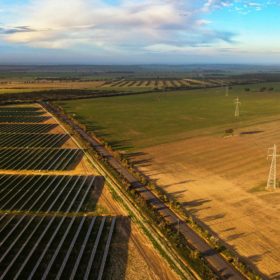
Australia’s federal government has trumpeted the successful passage of legislation enshrining a pledge to slash carbon emissions by 43% by 2030 and to net zero by 2050, saying it provides the certainty that investors have been seeking so they can invest in renewable energy generation, storage and in transmission.
Queensland expected to target to new renewable energy mark
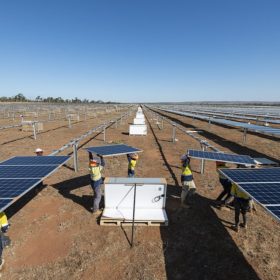
The Queensland government is reportedly considering ramping up its renewable energy target as the state looks to wean itself off coal-fired power on the pathway to net zero emissions by 2050.
NSW announces inaugural tender for ambitious grid transformation
New South Wales is seeking 2,500 GWh of annual generation and 600 MW of long-duration storage for its first tender, part of realising its ambitious NSW Electricity Infrastructure Roadmap.
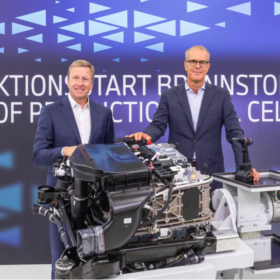
BMW starts in-house production of fuel cells for iX5 Hydrogen
BMW Group said it is targeting the premium segment with its iX5 Hydrogen car, Topsoe revealed that it will invest US$267 million (AU$392m) to build the world’s largest SOEC electrolyzer plant in Denmark, and Bosch announced plans to invest US$200 million (AU$292m) in US fuel cell production.
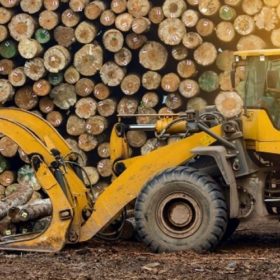
Native forest wood waste burning to be excluded from ‘renewable’ classification, Senate report recommends
As Australia’s Climate Change Bill 2022 progresses through parliament, a Senate committee has recommended using wood waste from native forests to generate electricity should no longer be classified as “renewable energy.” It is not yet clear what impact such changes would have on the growing pipeline of Australian ‘biomass’ projects.
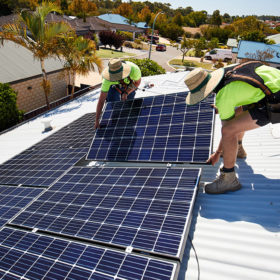
CEC warns labour and skills shortages threaten clean energy transition
Australia’s transition to a clean energy future is at risk with a new report indicating the nation’s quickening shift to a grid dominated by renewables has resulted in labour and skills shortages that could deepen as the sector continues to grow.