ANU researchers push boundaries on tandem solar cells
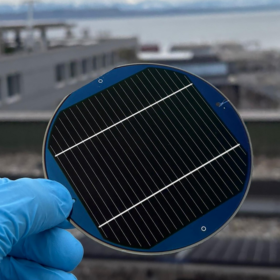
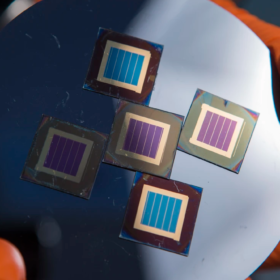
The researchers have achieved 27.7% efficiency for mechanically-stacked perovskite-silicon tandem cells.
Solar-powered trees for cool spots in urban hot spots
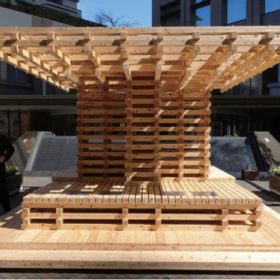
A Japanese consortium has started producing solar-powered ‘urban furniture’. The result is a solar-plus-battery bench with cooling elements and vaporizers.
Organic pigments for stretchable solar cells
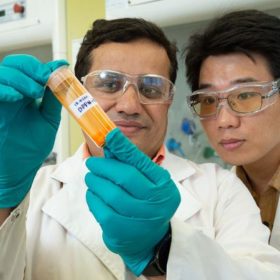
Researchers at the Queensland University of Technology have compiled a detailed overview of the use of diketopyrrolopyrrole organic pigments in driving the future of electronic devices, including wearable technology and solar cells that could be made at a fraction of the current costs.
How UQ scored a quantum dot efficiency world record
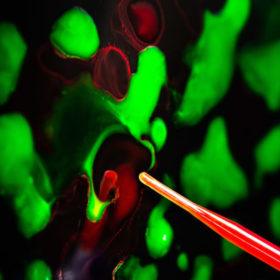
In early 2020, a team of researchers at University of Queensland announced that it had managed to break the world record for quantum dot solar cells. The UQ researchers did so by synthesizing a quantum dot solar cell from a halide perovskite and using a surface engineering strategy to improve the optoelectronic quality of the perovskite quantum dots.
Evaluating battery chemistries for grid-level storage
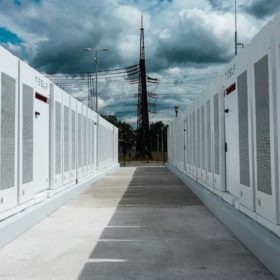
Researchers in China have ranked some of the most commonly used battery chemistries according to parameters deemed important for grid-level storage. The team gave a score in each category and determined a winner – and it wasn’t lithium-ion.
International consortium claims 25% efficiency for flexible CIGS solar cell
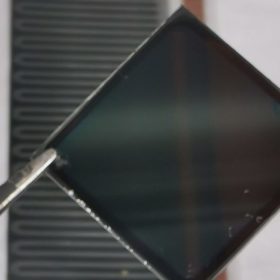
Researchers led by Belgian institute imec claim to have achieved the result with a 1cm² flexible thin-film cell intended for building-integrated PV application. The result tops the 24.6% efficiency the consortium announced in September 2018. The cell’s developers are now aiming for 30%.
Energy storage research hub launched at UNSW
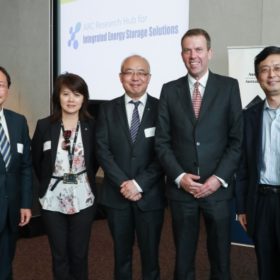
The ARC Research Hub for Integrated Energy Storage Solutions has a broad research mandate as it looks for innovative energy storage solutions for the energy transition, but some of the nation’s finest minds are now working on them together.
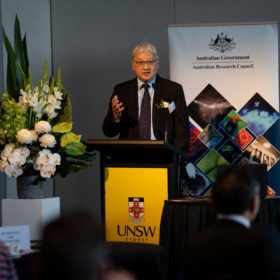
Slip-Slop and Slap it on everything, the ‘Solar Skin’ that doesn’t burn
Professor Guan Yeoh is an essential part of a project to commercialise a solar polymer membrane called ‘Solar Skin’, which can generate energy from both direct and indirect sunlight and off both vertical and horizontal surfaces. The technology has the potential to transform every CBD and local government area into a solar farm. pv magazine Australia sat down with Professor Yeoh for a Q&A.
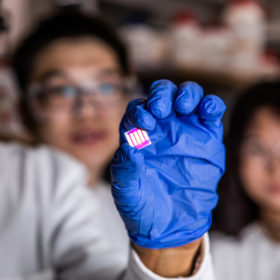
UQ: A quantum dot solar cell with 16.6% efficiency
Scientists at Australia’s University of Queensland have set a new world record for a quantum dot solar cell. The group fabricated a 0.1cm² device from perovskite and measured power conversion efficiency at 16.6%. The record has been verified by the United States National Renewable Energy Laboratory.
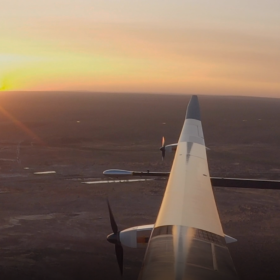
Pioneering solar-powered aircraft completes Australian test flight
The PHASA-35 crewless solar and battery-powered aircraft completed its first test flight this week. The pioneering solar-powered aircraft could fill a niche as a cheap alternative to satellites.