Demand, policies, investment key to green hydrogen development
Ruchi Gupta is a research fellow at the University of Geneva’s Institute for Environmental Sciences. She focuses on how flexibility options, such as sector coupling with hydrogen production, can support renewable energy integration and decarbonise a wide range of sectors.

UN wants to reduce carbon footprint of peacekeeping
The international organisation has pledged to deploy clean energy generation equipment wherever possible in its global operations, with the help of the International Renewable Energy Agency.
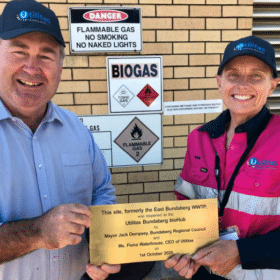
How a Queensland city’s co-location past is fuelling its green hydrogen future
In the world of renewable energy, the past carries charge. It can be an anchor, a learning curve, a hurdle. In Bundaberg, it’s quite literally the fuel for the future. And that green future is being energised by an unusual crew: its local government.
Rystad says cost looms as hurdle for green hydrogen industry
Australia’s determination to establish itself as a major player in the green hydrogen market has seen a flood of government funding and announced projects in recent months but new analysis from international consultancy firm Rystad Energy has highlighted a potential hurdle for the industry.
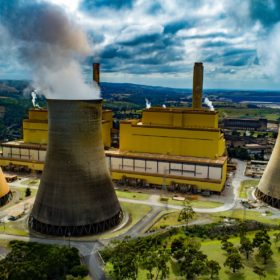
Victoria declares ‘energy emergency’ with Yallourn Power Station at risk
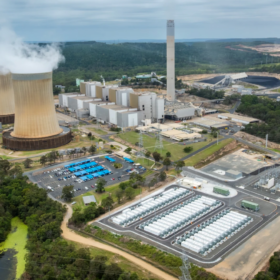
Australia’s coal-fired power generators are again in the spotlight with the Victorian government declaring a state “energy emergency” as damage caused by recent flooding in the Latrobe Valley threatens the ongoing viability of the 1.48 GW Yallourn power station.
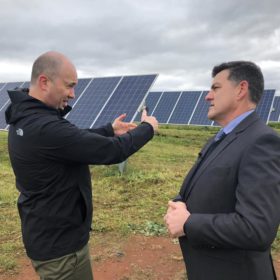
NSW to invest record $380 million for renewable energy rollout
The New South Wales government will allocate $380 million in next week’s budget to help fuel investment in large-scale renewable energy as it continues its transition away from coal-fired generators.
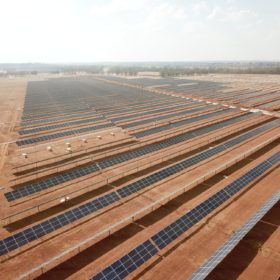
FRV builds on Australian portfolio with Dalby solar-storage hybrid power plant
Saudi-owned renewable energy developer Fotowatio Renewable Ventures continues to build upon its Australian portfolio, commencing construction on a 5 MW solar-storage hybrid power plant near Dalby in southern Queensland.
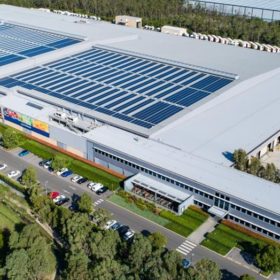
Aldi takes first place in supermarket race to 100% renewables
Aldi Australia committed to reaching 100% renewable energy for its operations by the end of 2021, it’s done that with six months to spare. Achieved through an unprecedented commercial solar rollout, PPAs with two wind farms, and renewable energy certificates, the German discount supermarket beat out its competitors and is now preventing 274,000 tonnes of CO2 emissions annually.
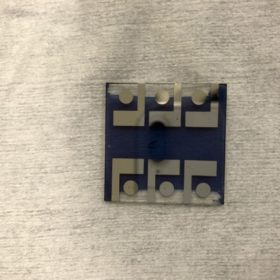
Organic solar cell with 18.4% efficiency via new electrode coating
Saudi scientists built the cell’s electrode with a hole-transporting molecule called Br-2PACz and not with the commonly used PEDOT:PSS. It helped improve the photovoltaic cell efficiency by around 0.9%.
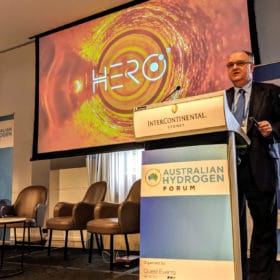
Out-of-the-box Australian selected to be one of eight in World Hydrogen Advisory Board
Andrew Horvath, Global Chairman of hydrogen technology company Star Scientific, has been selected by the global Sustainable Energy Council to be one of the eight leaders on its World Hydrogen Advisory Board. “I’m the only Aussie!” Horvath told pv magazine Australia.