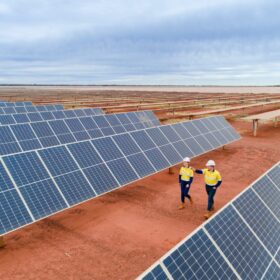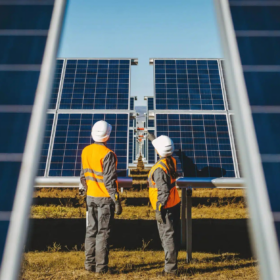
NSW amends laws to pave the way for rooftop solar and big batteries
The New South Wales government has amended legislation to allow for larger-scale solar systems to be installed on homes and commercial buildings without council approval and to facilitate the installation of utility-scale batteries.
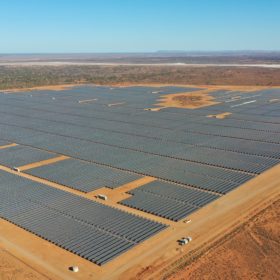
South Australia forecast to add nearly 1 GW of big PV over the next four years
With more than half of its electricity already supplied by wind and solar, South Australia is setting the bar high for how to efficiently decarbonize the grid. As it moves toward its 2030 target of “net” 100% renewables, the speed of the state’s energy transition will depend on a host of factors.
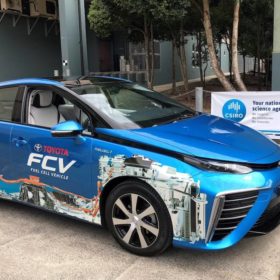
Toyota unveils the first stage of its Altona green hydrogen hub
Toyota Australia has marked the 50th anniversary of Earth Day with the unveiling of the first stage of its green hydrogen production and refueling center at its former manufacturing site in West Melbourne.

Macquarie Uni signs on with Snowy Hydro
Sydney’s Macquarie University has signed a seven-year contract with Snowy Hydro owned Red Energy to be powered by 100% renewables from 1 July 2020. The move demonstrates the variety of pathways to sustainability through renewable energy.
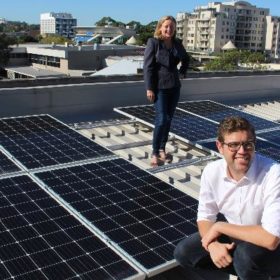
Solar to pay for a Ticket to Ryde
The City of Ryde has decided to adjust its ambitions from a 60% renewable energy target by 2030 to a 100% renewable energy target.
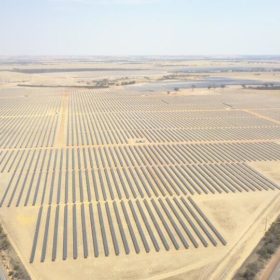
Risen Energy’s Merredin Solar Farm readies to join the grid
The Chinese PV module maker’s 132 MW PV project in Western Australia’s Wheatbelt region has completed all pre-commissioning testing and is now starting the commissioning process.
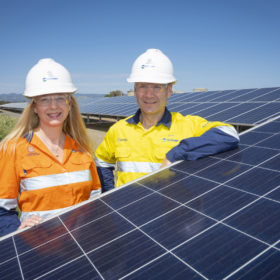
SA Water to build solar farm on site of former oil refinery
SA Water has bought a significant portion of land from ExxonMobil Port Stanvac oil refinery to build a large-scale solar farm to generate energy for its neighbouring Adelaide Desalination Plant. The project is part of SA Water’s $300 million investment in solar and energy storage.

Rio Tinto urges climate action despite pandemic and recession
Rio Tinto Chairman Simon Thompson is urging governments to take “urgent” action on climate change despite the twin evils of Covid-19 and economic recession. The call comes amid criticism that Rio Tinto’s own emissions reductions schemes are too weak.

Infrastructure critical to energy transition, says CEFC report
The Clean Energy Finance Corporation along with its partners has released an Issues Paper on the halting state of Australia’s infrastructural development. The paper highlights the nation’s short-sighted infrastructural projects and their weight upon the energy transition.
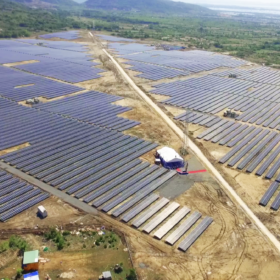
Vietnam finally unveils new FITs for large-scale, rooftop, floating PV
Hanoi has set new feed-in tariff rates for utility-scale, rooftop and floating PV projects, ending a long period of policy uncertainty. The government has announced the new rates, which are broadly in line with industry expectations, roughly 10 months after the expiration of its old tariffs.