Ooh, aah, Dubbo goes solar
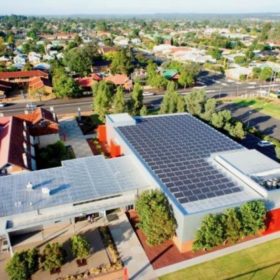
Dubbo, birthplace of Glenn McGrath, has announced its membership in the Cities Power Partnership (CPP) program as it looks to transition to renewable energies, particularly solar.
Western Australia, the stand-out state for stand-alone systems
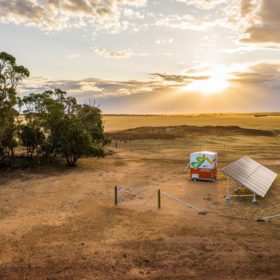
Before social-distancing became a thing, Western Australia stood apart from the rest of the country. Defined by remoteness, the state is beginning to embrace its identity, and cure itself of network headaches at the same time, with the uptake of stand-alone power systems (SPS).

New Zealand may reach 6 GW of solar by 2050
National utility Transpower said that solar could take a 9.3% share of the country’s generation mix by the middle of the century. However, real growth is only forecast to occur from 2035, with distributed generation expected to account for more than 80% of total installed PV.
Long read: Orchestral support for an evolving energy system
As one of the world leaders in PV+storage deployment, Australia has ample opportunity to develop a two-way energy system that could provide critical services to the grid and deliver additional revenue streams for rooftop PV and battery prosumers. Although still in their early days, some virtual power plant (VPP) projects are already proving their worth.
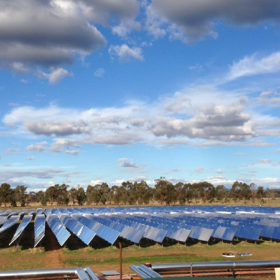
Jemalong solar farm starts construction largely unaffected by Covid-19
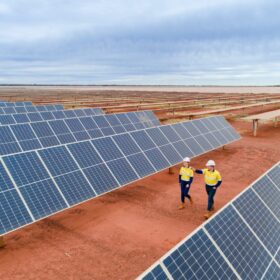
One of the largest solar projects scheduled to break ground this year has moved into the construction phase mostly unaffected by Covid-19 disruption.

More postponements due to Covid-19
The list of clean energy industry events put on hold due to the Covid-19 outbreak is lengthening.
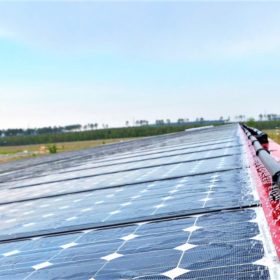
Cooling down PV panels with water
France’s Sunbooster has developed a technology to cool down solar modules when their ambient temperature exceeds 25 C. The solution features a set of pipes that spread a thin film of water onto the glass surface of the panels in rooftop PV systems and ground-mounted plants. The cooling systems collect the water from rainwater tanks and then recycle, filter and store it again. The company claims the technology can facilitate an annual increase in power generation of between 8% and 12%.

Windlab lands loan to manage through project delays
The developer has secured a $20 million loan from Squadron Energy and Federation Asset Management, as it continues to struggle with connection delays on its Kennedy solar-wind-battery park.
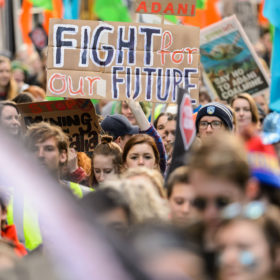
Young, invested and digitally savvy — AYCC trains a youth army for climate justice
The Australian Youth Climate Coalition intends to utilise the fact that many of its constituents are at home and online due to COVID-19, and train young climate-concerned Australians to effectively organise against the influence of the fossil-fuel lobby.
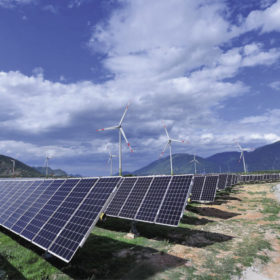
Covid-19 to wreck economics of new solar and wind projects
While the full extent of the impact of the Covid-19 pandemics on the renewable energy market is yet to reveal itself, Norwegian consultancy Rystad Energy predicts new solar and wind projects will grind to a halt this year and experience a ripple effect in the years beyond as currencies across the globe continue to fall against the US dollar.