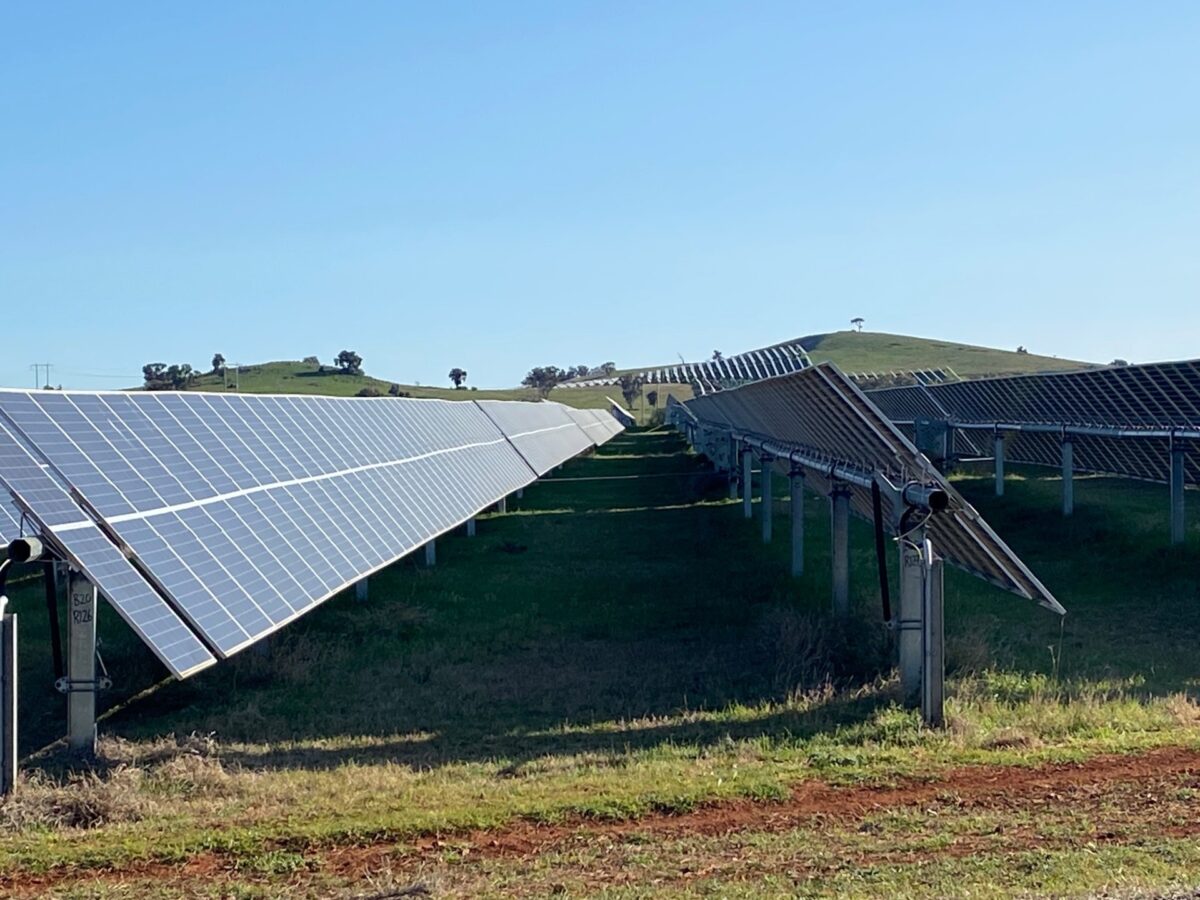





The Australian Energy Market Operator (AEMO) says total generation and storage capacity will need to triple from the current 92 GW to 297 GW in 2050 to keep the energy transition on track with electricity consumption in the nation’s main grid forecast to rise by 90% from 205 TWh now to 389 TWh by mid-century.
AEMO said the Draft 2026 Integrated System Plan (ISP), open now for consultation ahead of the final 2026 ISP being released in June next year, presents a roadmap for generation, storage and transmission infrastructure in the National Electricity Market (NEM) through to 2050.
The market operator said the plan is underpinned by detailed analysis of more than 2,000 potential development paths assessed for cost, benefits, and future power system needs across three electricity market scenarios.
At its core is the optimal development path (ODP) Step Change scenario, put forward as the optimal mix of generation, storage and network investments to replace coal as it retires, and meet consumer needs and government policies, at least cost.
Consistent with previous reports, electricity consumption is expected to nearly double from 205 TWh today to 389 TWh by 2050, driven by electrification of transport, expansion of data centres and industry shifting from gas to electricity. At the same time, two-thirds of the remaining coal fleet is to close by 2035, in many cases earlier than publicly announced closure dates, with all due to retire by 2049.
To deliver the ODP proposed in this draft, AEMO said total generation and storage capacity will need to triple, rising from today’s combined 82 GW to 190 GW by 2035 and 297 GW by 2050.
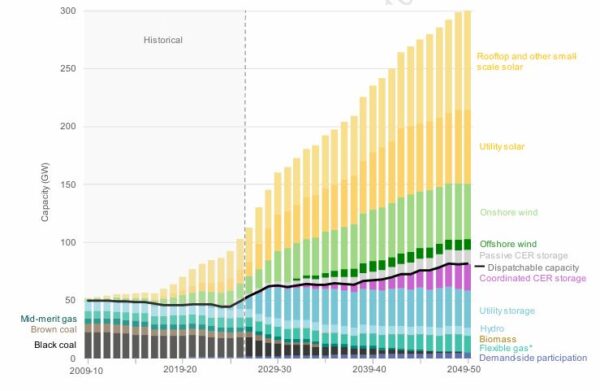
Image: AEMO
Grid-scale solar and wind capacity in the NEM would rise from its current 23 GW to 58 GW by 2030, then double to 120 GW by 2050. Grid-scale solar would reach 32 GW by 2030, 38 GW by 2035, and 63 GW by 2050. Wind would reach 26 GW by 2030, 40 GW by 2035, and 57 GW by 2050. In addition, the NEM’s existing 7 GW of hydro-electric generation capacity remains in place while 14 GW of flexible gas-powered generation would be needed by 2050, a marginal increase on the current 12 GW of capacity.
The ODP forecasts 33 GW of dispatchable, grid-scale battery and pumped-hydro energy storage would be needed by 2050, with 27 GW by 2030.
Consumers will also continue to play a major part in Australia’s energy transition with small-scale solar expected to increase four-fold from 25 GW currently to 87 GW in 2050. This in addition to 27 GW of behind-the-meter batteries and 9 GW of storage from electric vehicles (EVs) by 2050 when 80% of all vehicles are expected to be battery EVs.
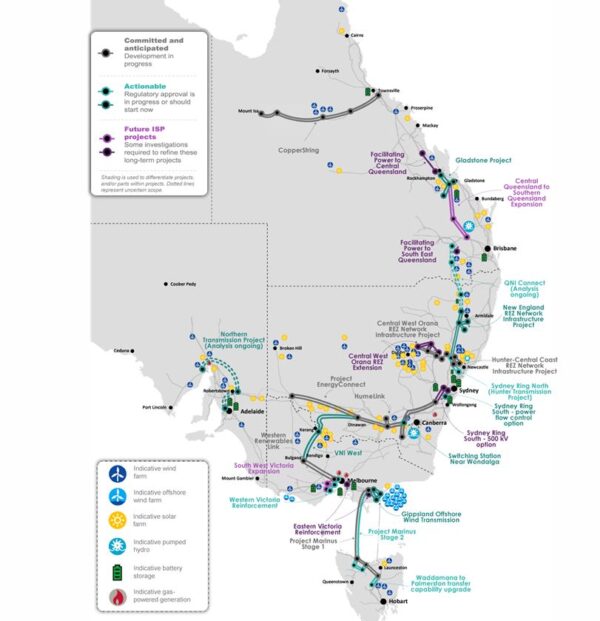
Image: AEMO
In addition to the new generation and storage, the ODP calls for a further 6,000 kilometres of new transmission lines to be added to the existing 44,000 km network. This includes 2,800 km from already committed or anticipated projects that are well underway for delivery.
Overall cost to deliver all utility-scale generation, storage, firming and transmission and distribution network in the ODP is estimated at $128 billion (USD 84.95 billion), 2.8% higher than in the 2024 ISP.
AEMO Chief Executive Officer Daniel Westerman said the draft roadmap is consistent with previous reports, and reflects investments and momentum underway, and what’s needed as Australia’s remaining coal power stations become less reliable and withdraw.
“Extensive stakeholder consultation and modelling of thousands of potential investment combinations has identified the least-cost option,” he said. “Renewable energy, firmed with storage, backed up by gas and connected with upgraded networks remains the least cost roadmap to meet Australia’s energy needs. This aligns with consumer, industry and government investments already underway.”
Westerman said “significant” progress is being made towards the ODP with development of all generation, storage and transmission infrastructure gaining momentum, but he added the transition is not without challenges.
“While momentum in investment and delivery continues to build, challenges remain in delivering essential infrastructure at the pace required,” he said, warning that “slower progress will erode benefits to consumers and present risks to reliability.”
Clean Energy Council CEO Jackie Trad welcomed the draft report and said it should be read alongside the progress already made across the system, with renewable generation nearly tripling in a decade.
“This transition is already well advanced. Only 10 years ago, just 14.6% of the east coast’s electricity came from renewables; today it is close to 50%,” she said.
“Energy consumers are currently installing close to 1,400 batteries a day, and renewables have avoided more than 200 million tonnes of emissions in less than a decade. With the right policy and planning settings, the system can continue to accelerate.”
AEMO is now calling for feedback on this draft, with written submissions requested by 13 February 2026. The final 2026 ISP is to be released by the end of June 2026.
This content is protected by copyright and may not be reused. If you want to cooperate with us and would like to reuse some of our content, please contact: editors@pv-magazine.com.


1 comment
By submitting this form you agree to pv magazine using your data for the purposes of publishing your comment.
Your personal data will only be disclosed or otherwise transmitted to third parties for the purposes of spam filtering or if this is necessary for technical maintenance of the website. Any other transfer to third parties will not take place unless this is justified on the basis of applicable data protection regulations or if pv magazine is legally obliged to do so.
You may revoke this consent at any time with effect for the future, in which case your personal data will be deleted immediately. Otherwise, your data will be deleted if pv magazine has processed your request or the purpose of data storage is fulfilled.
Further information on data privacy can be found in our Data Protection Policy.