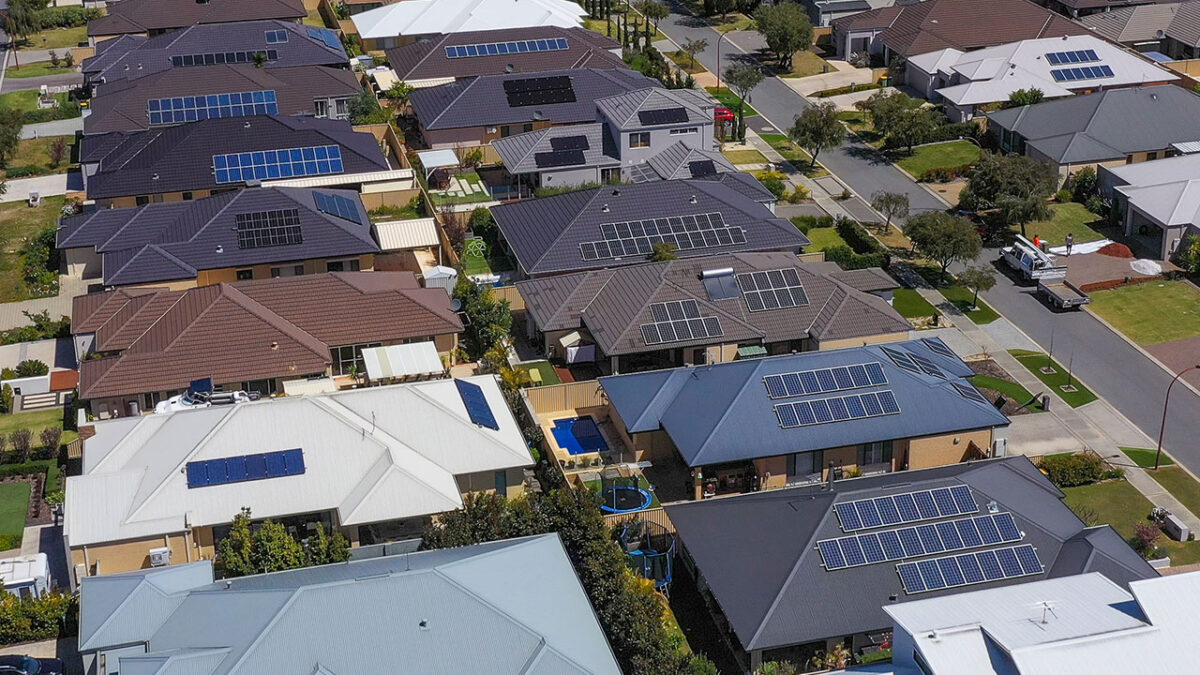





Announcing the changes, federal Minister for Climate Change and Energy Chris Bowen said: “We want more Aussie households to have access to batteries that are good for bills and good for the grid – because it means more cheap, fast, safe solar energy is available in our homes night or day, when and where it’s needed.”
However, while the changes are a step in the right direction towards ensuring the program is fairer, many significant problems still exist.
More than 155,000 batteries
The Cheaper Home Batteries Program started in July this year. It has provided discounts of around 30% for the upfront cost of home batteries. The government estimated it would lead to one million batteries installed by 2030.
More than 155,000 homes and small businesses have benefited from the program in less than six months.
This success has some benefit for others too, as battery storage can put downward pressure on grid electricity prices.
However, as reported last week, around a third of the budget allocation for the five-year program has been used up in five months.
Much of the cost has been funding oversized batteries.
The average battery system size installed under the program has been more than 22 kWh.
In contrast, the government suggests 4-14 kWh as typical for a regular Australian household.
A boost in funding
The changes to the Cheaper Home Batteries Program will kick in from May 1 next year.
The federal government will significantly boost funding for the program to $7.2 billion (USD 4.72 billion), an increase from the $2.3 billion originally allocated. This is expected to see more than two million Australians install a battery by 2030.
In other words, the government has nearly tripled the amount of cash but only doubled the total number of batteries they were planning to fund.
The subsidy is now set to decline at a faster pace. When the scheme ends in 2030, the subsidy will be less than half compared to the original plan.
Support for larger batteries will also be wound back to some extent.
Each kilowatt-hour between 14 kWh and 28 kWh will receive only 60% of the current subsidy rate.
This falls to 15% for the 28-50 kWh range.

Image: Australian Government
A step in the right direction
These changes are a step in the right direction.
They are likely to improve the overall fairness of the program, as it tends to be more wealthy households that can afford larger systems and receive larger subsidies. This will be scaled back after next April.
But a lot of the existing problems with the program still remain.
First, the program will likely continue to bring forward battery installations that would have happened anyway, as has happened in other contexts. This means governments end up paying mostly for investments that would have happened regardless.
This is a good reason to make the subsidies smaller – or, even more importantly, more targeted.
For example, they can be targeted based on household assets to ensure those who are less likely to buy a battery in the first place because of the financial cost will benefit. Research in solar contexts can inform this targeting.
There are also ways for the government to get more new information on household willingness to pay.
The fairness of the program could be improved further. More wealthy households are more likely to get a subsidy, and more likely to get a larger subsidy, as they have more purchasing power. The new program would still mean a 25 kWh battery would receive around double the subsidy for a 10 kWh battery.
Fairness is one benefit of smaller subsidies for larger batteries, as the subsidy for wealthy households who can afford larger batteries would be closer to the subsidy for others. There is also an issue of wealthier households with larger batteries benefiting more from selling more electricity in the wholesale market.
Smaller subsidies for larger batteries also reduce the incentive for installers to try to sell and report the biggest possible batteries.
For example, a lower subsidy rate is possible compared to the government’s plan for each kilowatt-hour of battery systems between 14kWh and 28kWh.
Uncertainty also exists about the impact of the faster pace of subsidy decline.
Households who need to wait a few years to afford a battery might be disadvantaged relative to those who can buy sooner.
While the faster pace of subsidy decline might be suitable if battery prices fall, evidence of prior price declines is mixed. This should motivate the government to more frequently re-evaluate the scheme.
Author: , Senior Lecturer, Department of Economics, Macquarie University
This article was initially published in The Conversation and is republished here under a Creative Commons Licence.
The views and opinions expressed in this article are the author’s own, and do not necessarily reflect those held by pv magazine.
This content is protected by copyright and may not be reused. If you want to cooperate with us and would like to reuse some of our content, please contact: editors@pv-magazine.com.




By submitting this form you agree to pv magazine using your data for the purposes of publishing your comment.
Your personal data will only be disclosed or otherwise transmitted to third parties for the purposes of spam filtering or if this is necessary for technical maintenance of the website. Any other transfer to third parties will not take place unless this is justified on the basis of applicable data protection regulations or if pv magazine is legally obliged to do so.
You may revoke this consent at any time with effect for the future, in which case your personal data will be deleted immediately. Otherwise, your data will be deleted if pv magazine has processed your request or the purpose of data storage is fulfilled.
Further information on data privacy can be found in our Data Protection Policy.