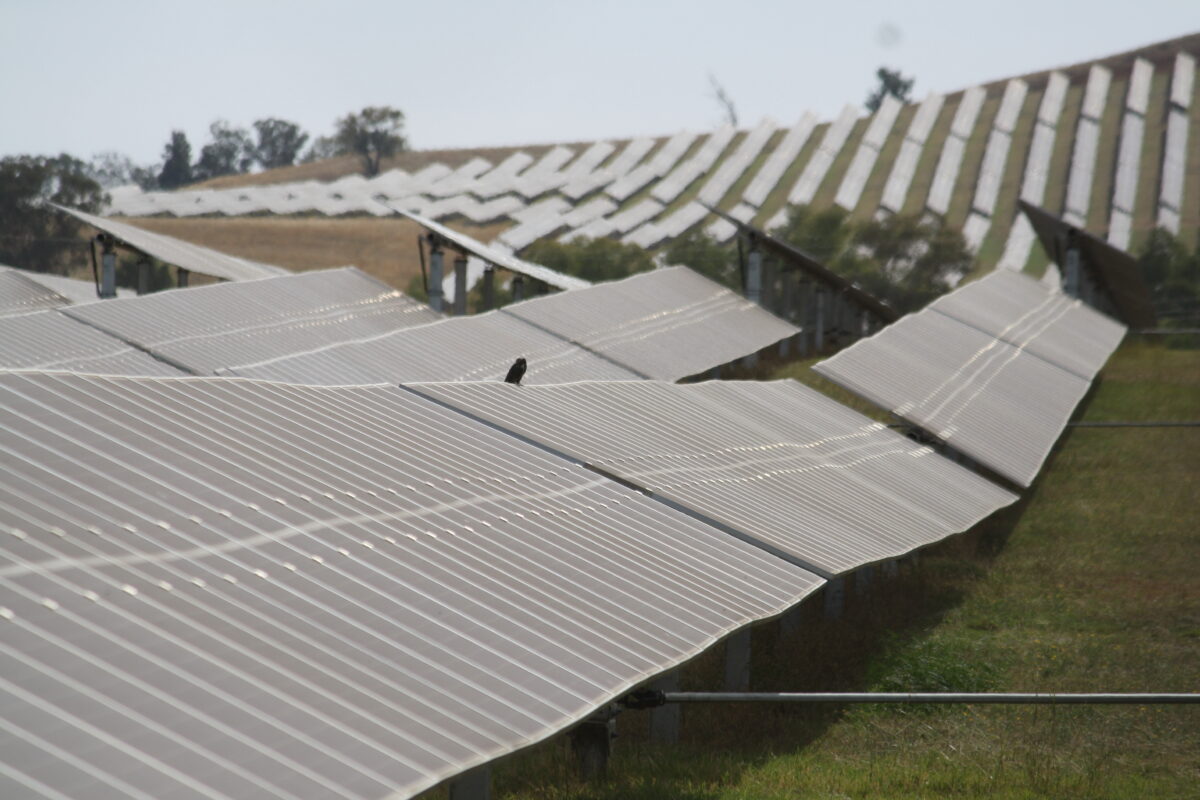





Curtailment outcomes can vary markedly by location, timing, and operating conditions, and are therefore best understood at the level of individual projects rather than in aggregate.
Last Wednesday WattClarity published the latest edition of our annual Generator Statistical Digest, which presents detailed performance statistics for every unit in the NEM, including a breakdown of monthly network and economic curtailment figures. Building on similar articles that we published in 2023 and 2024, this article uses the latest GSD data to highlight curtailment patterns across the NEM in 2025 and how these outcomes fit with longer-term trends.
The two types of curtailment — and why they are not independent
Curtailment occurs when a generator could theoretically produce more power than it is actually delivering to the market. In this article, we distinguish between:
- Network curtailment, where output is reduced due to a binding network-related constraint, such as thermal limits on a transmission line, voltage limitations, etc. and
- Economic curtailment, where output is reduced due to pricing/bidding effects — most commonly, negative spot prices.
While analytically distinct, these two forms of curtailment are often closely linked in practice. Network constraints can materially influence spot price outcomes (for example through interconnector limits that lead to sustained price separation between two adjoining regions). Those price effects, in turn, shape bidding behaviour, meaning network limitations can indirectly drive economic curtailment.
For semi-scheduled units — such as large solar and wind farms — curtailment is of particular interest because these assets are typically contracted via PPAs to sell all of their available output, and their resource (i.e. the wind blowing or the sun shining) has no marginal fuel cost. As a result, there is a strong incentive to maximise utilisation of the available on-site solar or wind resource. In this context, many analysts, including those at the AEMO, often use the term economic offloading rather than economic curtailment, reflecting the voluntary decision to reduce output in response to market conditions.
For scheduled units — such as coal, gas, hydro, and battery facilities — economic curtailment happens far more often, as these units are dispatchable and thus face real fuel or opportunity costs, hence routinely adjust their output in response to price signals.
In our GSD report, we apply a consistent methodology across all units to estimate network and economic curtailment using dispatch, availability and bid data. The conceptual basis for this approach, and the associated caveats, were outlined in more detail in this earlier article by Allan O’Neil.
Headline figures show that curtailment continues to rise at a faster rate than production
As with the previous editions of this annual article series, I’ll start with a set of headline statistics and charts for the NEM as a whole, before digging into outcomes at the regional and individual unit level.
At a high level, across the 212 large solar and wind units that made up the NEM’s semi-scheduled fleet in 2025, our data shows that:
- They produced 50.2 TWh of energy in 2025, compared with 41.8 TWh in 2024 — this increase is reflective of both new capacity additions and projects progressing beyond commissioning across the solar and wind fleet. Likewise, availability also increased to 57.7 TWh in 2025, up from 46 TWh in 2024.
- Curtailment, however, continued to rise faster than both production and availability. Estimated network curtailment reached 1.5 TWh in 2025, compared with 1.2 TWh in 2024, while economic curtailment increased more materially to 5.7 TWh in 2025 from 3.15 TWh in 2024.
- In aggregate, total curtailment therefore rose year-on-year to 7.2 TWh in 2025, from 4.3 TWh in 2024.
To put some of these numbers to scale, 1 TWh is roughly equivalent to the entire production from Gladstone Power Station Unit 4 in 2025, or … a 114 MW hyperscale data centre campus operating continuously for a full year (assuming a baseload operating profile), or … according to a quick google search, the annual electricity consumption of approximately 160,000 Australian households.
2025 delivered some usual, and unusual, seasonal outcomes for solar and wind
As was highlighted in the AEMO’s Quarterly Energy Dynamics (QED) report released last week, the final quarter of 2025 saw a pronounced increase in economic curtailment across the NEM. While much of the media coverage focused on lower average spot prices relative to previous fourth quarters, it was the record frequency of zero and negative price intervals — particularly in Victoria and South Australia — that drove much of the increase in economic curtailment.
In the next three charts, we examine production, network curtailment and economic curtailment relative to installed capacity across the full 2025 calendar year. These charts express output and curtailment as a share of nameplate capacity, including units still progressing through commissioning. As a result, the implied availability levels may appear lower than metrics in other publications, and are best interpreted as system-level indicators rather than like-for-like comparisons with measures that adjust for commissioning status.
Large solar
As in previous years, solar output and curtailment in 2025 followed a familiar seasonal profile. Generation slowly softened through the middle of the year as daylight hours shortened, before lifting again into spring, while higher levels of curtailment tended to emerge in the shoulder seasons when milder conditions suppress electricity demand across much of the market.

Source: GSD2025 Data Extract
A notable seasonal feature of solar performance across the NEM in 2025 was the persistence of poor conditions across the northern half of the market throughout Autumn. As we noted on WattClarity at the time, a dominant high-pressure system led to below-average solar irradiance across much of Queensland and northern New South Wales, while conditions in the south were generally stronger than average.
At a NEM-wide level these effects partially offset one another, but the impacts were far more pronounced at an asset level. Notably however, the heavy rainfall associated with Cyclone Alfred in March suppressed solar conditions, contributing to materially lower availability (relative to capacity), even on an aggregate NEM-wide level, than compared to March 2024.
Wind
For the wind fleet, 2025 delivered more favourable conditions than in 2024. which was dogged by a pronounced wind drought.
Aggregate availability improved significantly in late autumn and early winter compared to the previous year — particularly in May through to July — and again toward the end of the year between October and December. These stronger wind conditions (especially during daylight hours) contributed to softer price conditions in the final quarter, with lower prices and correspondingly higher levels of economic curtailment, consistent with what was highlighted in the QED last week.

Source: GSD2025 Data Extract
On a volumetric basis, April was the weakest month for wind production in 2025, recording availability levels (relative to installed capacity) comparable to those seen during the wind drought in autumn 2024.
Combined large solar and wind
When combined, we see shades of some familiar seasonal patterns. The period from April to June continued to record the lowest levels of both availability and production across the VRE fleet as a whole. We can also see that 2025 amplified an emerging pattern already visible in past years — economic curtailment is increasingly concentrated in spring and summer.

Source: GSD2025 Data Extract
Seasonal curtailment patterns are diverging by region
A region-by-region view of economic and network curtailment shows a clear divergence across the NEM, driven by differences in interconnector capability, demand profiles, and seasonal conditions. It is worth noting that while the preceding charts expressed curtailment as a percentage of nameplate capacity — the charts that follow present curtailment as a percentage of availability, providing a clearer view of how curtailment varies through the year once solar and wind conditions are taken into account.
In 2025, the Queensland region exhibited a sharp rise in economic curtailment in August, and peaking in September. This pattern is consistent with the combination of strong VRE output, low market demand during daylight hours, and limited export capability to southern regions during periods of high northern supply over these months. The region experiences some of the deepest midday demand troughs in the NEM due to high distributed PV penetration, which amplifies the frequency of zero and negative prices during high-output periods. In contrast to the other three mainland regions, network curtailment in Queensland remains relatively low and stable across the year.

In QLD, economic curtailment saw a sharp rise in August and peaked in September. Source: GSD2025 Data Extract
New South Wales stands out for having materially lower levels of economic curtailment than the other mainland regions, particularly during spring and early summer when economic curtailment rises above 20% elsewhere. This reflects NSW’s deeper load base and greater ability to absorb VRE output without immediately pushing prices into negative territory. However, this lower exposure to price-driven curtailment is partly offset by comparatively higher levels of network curtailment, most notably from October through December.
As highlighted across multiple QEDs, NSW has generally recorded fewer zero and negative price intervals than Victoria and South Australia, supported by higher daytime operational demand and strong connectivity with Queensland — but this same pattern also means curtailment in NSW is more often shaped by binding network constraints rather than by price outcomes alone.

NSW has materially less economic curtailment than the other mainland regions, but consistently has the highest network curtailment relative to availability. Source: GSD2025 Data Extract
Victoria and South Australia display similar seasonal profiles, characterised by relatively moderate curtailment through autumn and winter followed by a sharp escalation in spring and early summer. In both regions, economic curtailment rises rapidly from September onwards, coinciding with periods of strong wind output, subdued demand, and changes in interconnector dynamics — conditions repeatedly emphasised in AEMO’s QEDs as key drivers of the record incidence of zero and negative prices observed in recent years.


Seasonal economic curtailment profiles in VIC and SA are closely aligned, reflecting correlated weather conditions and shared interconnector dynamics. Source: GSD2025 Data Extract
Operating conditions in New South Wales are becoming more challenging
One of the more important takeaways from the 2025 data is that, while VRE projects in New South Wales are experiencing relatively lower levels of economic curtailment than the other three mainland regions, operating conditions within the region are becoming significantly more challenging.
In the map below I’ve charted network and economic curtailment, as a percentage of availability, in 2025 for each of semi-scheduled solar and wind unit in the NEM.

While economic curtailment is far more widespread, network curtailment is geographically concentrated to known, and emerging, bottlenecks. Source: GSD2025 Data Extract
In terms of network curtailment in NSW, we can see that the most affected transmission corridors is the 132 kV sub-section of the grid near the town of Orange, and the transmission corridor around Wagga Wagga, which forms a key part of the Victoria-to-New South Wales interconnector.
The next map highlights the year-on-year increases in curtailment outcomes between 2024 and 2025, at this unit level.

NSW saw a large increase in incidences of daytime negative prices in 2025 compared to 2024, driving higher relative economic curtailment of solar farms within the region, while network constraints are also worsening. Source: GSD2024 and GSD2025 Data Extract
This highlights a key nuance. While NSW continues to exhibit lower aggregate economic curtailment than Queensland, Victoria and South Australia (like we saw in one chart earlier), many solar assets in the region that were already exposed to rising network constraint risks are now increasingly challenged by economic curtailment, as the region experienced a much sharper increase in zero and negative price intervals throughout 2025.
As an example of how these dynamics are playing out at the unit level, the Goonumbla Solar Farm in central NSW recorded one of the largest year-on-year deteriorations in performance across the NEM, with its capacity factor falling by 7.62% in 2025 compared to 2024. Goonumbla is affected by the 94T constraint — a thermal limit on the Molong to Orange North 132 kV line — which has historically driven persistent curtailment at the Molong and Manildra Solar Farms. While Goonumbla has a lower factor on the left-hand side of the constraint, the growing frequency and duration of binding events means it is now being caught more often.
The diurnal profiles from the GSD, shown below, illustrate how the curtailment from this constraint (and increasing incidence of negative prices in NSW) are increasingly capping this unit’s daytime output.

In a sign of the times, the Goonumbla Solar Farm now has its highest output at sunrise and sunset across most of the year. Source: GSD2025
As we see, the impact was less pronounced in June, when lower solar availability across the corridor and stronger output from Flyers Creek Wind Farm — located on the opposite side of this particular constraint — partially relieved flows on the constrained line.
Outage constraints are increasingly playing a role in asset performance
For those who follow the market closely day by day, it should be becoming increasingly clear that transmission outage-related constraints are having a more visible impact on individual unit performance — and, by extension, pricing outcomes.
One clear example of this can be seen for the Crowlands Wind Farm in western Victoria, which experienced more than double the level of network curtailment in 2025 compared to 2024, driven primarily by two extended transmission outages in early June and again in late September.
In both cases, the unit was impacted by a binding constraint associated with an outage on the Wagga-to-Walla Walla 330 kV transmission line in southern NSW. While this line is located roughly 350 km north-west from Crowlands (and in a completely different region), a combination of other outages and network conditions across the broader VNI corridor led to a material amount of network curtailment for the unit.

Two extended outage constraints in early June and late September, led to material network curtailment for the Crowlands Wind Farm in Victoria. Source: GSD2025
The timing of the June outage was likely particularly costly for the unit (in terms of opportunity cost), as it coincided with the highest month for spot prices in Victoria for the year.
Key takeaways
As I have emphasised in past editions of this annual review, curtailment is a natural — and increasingly expected — feature of any power system with high penetrations of VRE.
That, however, does not make it any less painful for developers and operators to navigate.
The GSD2025 data reinforces that while both network and economic curtailment continue to rise at an aggregate level, outcomes vary markedly by region, by generation type, and by asset — with network and economic drivers increasingly interacting.
The sustained increase in zero and negative price intervals — particularly in Victoria and South Australia, but increasingly also in New South Wales — is emerging as a structural feature of the market and remains a central driver of economic curtailment, especially for solar farms (and wind farms with a strong daytime wind resource).
This analysis also highlights that network constraints are playing a growing role in shaping realised outcomes at the unit level, often with far reaching impacts. Looking ahead, the looming introduction of PEC Stage 2 is almost certain to further complicate bidding and dispatch outcomes and it is unlikely on its own to resolve much of the underlying network bottlenecks currently driving both forms of curtailment.
All of these dynamics underscore why developing or operating an asset in the NEM is becoming increasingly challenging — and why understanding dynamics such as curtailment now requires looking well beyond headlines and averages.
Further reading
The data used in this analysis was drawn from the Generator Statistical Digest 2025 (GSD2025), released in late January 2026. The GSD provides a consistent, unit-level summary of operational and financial performance across all operating units in the NEM, enabling analysts, investors, developers and other stakeholders to assess outcomes such as spot market revenue, constraint impacts, bidding behaviour, FCAS costs, etc. across the NEM. The GSD2025 is available for purchase here.

Author: Dan Lee, Market Analyst, Global-Roam
The views and opinions expressed in this article are the author’s own, and do not necessarily reflect those held by pv magazine.
This content is protected by copyright and may not be reused. If you want to cooperate with us and would like to reuse some of our content, please contact: editors@pv-magazine.com.


By submitting this form you agree to pv magazine using your data for the purposes of publishing your comment.
Your personal data will only be disclosed or otherwise transmitted to third parties for the purposes of spam filtering or if this is necessary for technical maintenance of the website. Any other transfer to third parties will not take place unless this is justified on the basis of applicable data protection regulations or if pv magazine is legally obliged to do so.
You may revoke this consent at any time with effect for the future, in which case your personal data will be deleted immediately. Otherwise, your data will be deleted if pv magazine has processed your request or the purpose of data storage is fulfilled.
Further information on data privacy can be found in our Data Protection Policy.