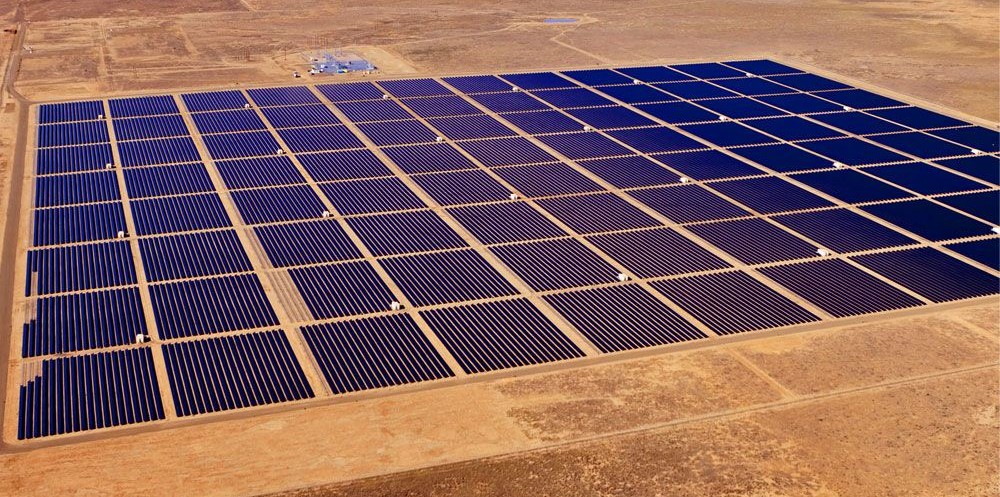





Western Green Energy Hub (WGEH) has signed a feasibility phase agreement (FPA) with major international partners including China-headquartered heavy equipment manufacturer SANY International Development, and multiple undisclosed South Korean entities.
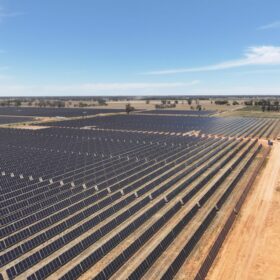
The agreement enables full feasibility and pre-front-end-engineering-design (FEED) studies for Stage 1, designed to deliver approximately 6 GW of hybrid wind and solar capacity to produce up to 330,000 tonnes per year of green hydrogen.
Majority owned by very large-scale renewable hydrogen developments company InterContinental Energy (ICE), WGEH Chair and ICE Head of Australia Isaac Hinton said the FPA moves the project closer to delivery.
“It also reflects strong international confidence in Australia’s growing green hydrogen economy,” Hinton said.
“Stage 1’s scale and partnerships position Australia as a major green fuel producer, well placed to serve emerging demand in Asia.”
Hinton added that strong partners and clear policy focus from both the Australian and Western
Australian governments, means momentum is building to deliver world-scale green fuels from Western Australia.
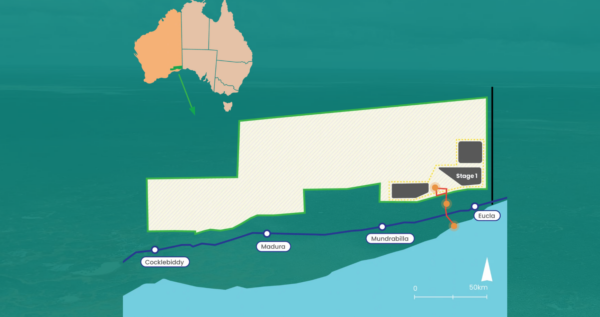
WGEH Chief Executive Officer Ray Macdonald said the FPA partners us with globally recognised leaders in renewable and industrial technology.
“SANY brings world-class equipment, battery systems, solar and hydrogen facilities, while the South Korean entities contribute deep engineering, procurement and construction (EPC) capabilities—giving us the strength to take WGEH into delivery,” Macdonald said.
“This collaboration provides the detail we need on costs, schedule and design to build a strong business case ahead of final investment decision (FID) in 2029.”
As part of the FPA partners will combine expertise to refine costs, schedule, design, and supporting infrastructure to advance development.
SANY International Renewable General Manager Frank Edwin said with the gradual deepening of the FPA, WGEH will assist Australia in achieving great success on its decarbonisation journey across the globe.
The FPA builds on ongoing Memorandum of Understanding (MOU) arrangements between WGEH and the Naju-Si-headquartered Korean Electric Power Corporation (KEPCO), which have supported early collaboration in project design, technology, construction, service provision and offtake.
ICE is behind the patented P2(H2)Node, a modular architecture designed to produce cost-competitive green hydrogen by co-locating 1.5 GW+ electrolysers directly with wind and solar farms.
By eliminating long-distance, high-voltage electricity transmission, this design reduces capital costs by approximately 10% and improves efficiency by approximately 10%.
ICE’s Australian footprint also includes the 1.6 million-tonne-per-year green hydrogen, ammonia, and iron focused Australian Renewable Energy Hub (AREH) in the Pilbara, in support of the Future Made in Australia vision, and for which it recently secured $21 million (USD 14.9 million) from the Australian government.
This content is protected by copyright and may not be reused. If you want to cooperate with us and would like to reuse some of our content, please contact: editors@pv-magazine.com.


By submitting this form you agree to pv magazine using your data for the purposes of publishing your comment.
Your personal data will only be disclosed or otherwise transmitted to third parties for the purposes of spam filtering or if this is necessary for technical maintenance of the website. Any other transfer to third parties will not take place unless this is justified on the basis of applicable data protection regulations or if pv magazine is legally obliged to do so.
You may revoke this consent at any time with effect for the future, in which case your personal data will be deleted immediately. Otherwise, your data will be deleted if pv magazine has processed your request or the purpose of data storage is fulfilled.
Further information on data privacy can be found in our Data Protection Policy.