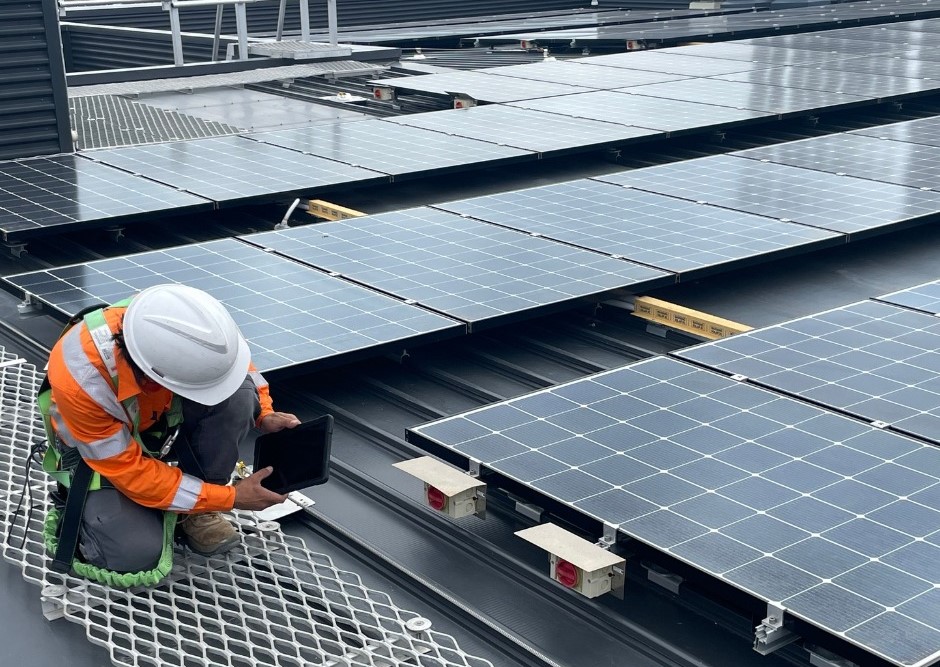





Behind the meter however another story is emerging, and it’s one that we need to address if we care about the future of clean energy: It’s a documentation crisis. In my role leading a national renewable energy maintenance service, we are seeing this problem routinely. As rooftop solar and battery installations surge, we are seeing more and more incomplete, missing or unusable system documentation.
Documentation is unexciting, but it’s critical. Would anyone purchase a vehicle without an owner’s manual? Yet we are increasingly treating rooftop generation and storage — critical electrical infrastructure attached to people’s homes — as if documentation were optional.
On recent service audits across thousands of systems sites, here’s what we found:
- Single-line diagrams were absent
- Inverter configuration settings were not recorded
- Commissioning data could not be traced
- No consistent digital repository existed
In fact, fewer than 15% of systems had a complete documentation pack.
If a system has no documentation, it can take three times longer to diagnose or quote faults. Crews are forced to reverse-engineer installations just to trace an earth fault or confirm a protection setting. We already have a technical skills shortage nationwide and this threatens to make the consequences of this shortage a lot worse.
It’s not a standards problem, either. Australia’s technical standards for solar and storage are strong. Compliance frameworks exist. Commissioning requirements are clear. But the industry lacks enforced continuity in documentation storage and retrieval. Documentation can sit all over the place: in an installer’s inbox, a retail CRM system, a USB drive or just nowhere at all.
Five years later, if the original installer has exited the market or changed platforms, the system effectively becomes undocumented infrastructure. We have built millions of distributed energy assets designed to last 15–25 years — without a reliable mechanism to preserve their service history.
Poor documentation hygiene is not just administrative untidiness. Its impacts are tangible:
- Safety risks from undocumented wiring changes or inverter parameter adjustments
- Higher labour costs passed to consumers due to extended fault diagnosis
- Slower emergency response during storm or grid events
- Insurance and liability exposure where commissioning records are incomplete
- A growing maintenance burden as first-generation systems age
The clean energy transition is entering a new phase. The first was about scale and speed. The next must be about durability. Installation is not the end of a transaction; it is the beginning of a 20-year asset lifecycle, and that lifecycle relies on document hygiene and consistent maintenance.
If documentation at commissioning is inconsistent, inaccessible or unenforceable, then Australia risks inheriting a fragmented fleet of ageing, opaque behind-the-meter systems that are harder to maintain and harder to integrate into a digitally orchestrated grid.
Let’s get pragmatic: Clear documentation requirements at commissioning, mandated digital storage independent of installer solvency, and defined access protocols for installers, maintenance providers and regulators.
Australia’s rooftop solar achievement is real and globally significant. But if we want what we have installed to remain safe, serviceable and grid-ready over decades, documentation must move from afterthought to standard practice. Maturity and resilience are what needs to come next.
The views and opinions expressed in this article are the author’s own, and do not necessarily reflect those held by pv magazine.
This content is protected by copyright and may not be reused. If you want to cooperate with us and would like to reuse some of our content, please contact: editors@pv-magazine.com.



By submitting this form you agree to pv magazine using your data for the purposes of publishing your comment.
Your personal data will only be disclosed or otherwise transmitted to third parties for the purposes of spam filtering or if this is necessary for technical maintenance of the website. Any other transfer to third parties will not take place unless this is justified on the basis of applicable data protection regulations or if pv magazine is legally obliged to do so.
You may revoke this consent at any time with effect for the future, in which case your personal data will be deleted immediately. Otherwise, your data will be deleted if pv magazine has processed your request or the purpose of data storage is fulfilled.
Further information on data privacy can be found in our Data Protection Policy.