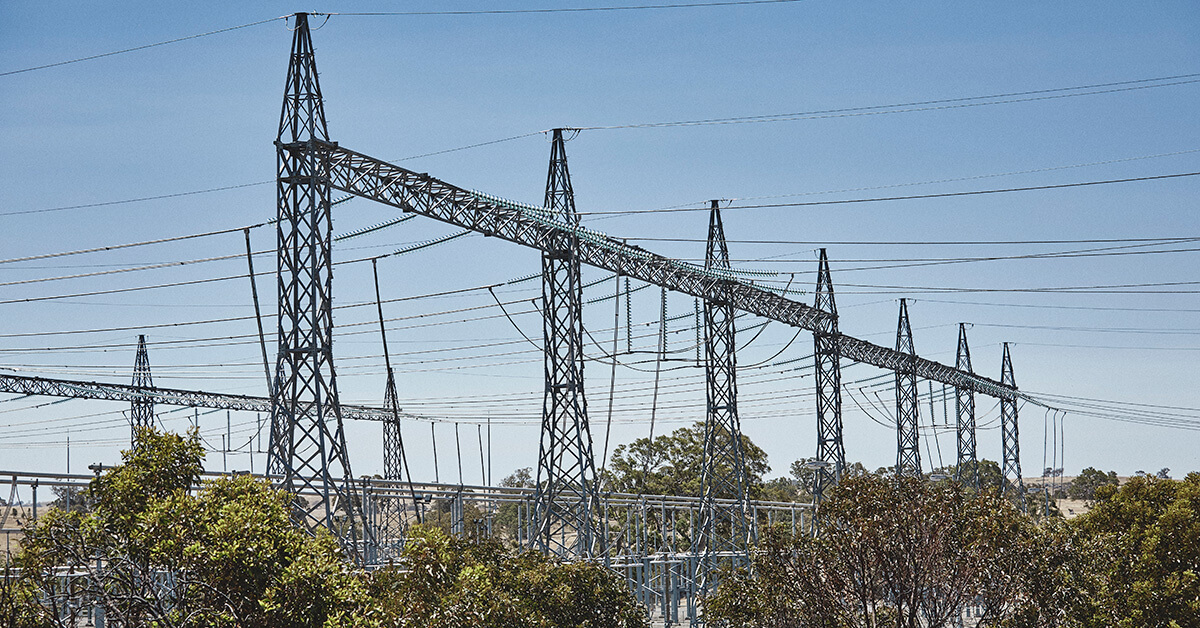





South Australia transmission network service provider ElectraNet has outlined a $3.94 billion (USD 2.7 billion) pipeline of priority transmission projects designed to support an energy transformation that could lead to a doubling of the state’s electricity usage over the next 15 years.
In its latest Transmission Annual Planning Report (TAPR), ElectraNet says South Australia’s peak electricity demand is set to double over the next 15 years, from 3.3 GW currently to more than 6.5 GW as industrial customers seek to capitalise on the state’s low-cost clean energy for operations.
South Australia operates the most renewable-heavy electricity system in the country, with the majority of the state’s electricity coming from renewable sources. It regularly generates 100% of its electricity needs from renewables and is expected to reach 100% net renewables on an annual basis by next year.
ElectraNet said the state’s unique advantages, including “world-class wind and solar resources,” have triggered historically unprecedented levels of enquiry for network connection from prospective generators, prospective electricity users, and from existing businesses seeking to shift their processes to electricity.
The 2026 TAPR forecasts increased connection demand from Greater Adelaide, the Mid North and South East regions of the state as a result of data centres and the AI boom, as well as defence industry development. In the Eyre Peninsula and Upper Spencer Gulf regions, growth will be driven by the mining and minerals sector, steel production at Whyalla, and Northern Water’s desalination project.
ElectraNet said the surge in demand presents a ‘once-in-a-generation’ economic growth opportunity but realising this hinges on planning and enhancement of infrastructure to keep up with rapidly growing electricity demand.
“The state’s best renewable resources are not co-located with its largest and growing load centres, and the retirement of thermal generation within the metropolitan area will increase reliance on power delivered from outside Adelaide,” the company said.
“Building a resilient, high-capacity transmission backbone, supported by system strength, modern protection and enhanced operational tools, will be essential to translate South Australia’s renewable advantage into secure, low-cost electricity supply for households, businesses and new industry in the future.”
ElectraNet’s 2026 TAPR highlights three proposed transmission projects, including the Northern Transmission project spanning the northern and eastern parts of the state; the Eyre Peninsula Upgrade that will expand the Cultana–Yadnarie lines; and the South East Expansion.
The estimated $3.5 billion Northern Transmission Project, currently in early planning stages, will explore the benefits of increased transfer capacity between Bundey and the Adelaide metropolitan load centre, and Bundey and the anticipated Cultana load centre.
The Eyre Peninsula Upgrade, anticipated by 2027/28, will include establishing a new 275 / 132 kV Yadnarie North substation, and upgrading the operating voltage of the Cultana to Yadnarie lines from 132 kV to 275 kV at an estimated cost of $350 million.
The South East network augmentation would include stringing a second 275 kV circuit between Tailem Bend and Tungkillo, increasing transfer capability between the South East, Mid North and Adelaide regions. Early estimates suggest the project will cost between $80 and $90 million.
ElectraNet Chief Executive Officer Simon Emms said the new transmission infrastructure will be essential to connect geographically diverse renewable development to existing customer demand, and to meet increasing demand from electrification and emerging load growth.
“Transmission infrastructure will be vital to create an electricity superhighway, taking energy from the source to where it is needed, and managing the peaks and troughs of demand,” he said.
“So while South Australia has an exciting economic opportunity ahead, we must have the ability to take it. It is vital that we get the planning right and that regulators and governing bodies continue to evolve with us as we tackle truly unique energy circumstances.”
This content is protected by copyright and may not be reused. If you want to cooperate with us and would like to reuse some of our content, please contact: editors@pv-magazine.com.



By submitting this form you agree to pv magazine using your data for the purposes of publishing your comment.
Your personal data will only be disclosed or otherwise transmitted to third parties for the purposes of spam filtering or if this is necessary for technical maintenance of the website. Any other transfer to third parties will not take place unless this is justified on the basis of applicable data protection regulations or if pv magazine is legally obliged to do so.
You may revoke this consent at any time with effect for the future, in which case your personal data will be deleted immediately. Otherwise, your data will be deleted if pv magazine has processed your request or the purpose of data storage is fulfilled.
Further information on data privacy can be found in our Data Protection Policy.