




This is no longer a technical nuance and it’s becoming a defining factor in how safely and effectively the energy transition can be delivered.
Electricity networks were designed for predictability through centralised generation, stable flows, and relatively consistent operating conditions. Today, they are being asked to function in a fundamentally different environment shaped by decentralisation, variability and increasing climate exposure.
The challenge now is not only how we expand the grid but how we observe it.
From infrastructure to observability
For decades, network reliability has relied on physical infrastructure and periodic inspection. Assets were built to withstand known conditions, and maintenance regimes were designed around expected rates of degradation.
However, that model is now under strain.
Ageing infrastructure is operating closer to its limits, while environmental conditions are becoming less predictable.
Higher temperatures, stronger wind events and longer dry periods are placing additional stress on network components. At the same time, the rapid uptake of rooftop solar and other distributed energy resources is changing how electricity flows through the system.
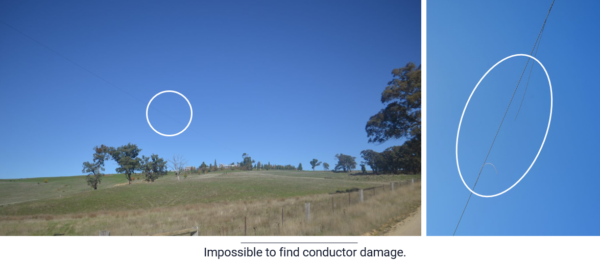
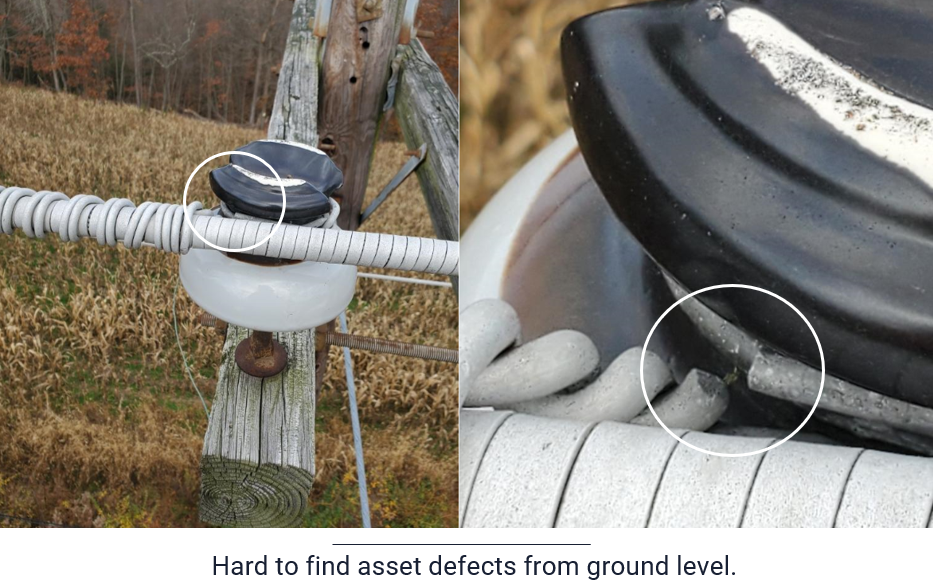
A critical but often under-recognised aspect of this evolving risk profile is the presence of “weakest links” within the network, which are components that may be relatively small, ageing or operating slightly outside optimal conditions, yet capable of triggering disproportionate consequences.
These vulnerabilities are not always readily identified through conventional inspection regimes or periodic maintenance cycles.
In a high-stress operating environment, these weaker points are also subject to compounding pressures. Rising system loads, driven by electrification, data centres and increasing demand, are placing additional strain on already constrained assets, while more extreme and variable weather conditions are accelerating rates of degradation.
As a result, the most vulnerable parts of the network are being asked to carry more, under more volatile conditions, increasing both the likelihood and consequence of failure.
As these vulnerabilities become more dynamic and less predictable, they are also harder to detect through conventional approaches. The result is a grid that is both more dynamic and more exposed, but not yet proportionately more observable.
This gap between system complexity and system visibility is becoming a critical constraint and increasingly, one that cannot be addressed through traditional infrastructure upgrades alone.
Faults are no longer isolated events
In a more volatile operating environment, the nature of faults is also changing.
Many network failures do not begin as sudden events. They develop progressively through conductor movement, vegetation interaction, or gradual insulation degradation. Under stable conditions, these issues may remain contained. Under extreme weather, they can escalate rapidly.
What matters, therefore, is not just the occurrence of faults, but the ability to detect them early enough to intervene.
Historically, much of the network has operated with limited real-time insight into these conditions, particularly across long and remote sections. This has meant that response is often triggered after a fault has already materialised.
As climate variability increases, the consequences of this delay are becoming more significant both in terms of system reliability and, in some cases, community safety.
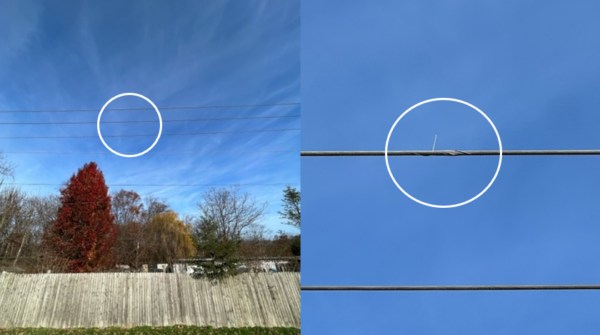
Image: IND Technology
Early detection as a system capability
Advances in sensing, data processing and communications are beginning to change this dynamic. Australia has also been at the forefront of developing and trialling some of these capabilities in real-world network conditions.
High-frequency monitoring and early fault detection technologies are enabling networks to identify the electrical signatures of developing faults, such as conductor clashing or vegetation contact, before they escalate into failure. This shifts the model of network management from reactive response toward earlier, more targeted intervention.
Importantly, this is not just a matter of adding new technology. It reflects a broader shift toward a more data-enabled grid, where visibility is treated as a core operational capability rather than a secondary layer.
In a system that is becoming more complex and more exposed, the ability to detect, interpret and act on emerging signals is now as important as the physical assets themselves.
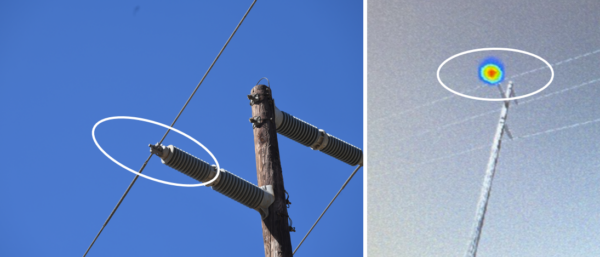
Image: IND Technology
Why this matters for a renewable system
The transition to renewables is not only increasing grid complexity, but also reducing tolerance for disruption.
As more generation becomes distributed and weather-dependent, system stability relies on a network that can respond quickly to changing conditions. At the same time, electricity is becoming more central to essential services, from communications to health and emergency response, raising the stakes of failure.
This creates a convergence: a more complex system operating under tighter performance expectations, in a more volatile environment.
In that context, visibility is not simply an operational improvement. It is a prerequisite for resilience and one that is being enabled through advances in sensing and analytics rather than traditional infrastructure alone.
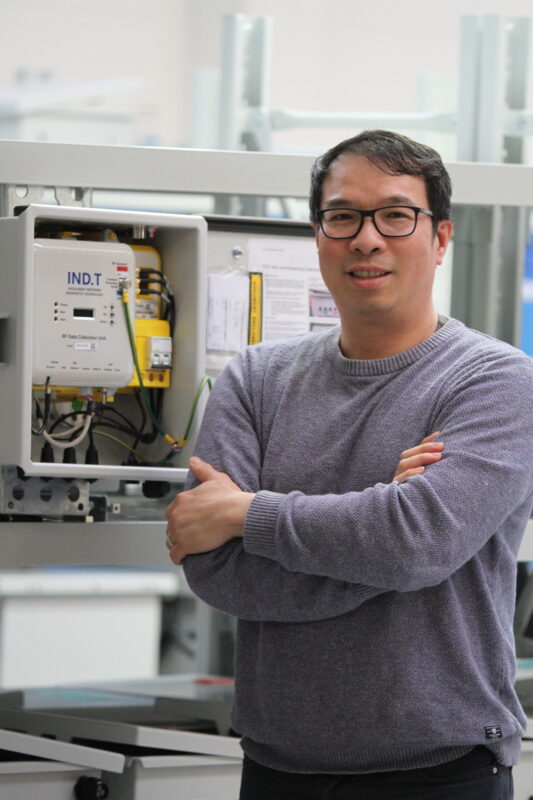
Image: IND Technology
From monitoring to decision-making
The next step is not simply deploying monitoring technologies, but embedding them into how the system is managed.
Data must translate into action – informing maintenance prioritisation, operational decisions, and longer-term planning. This requires closer alignment between engineering, operations and policy settings, ensuring that early signals can be acted on before they escalate.
It also points to a broader shift in how grid performance is understood. Rather than relying solely on historical reliability metrics, there is a growing need to assess how effectively emerging risks are identified and managed in real time.
Australia has made significant progress in deploying renewable energy and modernising elements of its electricity system. It has also demonstrated strong capability in developing technologies suited to its unique operating conditions, from long rural feeders to highly variable climates.
The next phase of the transition will depend on how these capabilities are embedded at scale, integrated into the grid’s core operating model.
In a decentralised, climate-exposed energy system, resilience will hinge on how early emerging risks are identified, understood and acted on.
About IND Technology
IND.T is the designer and manufacturer of the award-winning EFD product based in Melbourne. The EFD system is being rolled out in the US and Canada to mitigate wildfires started by powerlines and to improve the reliability of power networks. The Early Fault Detection (EFD) product is manufactured in Victoria, generating high-tech advanced manufacturing jobs in Australia. The EFD system will create safer and more reliable energy networks.
Author: IND Technology Founder and Chief Executive Officer, RMIT University high-voltage research group lead, Professor Alan Wong.
The views and opinions expressed in this article are the author’s own, and do not necessarily reflect those held by pv magazine.
This content is protected by copyright and may not be reused. If you want to cooperate with us and would like to reuse some of our content, please contact: editors@pv-magazine.com.

By submitting this form you agree to pv magazine using your data for the purposes of publishing your comment.
Your personal data will only be disclosed or otherwise transmitted to third parties for the purposes of spam filtering or if this is necessary for technical maintenance of the website. Any other transfer to third parties will not take place unless this is justified on the basis of applicable data protection regulations or if pv magazine is legally obliged to do so.
You may revoke this consent at any time with effect for the future, in which case your personal data will be deleted immediately. Otherwise, your data will be deleted if pv magazine has processed your request or the purpose of data storage is fulfilled.
Further information on data privacy can be found in our Data Protection Policy.