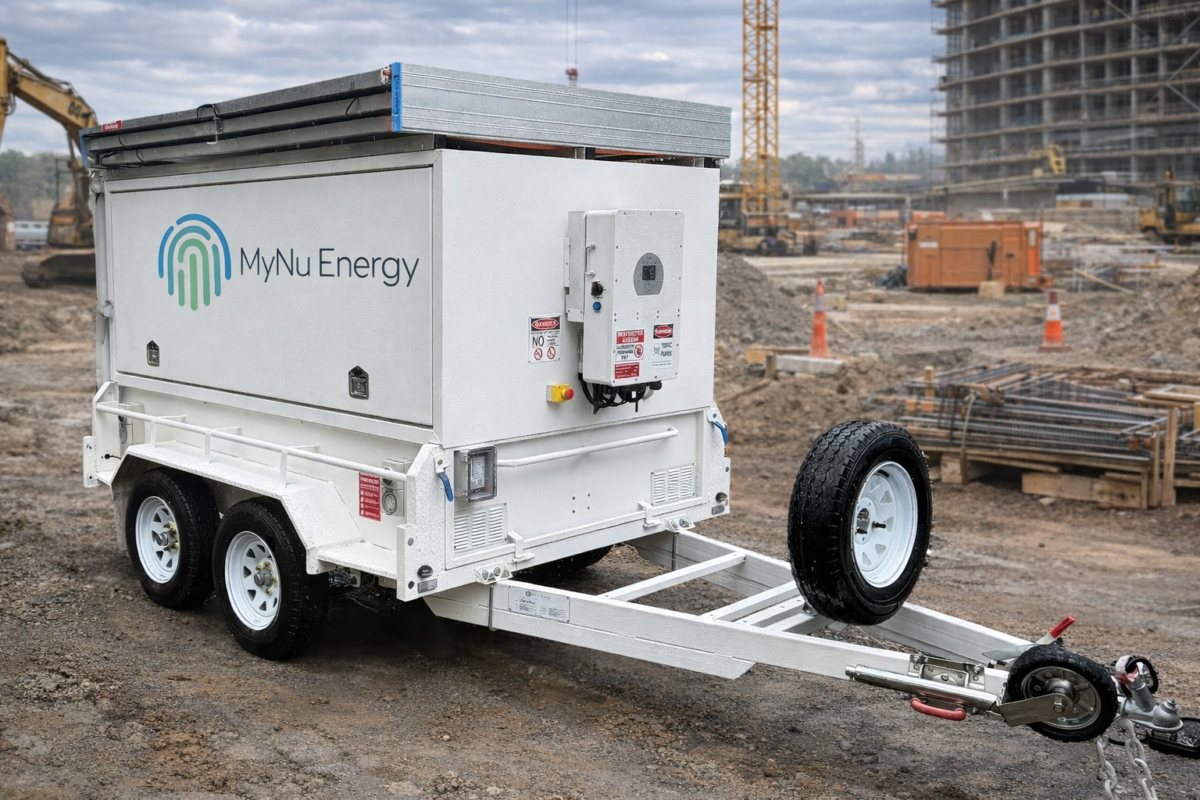





Brisbane-based energy solutions provider MyNu Energy has unveiled a trailer-mounted solar and battery energy storage system designed to replace traditional diesel-fuelled generators as businesses look to manage energy costs and reduce exposure to fuel supply disruptions.
The PowerQub-M Mobile Power Station combines a 3 kW demountable solar array with battery storage options ranging from 60 kWh to 240 kWh and can deliver between 25 kVA and 160 kVA of power depending on configuration, with both three-phase and single-phase outlets.
The company said the mobile power plant can also be customised to meet specific customer requirements, including integrating with larger ground-mounted portable solar systems.
MyNu said the PowerQub-M is designed and assembled in Australia, with company co-founder Shaun Nugent highlighting that the ability to deploy power quickly in remote or temporary locations was a key driver behind the design.
“We wanted to create something that could be moved easily and set up quickly wherever power is needed, whether that’s a construction site, a farm, an event or even disaster recovery situations,” he said.
“The trailer-based design means it can be deployed rapidly without the need for permanent infrastructure.”
MyNu expects demand across sectors including construction, agriculture, remote infrastructure, events and emergency response, particularly in regions where diesel logistics remain challenging.
“This isn’t just about sustainability, it’s about practicality,” Nugent said. “Businesses need power they can rely on, and increasingly they’re looking for solutions that aren’t tied to diesel.”
Nugent said the system also offers advantages for equipment performance, with battery-based power delivering more stable electricity compared to some diesel generators.
The PowerQub-M Mobile Power Station is priced from $49,750, not including GST, with MyNu estimating it could reduce diesel usage by up to 25,000 litres per year.
MyNu co-founder John Myler said the launch of the mobile energy plant comes amid a growing shift toward alternative power solutions as businesses look to exert more control over their energy use and costs.
“We’re hearing from farmers, construction operators and regional businesses who are struggling with both the cost and availability of diesel,” he said. “Power is critical to their operations, and they need solutions that are reliable, but also independent of fuel supply chains.”
This content is protected by copyright and may not be reused. If you want to cooperate with us and would like to reuse some of our content, please contact: editors@pv-magazine.com.


By submitting this form you agree to pv magazine using your data for the purposes of publishing your comment.
Your personal data will only be disclosed or otherwise transmitted to third parties for the purposes of spam filtering or if this is necessary for technical maintenance of the website. Any other transfer to third parties will not take place unless this is justified on the basis of applicable data protection regulations or if pv magazine is legally obliged to do so.
You may revoke this consent at any time with effect for the future, in which case your personal data will be deleted immediately. Otherwise, your data will be deleted if pv magazine has processed your request or the purpose of data storage is fulfilled.
Further information on data privacy can be found in our Data Protection Policy.