




Recent battery fire incidents, both on the ground in Australia and abroad, have shifted attention away from component-level certifications alone, towards how complete battery energy storage systems (BESS) systems behave under high-severity fire conditions including containment, thermal propagation, and post-incident operability.
For asset owners and operators, system-level behaviour is now a material risk consideration rather than a theoretical one, directly impacting project approvals, insurance underwriting and location decisions.
Within this context, independently overseen large-scale fire testing (LSFT) is emerging as a useful source of reference data for understanding how containerised BESS installations respond under extreme conditions, providing critical empirical data to demonstrate how these systems may behave under extreme stress scenarios.
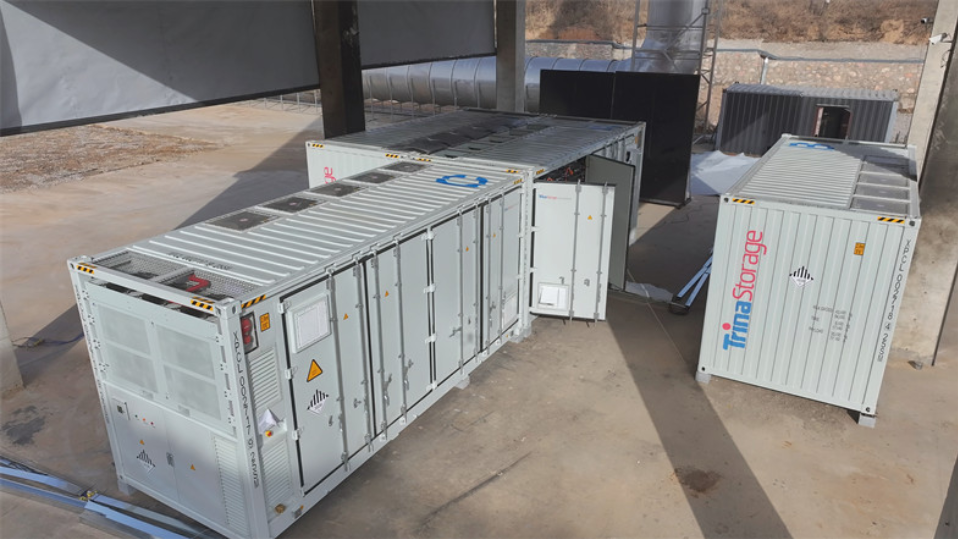
A recent LSFT conducted on Trina Storage’s 5 MWh Elementa 2 Pro utility-scale battery system illustrates the type of system-level insight now informing industry discussion. The test was conducted by TÜV Rheinland and witnessed and technically overseen on site by international fire engineering consultancy The Hiller Companies. It followed an international testing framework incorporating CSA/ANSI C800-2025, NFPA 855-2026, and UL 9540A (November 2025.)
To evaluate safety level margins under the severest of conditions, the test configuration reduced container spacing to 10 centimetres, tighter than a typical reference layout. The initiating container was exposed to sustained fire exceeding 1,300 °C. Monitoring data recorded during the test showed no thermal propagation to adjacent containers, with temperatures remaining below cell venting thresholds across back-to-back, side-by-side, and face-to-face configurations.
Post-test inspections indicated that the initiating container maintained structural integrity, with electrical cabinets and internal separation preserved. Adjacent containers remained structurally intact and operational, with fire protection and thermal management systems continuing to function.
For Australian utility-scale projects, results of this nature do not replace site-specific design, regulatory review, or emergency response planning. However, independently overseen LSFT outcomes can provide useful reference inputs for fire risk assessment, assist in insurer discussions, and system design review, especially as BESS projects increase in size and proximity to other critical infrastructure.
As Australia’s storage fleet continues to expand, transparent system-level safety data is likely to play a growing role in how asset owners, network operators, and insurers assess and manage fire risk across the project lifecycle, facilitating confidence and better positioning projects to support stakeholders and navigate evolving regulatory and insurance requirements as the storage sector continues to expand.
Author: Dr Leo Zhao, Head of Energy Storage Solutions APAC, Trinasolar
The views and opinions expressed in this article are the author’s own, and do not necessarily reflect those held by pv magazine.
This content is protected by copyright and may not be reused. If you want to cooperate with us and would like to reuse some of our content, please contact: editors@pv-magazine.com.


By submitting this form you agree to pv magazine using your data for the purposes of publishing your comment.
Your personal data will only be disclosed or otherwise transmitted to third parties for the purposes of spam filtering or if this is necessary for technical maintenance of the website. Any other transfer to third parties will not take place unless this is justified on the basis of applicable data protection regulations or if pv magazine is legally obliged to do so.
You may revoke this consent at any time with effect for the future, in which case your personal data will be deleted immediately. Otherwise, your data will be deleted if pv magazine has processed your request or the purpose of data storage is fulfilled.
Further information on data privacy can be found in our Data Protection Policy.