Reindustrialising Australia, the path to 500% renewables
Australia has an undisputed competitive advantage when it comes to renewable energy, and many believe we can become a clean energy exportation superpower, but we have to reindustrialise ourselves first.

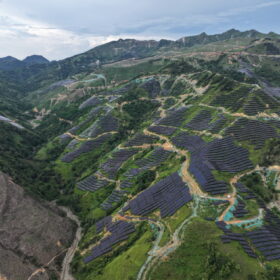
Total completes 16 MW/10 MWh solar+storage project in New Caledonia
The project is an extension of the Hélio Boulouparis 1 installation, which was commissioned in May 2017 with 11.2 MW of capacity.
183 MW solar farm approved for south-west WA, another 100 MW project on the cards
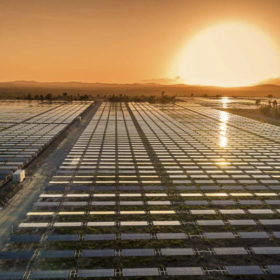
Western Australia’s South West has attracted the interest of Melbourne-based developer South Energy, which has proposed two utility-scale solar projects for the region. One has already secured development approval, while the other one will be discussed next week.
Clean energy investment confidence continues to slide
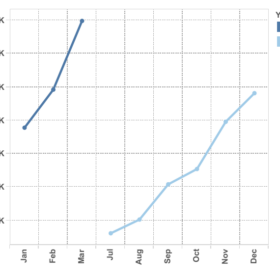
A survey run by the Clean Energy Council shows confidence in new clean energy investment continued to weaken over the past six months. While a big majority of industry representatives expect to hire more staff in the next 12 months, the biggest challenges to developing new projects remain unchanged with grid connection process and technical requirements and policy uncertainty at the top of their list of concerns.
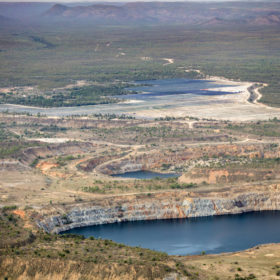
Plan to go ahead as J-Power recommits to Kidston pumped hydro
The Kidston solar-pumped hydro project is back on its feet after Japanese utility J-Power and Genex Power renegotiated their deal with the extension of funding provided by the Northern Australia Infrastructure Facility Board earlier this month. The project had been thrown off-course after a shock decision by EnergyAustralia not to finalise a purchase agreement.
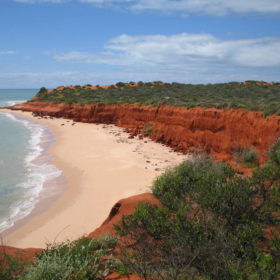
Western Australia to consume its carbon budget 20 years too early, report finds
Under the business-as-usual scenario, Western Australia could use up its Paris-Agreement 1.5°C compatible carbon budget within 12 years but a massive ramping up of renewable energy capacity would unlock significant economic opportunities for the state, finds a report by Berlin-based science and policy institute Climate Analytics.
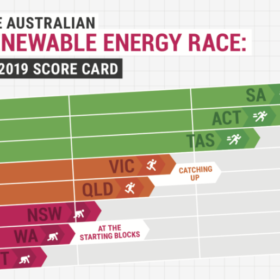
State of play: Leaders and laggards in Australia’s renewables race
South Australia has won this year’s state and territory renewables race, with the Australian Capital Territory and Tasmania hot on its heels. As the state governments continue to step up action on climate change, the Federal Government is acting as an obstacle to investment, finds the Climate Council.
City of Melbourne invites second renewable energy tender
A group of Melbourne’s prominent universities and businesses are combining their purchasing power to source their electricity from a large scale renewable energy project in Victoria.
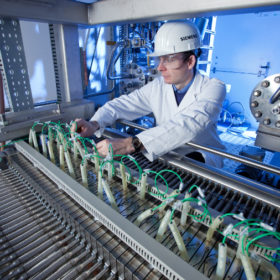
Australia’s National Hydrogen Strategy adopted, funds for new projects allocated
State and federal energy ministers have given a tick of approval to the National Hydrogen Strategy prepared by chief scientist Alan Finkel and voiced support for a $370 million fund for green hydrogen projects. Against high expectations of the country’s hydrogen export potential, a report finds that Australia has overhyped the potential demand for hydrogen exports by a factor of up to 11.
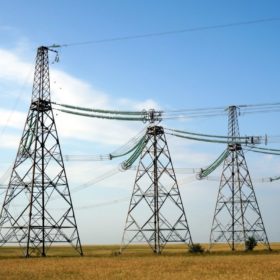
Let’s Talk Losses
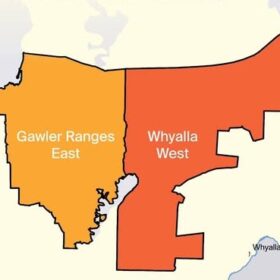
Last week two things happened related to rule changes on losses. The AEMC released a draft determination, rejecting the proposal to move to Average Loss Factors (ALF). They also held a working group for COGATI which proposes dynamic marginal loss factors.