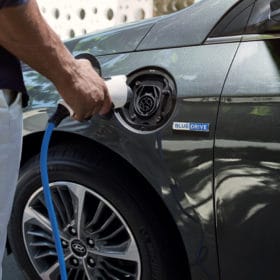
Motoring body says EVs at turning point as road tax passes
A national motoring body has called on the Federal Government to “provide leadership”, declaring the rollout of electric vehicles in Australia is facing significant roadblocks.
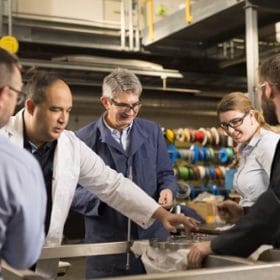
Mission Possible: CSIRO launches $68 million Hydrogen Industry Mission
Australia’s national science agency, the CSIRO, has launched a collaborative “Team Australia” style mission bringing together actors from all aspects of hydrogen development and production toward the goal of driving costs below $2/kg and driving Australia toward hydrogen superpower status by 2030.

Four keys to getting Australia’s hydrogen economy right
As Australia’s hydrogen hype is substantiated by a pipeline of real projects backed by real money, questions around how to design Australia’s ‘future fuel’ industry so it doesn’t become a fossil fuel lifeline grow increasingly urgent. Nicky Ison, WWF Australia’s Energy Transition Manager, shares the four focal points she believes are key to ensuring Australia’s hydrogen economy is cleanly built.
Victoria bans door-to-door sales for solar companies, introduces $1 million fine for wrongful disconnections
Victoria’s state government has introduced new rules for solar businesses and energy retailers banning on door-to-door sales of products and announcing penalties of up to $1 million for retailers that wrongfully disconnect the electricity of vulnerable Victorians.
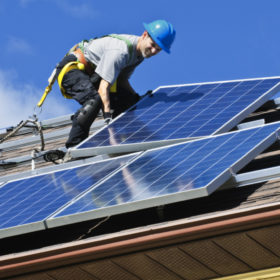
Stop removing your solar panels early, please. It’s creating a huge waste problem for Australia
Charles Darwin University’s Deepika Mathur, and Imran Muhammad of Massey University in New Zealand reveal surprising results from their study into why Australians are retiring solar panels before their time, and what it means for our material footprint and the environment.
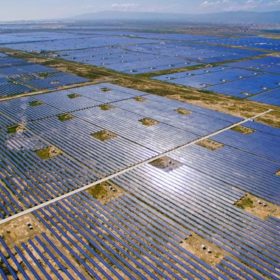
Saturday read: New applications see surge in Chinese demand
China’s project development segment is dynamic, to say the least. Having undergone significant changes toward a “subsidy-free” footing, developers are now facing requirements to integrate storage, deploy hybrid arrays, and pursue self consumption through BIPV and agrivoltaics applications, writes Frank Haugwitz, the director of the Asia Europe Clean Energy (Solar) Advisory (AECEA).
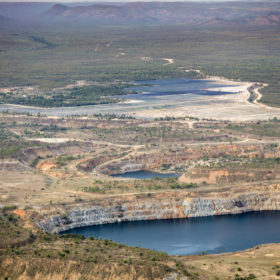
Kidston pumped hydro reaches financial close, given green light
For the first time in almost four decades a pumped hydro energy storage plant is set to begin construction with the financial close of Genex Power’s Kidston Clean Energy Hub.
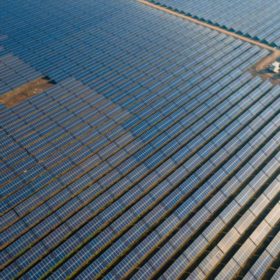
IEA calls for solar PV additions to reach 630 GW by 2030
According to the International Energy Agency, most of the global reductions in CO2 emissions between now and 2030 would come from technologies available today. In a recent report, the agency sets what it described as a “cost-effective and economically productive” pathway resulting in an energy economy “dominated by renewables like solar and wind.”

Why rooftop solar failed to find its legs in India
Poor and piecemeal implementation of net metering policies is a major roadblock for the uptake of rooftop solar system in India, according to a new report by Asian Development Bank.
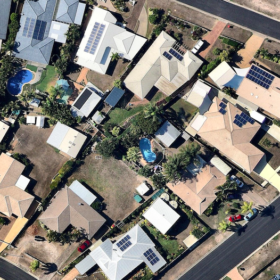
Regulator expands fraud detection, introduces new anonymous online tool to growing arsenal
The Clean Energy Regulator has adopted the whistle-blower platform Whispli to allow Australians to report any potential fraudulent or non-compliant behaviour anonymously online. The move comes just after the Regulator joined forces with the Clean Energy Council to launch a taskforce targeting dodgy installers.