NSW backs pumped hydro to deliver long-duration storage
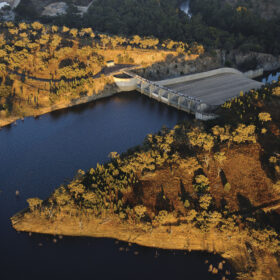
Pumped hydro continues to push for a place in Australia’s energy transition with the New South Wales government recently declaring two multi-billion-dollar projects Critical State Significant Infrastructure.
Global BESS capacity tops 250 GW, overtaking pumped hydro for first time
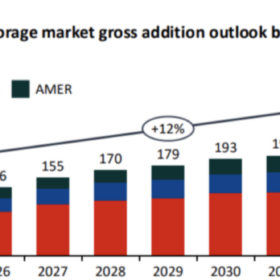
Rystad Energy says it expects global battery energy storage system (BESS) additions to exceed 130 GW/350 GWh in 2026, led by Australia, China, the United States, the United Kingdom, and Germany.
Snowy Hydro adds fourth tunnel borer to keep pumped hydro project on track
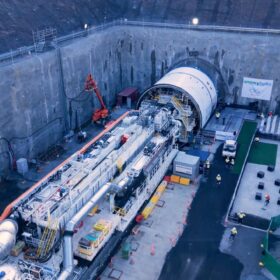
Snowy Hydro has commissioned a fourth tunnel boring machine for its Snowy 2.0 pumped hydro project in New South Wales as it seeks to prevent any further delay to the start-up of the renewable energy mega-project.
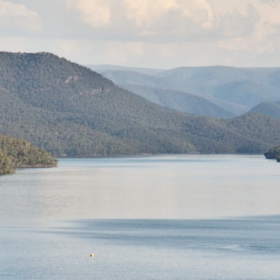
White elephant? Hardly – Snowy 2.0 will last 150 years and work with batteries to push out gas
When Snowy 2.0 is in the news, it’s usually about money. The cost of the huge project has gone well beyond the initial $6 billion estimate and will now cost more than $12 billion.
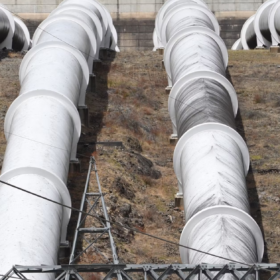
Snowy 2.0 cost blowouts might be OK if the scheme stored power more cheaply than batteries. But it won’t
Two years ago, Snowy Hydro announced a reset for its troubled Snowy 2.0 giant pumped hydro project amid cost blowouts. The supposed final cost was $12 billion.
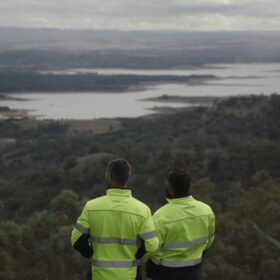
Acen seeks green light for 12-hour duration pumped hydro project
The Philippines-based renewables and energy storage developer Acen Australia says its 800 MW, 12-hour duration Phoenix pumped hydro energy storage project planned for central west New South Wales is on track to start generating power in the early 2030s.

Marinus Link gets go-ahead to dive straight into stage 1 construction phase
Marinus Link, the 750 MW capacity high voltage direct current electricity interconnector proposed to strengthen the Tasmania and Victoria connection on the National Electricity Market, has reached Stage 1 financial investment decision.
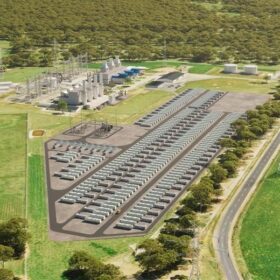
Banpu buys into EnergyAustralia battery project
Thai energy company Banpu has snapped up a 50% stake in the 350 MW / 1,400 MWh Wooreen battery energy storage system being built in Victoria’s Latrobe Valley as the Bangkok-based coal producer ramps up investments in renewable energy.
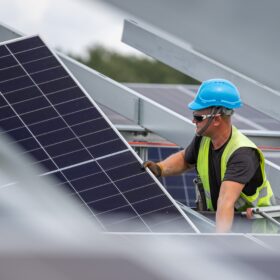
OX2 Muswellbrook solar and battery project approved
The New South Wales Independent Planning Commission has provided the tick of approval for a 135 MW solar farm and a 135 MW / 270 MWh battery project being developed at the site of a former coal mine in the Hunter Valley.
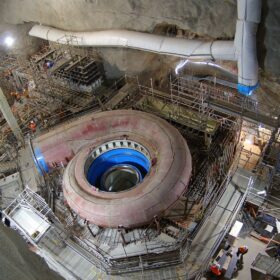
Genex reaches construction milestone on 2 GWh pumped hydro project
Construction of the 2 GWh Kidston pumped storage hydro project being developed in northern Queensland has reached a key milestone with the successful installation of the initial spiral case in the underground powerhouse.