Horizon Power’s Carnarvon DER trials picks up award
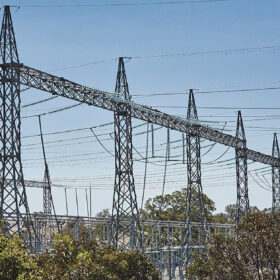
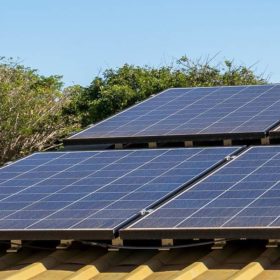
Western Australia utility Horizon Power’s Carnarvon Distributed Energy Resource (DER) PV trails have received the silver award in the Energy Smart Communities Initiatives (ESCI) Best Practice Awards in the category of Smart Grids. The award recognises the necessity of DER trailing in order to find better ways to integrate solar PV into regional locations.
Curtin’s new thermal battery project brings on the midnight sun
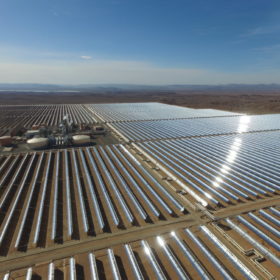
An international research collaboration led by Curtin University is set to help decarbonise mining and other off-grid industry with concentrating solar power that delivers clean energy night and day.

China auction allocates subsidies for 22.7 GW of solar with lowest bid of $0.0407/kWh
China’s National Energy Administration has given the greenlight to 3,921 ground-mounted and distributed generation projects. The approved energy price bids ranged from $0.0407 to $0.080, depending on system size, for an average price of $0.048.
Smart meter time of use pricing to drive up household energy costs without the help of solar and batteries
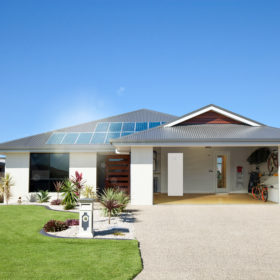
New research released this week by The Australia Institute shows that ‘time of use pricing’ (ToU) facilitated by smart meters is likely to drive up household energy costs by $429 a year on top of already high prices. Analysis of national electricity market data suggests that demand for electricity in Australia is very inelastic, which makes ToU more likely to increase the profits of electricity companies than to assist consumers. Households with solar PV and batteries, however, are best suited to cope with this type of pricing.
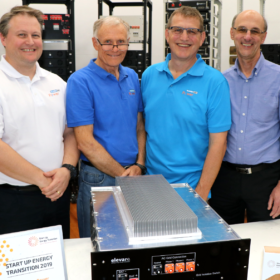
Planet Ark Power smooths the way for urban solar farms
Voltage regulation creates challenges for grid operation, particularly at high penetration levels of solar and other distributed renewables. Fresh being recognised as energy transition pioneers at the recent Startup Energy Transition (SET) Awards in Berlin, Planet Ark Power and its behind-the-meter technology is looking to dynamize Australia’s, and the world’s, energy grids with distributed clean energy.
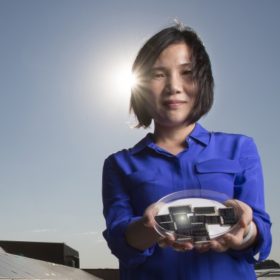
Two top solar innovators honoured at national engineering awards
Two UNSW affiliated solar engineers have been honoured as some of the country’s most innovative engineering minds at the annual Engineering Australia award ceremony this week for their work on ground-breaking solar solutions.
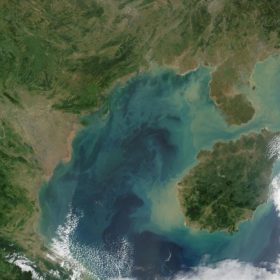
Grid data transparency vital to making the case for renewables in Vietnam
With a glut of solar capacity having come online this year, cheaper financing would help keep some of that momentum but policymakers cannot be persuaded of the economic benefits of clean energy unless state-owned utility EVN opens up.
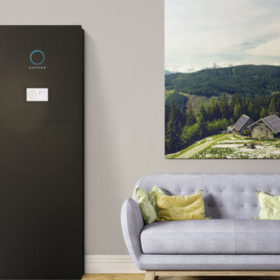
UniSA research finds batteries make economic sense in South Australia
Under the right conditions, solar batteries are economically beneficial for South Australian homeowners and can pay for themselves off within the warranty period, a new research finds.
AEMO: Australia will need 15 GW of utility-scale storage by early 2040s
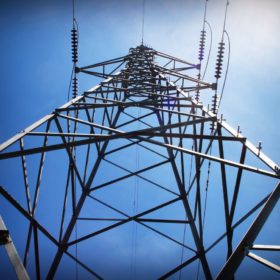
Increased storage and strategic transmission development will be needed to ensure the lowest cost and risk transition of Australia’s energy system, the Australian Energy Market Operator states in its latest study. In 20 years time, the need for storage will be at a scale not seen before in the NEM, and both pumped hydro storage and distributed storage are set to play major roles in lowering wholesale electricity prices and building a reliable and resilient power system.
2019 shaping as watershed year for renewables in resource sector
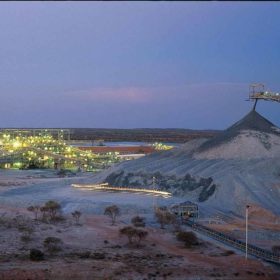
As one of the most energy-intensive industries, the resource sector is getting serious about integrating cheap wind and solar energy into its mix to boost bottom lines. Although still predominantly underpinned by gas or diesel, mine operations are increasingly deploying hybrid solutions pointing to the potential of the sector transitioning to 100% renewables – particularly as momentum builds for green hydrogen to play a role in future microgrids.