Divide and conquer, Tesla’s electric Cybertruck breaks into ute-market
Tesla’s new electric ute, the Cybertruck, may not be the most beautiful of vehicles, but that doesn’t seem to have cost it any attention. The unveiling almost broke the Internet, and a couple windows really did break in the process.
Australian researchers achieve breakthrough for sodium-sulfur batteries
Researchers from the University of Wollongong have manufactured a nanomaterial that acts as a superior cathode for room-temperature sodium-sulfur batteries, making them a more attractive proposition for large-scale energy storage.
Green hydrogen to reach cost parity by 2030
Recent analysis from Wood Mackenzie predicts green hydrogen, produced primarily by solar electrolysis, will reach cost parity in Australia, Germany and Japan by 2030.
Orderly disorder: Cambridge scientists make surprising perovskite discovery
Researchers have made a finding they say could vastly simplify and reduce the production cost of perovskite solar cells. Working with mixed halide perovskites, the group found a disordered chemical composition can improve device efficiency.

Saving water with solar and wind
Scientists at Princeton have found solar and wind energy offer the added environmental benefit of reducing water usage, by comparison with hydroelectric dams. Their findings, say the researchers, could have a positive impact on groundwater sustainability in drought-prone regions such as California, where they conducted a case study.
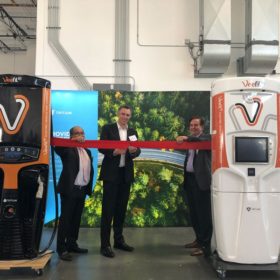
Tritium expands to Europe and the U.S.
Brisbane-based Tritium is quickly becoming a world leader in EV charging technology as the company rapidly expands across Europe and the United States.
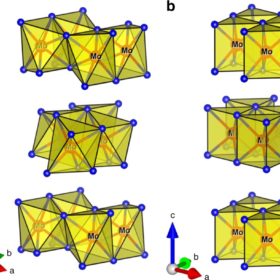
Scientists double down on hydrogen production
A team of scientists led by the University of Glasgow has discovered a more efficient method of splitting water into hydrogen and oxygen using electricity which it says could almost double the amount of hydrogen produced per millivolt.
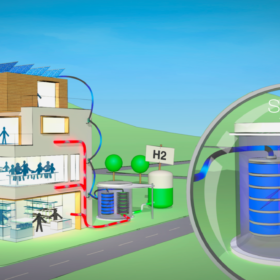
French consortium develops hybrid storage and co-generation system
The Smart Energy Hub can operate in electrolysis mode to store renewable energy as hydrogen, or in fuel cell mode to produce electricity and heat from previously produced hydrogen or methane. Its developers are the French Alternative Energies and Atomic Energy Commission and start-up Sylfen.
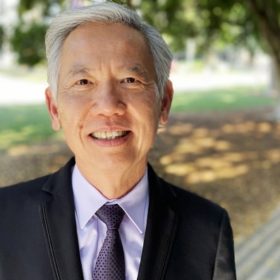
UNSW pioneer continuing to push solar ahead
Professor Chee Mun Chong is at the forefront of advanced hydrogenation, effectively doping solar cells with hydrogen to eliminate defects and build efficiency.
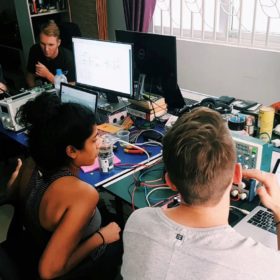
Meet the Aussie startup delivering solar minigrids to remote communities from a ping-pong table
Meet Afnan Hannan, CEO and co-founder of Okra Solar, an Aussie startup looking to eradicate energy poverty using solar minigrids that has already been recognised with a global sustainability award and a best IoT startup award.