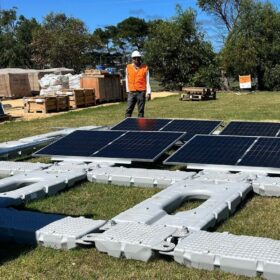
Major economies should divert fossil fuel Covid-recovery cash to clean energy before it’s too late
A report by Finnish company Wärtsilä has estimated the potential impact if every dollar committed to a non-renewables energy sector recovery was instead funnelled to clean power.
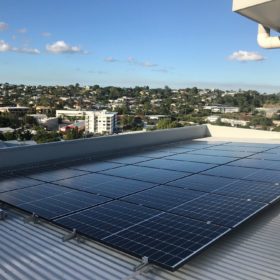
Q Cells releases new solar module designed specifically for the Australian market
South Korean-based manufacturer Q Cells has launched its first “made for Australia” solar module and in a show of confidence, the Q-Maxx-G2 comes complete with an extended 15-year product warranty.
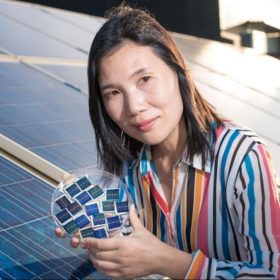
PM’s Prize for Science awarded to UNSW’s Xiaojing Hao for her pioneering work thin-film PV
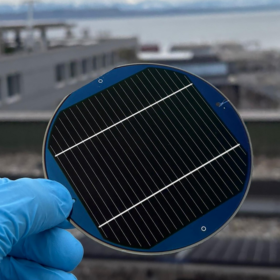
The 2020 Prime Minister’s Prizes for Science took place virtually this year, but that won’t quash the recognition of Xiaojing Hao, UNSW’s solar pioneer who took home (or rather, received at home) the prize for Physical Scientist of the Year. Hao’s work in thin-film photovoltaics is leading the world in fashioning new and sustainable applications for solar PV.

South Korea follows Japan with net-zero 2050 pledge
Re-elected South Korean president Moon Jae-in today declared he will follow-up on a campaign trail promise to eliminate carbon emissions by mid century. The announcement comes just two days after Japan’s new prime minister said he would accelerate his nation’s emissions target.
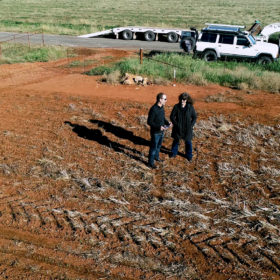
Aussie startup looks to boost ‘mid-scale’ PV segment through crowd equity
For Komo Energy founders Jonathan Prendergast and Gerald Arends, today has been equal parts terrifying and exciting. This morning, the solar development startup launched their crowd equity offering.
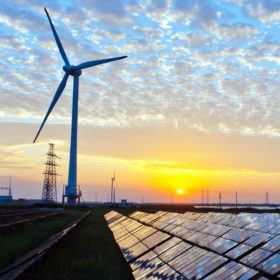
Fraunhofer to develop battery inverter for whole-area UPS and renewables integration
Industrial and academic partners are developing a battery inverter which can be grid connected under normal operation but can also use nearby renewables generators to form an island grid, for whole-area uninterrupted power supply.
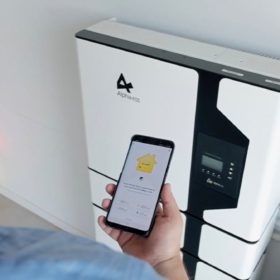
‘Disrupters’ tip Australia to become world’s biggest VPP in 2021
As Australia’s home battery market begins to catch up to its install residential solar capacity the opportunity for large-scale virtual power plants is verging on reality. Indeed, Solar Service Group’s new Solar + Battery Members’ Plan could see Australia host the world’s largest virtual power plant next year.
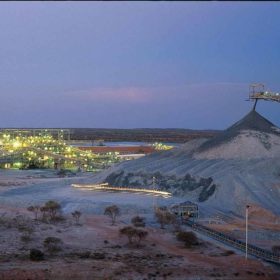
BHP targets ‘sustainable nickel’ through green PPA including 18.5 MW solar farm
BHP Nickel West has extended its PPA with Southern Cross Energy to 2038 as the mining giant looks to integrate renewable energy into its processes toward the goal of meeting its emissions reductions goals and producing ‘sustainable nickel’, a necessary requirement for potential client Tesla. The extended deal begins at Nickel West’s Leinster and Mount Keith operations with the development of an 18.5 MW solar farm and battery storage system.
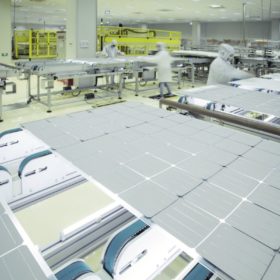
Interview: Longi Australia zeros in on 1 GW of shipments in 2021
Stable pricing, stable product performance, and rapid after-sales service: These are the pillars on which Chinese PV manufacturing giant Longi’s rapid growth in the Australian market are built – says Stephen Zhang, the MD of Longi Australia. And as the company moves towards another year of doubling its shipments to Australia, its local presence and team remains a vital part of its strategy.
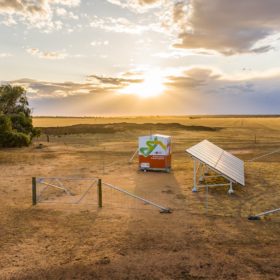
Western Power completes deployment of 52 stand-alone power systems in Australia first
Over 50 stand-alone power systems (SPS) units installed by Western Power are now operating in regional properties across Western Australia (WA). The landmark off-grid program is the largest single such deployment by a network business in the country.