SMA posts €175 million loss for 2018
The German inverter producer’s sales also fell significantly in the past financial year. With its cost reduction program, SMA is now eager to orchestrate a turnaround, but its first-quarter guidance still shows a sustained downward trend.
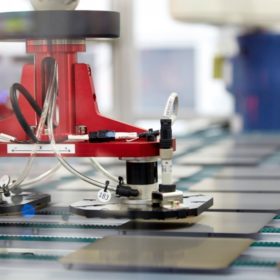
Hanwha Q Cells expands Australian patent infringement lawsuit to include REC, BayWa r.e., Sol Distribution
The South Korean solar module maker has filed another claim with the Federal Court of Australia against Norwegian solar manufacturer REC Group, as well as PV distributors BayWa r.e. Solar Systems and Sol Distribution, for distributing products that allegedly infringe on its patents.
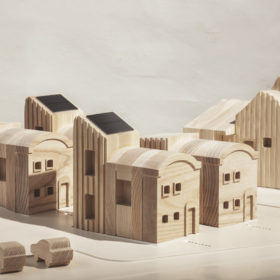
Ikea tests rooftop PV and blockchain on miniature wooden village
The Solarville project, by Ikea’s Danish research and design laboratory, has seen the participation of blockchain companies such as Bloc, Blocktech, WeMoveIdeas India and Temporal. It was conceived to help create cooperative community micro-grids to enable homeowners to become clean energy traders.
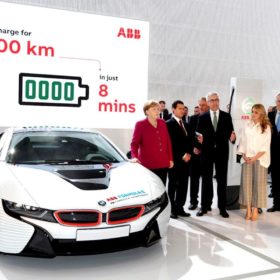
Renewables reach 65% of net power production in Germany for one week
Renewable energy had a 64.8% share of electricity generation, according to solar research institute Fraunhofer ISE. The achievement was mainly due to strong production from wind facilities.
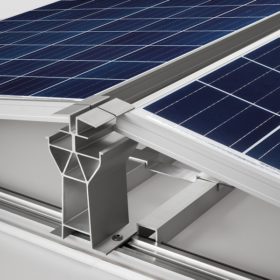
Hanwha Q-Cells sues Jinko, Longi and REC for patent infringement
The Korean solar manufacturer has lodged a patent infringement lawsuit against Jinko and REC in Germany, and two more against the same companies plus Longi in the U.S. Hanwha Q Cells claims its three rivals have used its patented solar cell passivation technology to increase the performance of their products.
Siemens wants to take over Kaco
After announcing its entry into residential storage a week ago, the Munich-based multinational has now unveiled a plan to acquire inverter manufacturer Kaco. Siemens has not provided details about the value of the transaction.
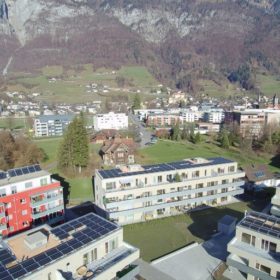
Blockchain marketplace for PV power trading launched in Switzerland
Some 377 households and a retirement home are participating in a pilot project. In the first two weeks of this month, solar power generators sold 82% of their electricity within the neighborhood. The goal of the one-year test run is to develop a viable concept for the trading of solar power.
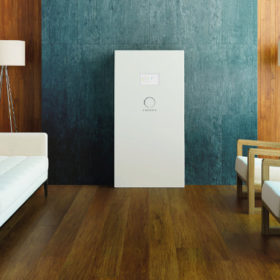
Shell moves to acquire German storage business Sonnen
In May 2018, oil giant Shell invested in German manufacturer Sonnen. Now the 112-year-old company wants to fully acquire the business, subject to Germany’s monopoly authorities. Sonnen said it hopes the deal will accelerate its growth by expanding its market reach and capacity.
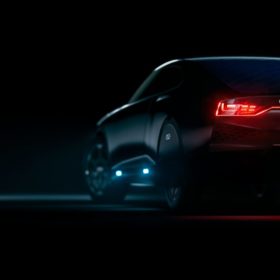
World’s first solar-powered passenger car on roads next year
A Dutch start-up has designed an electric vehicle that runs solely on solar energy, and aims to deliver its first models next year. The car will also be available to lease.
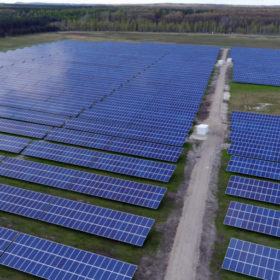
Germany installed almost 3 GW of solar in 2018
PV demand grew 68% year-on-year from the level seen in 2017 as Germany’s cumulative installed solar generation capacity reached 45.92 GW.