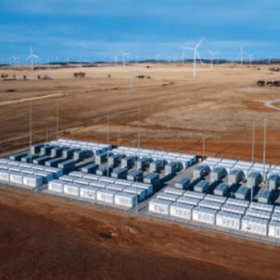
Sunday read: What’s in store for storage
As solar and wind make up larger portions of the energy mix, energy storage is becoming an increasingly important piece of the puzzle in keeping electricity networks running smoothly. And as battery costs fall, new business models are emerging to increase the value of battery energy storage projects for both grid operators and project owners. Focusing on two leading countries – the United Kingdom and Australia – pv magazine looks at what’s in store for large-scale energy storage.
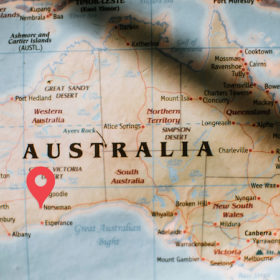
Saturday read: Dirty double standard on display
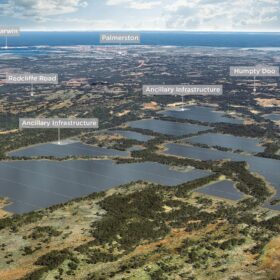
Australia’s proposed 26 GW Asian Renewable Energy Hub has encountered what appears to be a governmental double standard, as the country’s environment minister has rejected an expanded proposal. Thankfully, the project’s proponents have not become discouraged in the face of this double standard; in fact, they’re doubling down.
Microgrid project to shine spotlight on Tasmanian solar
The tiny Tasmanian town of Derwent Bridge could provide a big boost for the state’s solar PV energy credentials with the small community to play host to a microgrid project that will evaluate how to better meet the energy needs of Australians living in regional and remote areas.
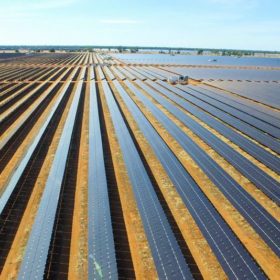
Energy giant’s $2.06 billion loss labelled a ‘Titanic’ failure
Australia’s largest energy retailer AGL has blamed an “extremely challenging market” prompted in part by the ongoing penetration of renewables, including rooftop solar PV, after reporting a $2.06 billion full-year net loss.
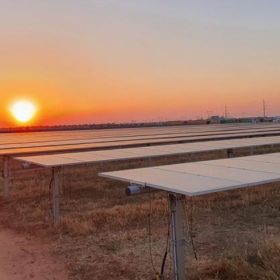
Australia’s biggest solar farm opts for AI-powered bidding platform
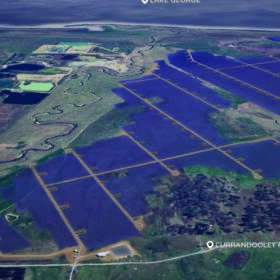
The operators of Australia’s largest solar farm have turned to a software-based bidding solution as they seek to optimise dispatch and manage the facility’s market trading and power purchase commitments amid increasingly market volatility.
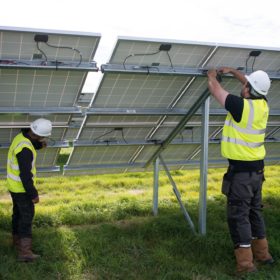
Pumped hydro and solar projects progress Queensland’s energy transition
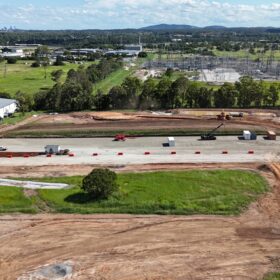
Queensland’s transition to a renewable energy future is set to progress with the state government calling for tenders for the proposed 1 GW Borumba Dam pumped hydro energy storage project while work on a nearby 176 MW solar farm has also reached a new milestone.
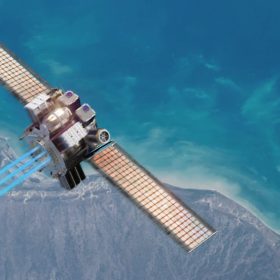
CSIRO looks to space to test next gen solar cell technology
The CSIRO is pushing the limits of flexible solar PV cells, partnering with Australian start-up Space Machines Company to test the technology in space.
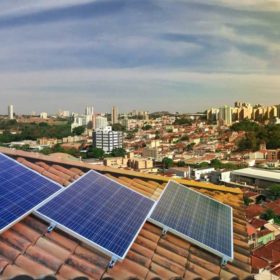
Chasing the sun — tax-free!
The Australian Energy Market Commission (AEMC) has made final a rule that will allow for solar export tariffs to be gradually introduced in the NEM jurisdictions (that is, everywhere except WA and the NT) under limited circumstances in four years’ time.
New rules revealed as AEMC aims to transform network into ‘two-way super-highway’
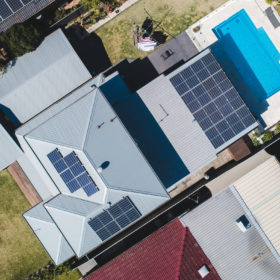
The Australian Energy Market Commission has retained a controversial two-way pricing mechanism in its finalised reforms package which has been designed to better integrate distributed energy resources, such as rooftop solar PV, batteries and electric vehicles into the grid, and transform it into a “two-way super-highway where energy flows in both directions”.
bp study confirms Australia’s green hydrogen export potential, and calls for carbon price
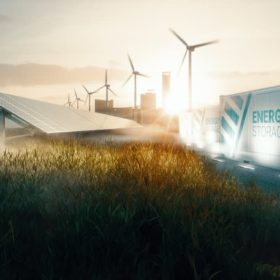
A bp Australia study partially supported by the Australian Renewable Energy Agency has confirmed the technical feasibility of large-scale renewable hydrogen and ammonia production for export in Australia, particularly in Western Australia’s Mid-West. However, the development of such an industry, says bp, requires strong government policy support, including a carbon price or emissions cap.